
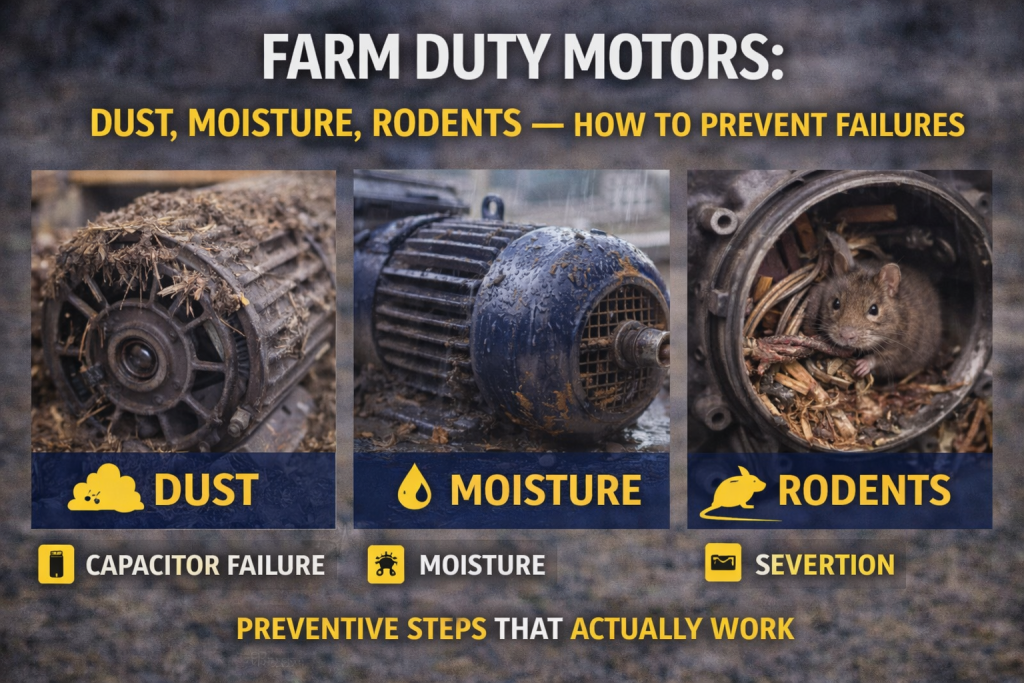
Farm duty motors live in some of the harshest environments motors ever see. Dust, moisture, temperature swings, chemicals, and rodents combine to shorten motor life far faster than normal industrial conditions.
Most farm motor failures aren’t caused by overload or age — they’re caused by environmental exposure. The good news is many of these failures are preventable with the right setup and maintenance.
This guide explains how farm motors fail, the warning signs to watch for, and what actually works to protect them.
Why Farm Duty Motors Fail More Often
Farm motors operate in:
- High dust and debris environments
- Damp or washdown conditions
- Unheated spaces with condensation
- Areas exposed to manure gases and chemicals
- Buildings with rodent activity
Even a well-sized motor will fail early if environmental threats aren’t addressed.
1. Dust and Debris Ingress
Dust is the most common killer of farm motors.
Sources include:
- Grain dust
- Feed dust
- Bedding material
- Chaff and hay debris
- Fertilizer residue
How Dust Causes Failure
- Blocks cooling airflow
- Acts as insulation, trapping heat
- Contaminates bearings
- Accelerates insulation breakdown
Symptoms to Watch For
- Motor running hotter than normal
- Thermal overload trips
- Burnt odor
- Reduced lifespan with no load change
How to Prevent Dust Damage
- Use TEFC (Totally Enclosed Fan Cooled) motors
- Clean cooling fins regularly
- Install protective motor shrouds
- Avoid open drip-proof motors in dusty areas
- Position motors away from direct dust sources
Dust buildup is slow — by the time overheating is noticed, damage may already be underway.
2. Moisture and Condensation
Moisture damage is especially common in barns, dairies, and washdown areas.
Sources include:
- High humidity
- Temperature swings
- Pressure washing
- Rain and snow infiltration
- Condensation inside unheated buildings
How Moisture Causes Failure
- Reduces insulation resistance
- Causes corrosion on windings and bearings
- Leads to ground faults
- Promotes rust and contamination
Symptoms to Watch For
- Low megger readings
- Nuisance breaker trips
- Motors that fail after sitting idle
- Visible corrosion
- Electrical arcing
How to Prevent Moisture Damage
- Use washdown-duty or severe-duty motors where applicable
- Install drain plugs or breathers correctly
- Store motors off concrete floors
- Use space heaters or anti-condensation heaters
- Avoid direct pressure washing of motors
Many motors fail after startup because moisture was trapped inside during downtime.
3. Rodent Damage (More Common Than You Think)
Rodents are a major cause of unexplained farm motor failures.
Common rodent damage includes:
- Chewed insulation
- Nesting inside conduit boxes
- Blocked cooling airflow
- Contaminated windings
Symptoms to Watch For
- Sudden electrical shorts
- Blown fuses without overload
- Burnt wiring smell
- Visible nesting material
- Repeated failures in the same location
How to Prevent Rodent Damage
- Use metal conduit instead of flexible where possible
- Seal conduit entries tightly
- Install rodent deterrents near motor locations
- Keep surrounding areas clean and uncluttered
- Inspect terminal boxes periodically
Rodent damage often looks like random electrical failure — until the cover is removed.
4. Chemical and Gas Exposure
Agricultural environments contain corrosive substances.
Common sources:
- Ammonia from manure
- Fertilizer dust
- Cleaning chemicals
- Silage gases
How Chemicals Cause Failure
- Attack insulation coatings
- Corrode metal components
- Accelerate bearing degradation
Prevention Tips
- Use epoxy-coated windings
- Choose severe-duty motor finishes
- Increase inspection frequency
- Isolate motors from chemical sources when possible
5. Improper Motor Selection
Many farm motors fail simply because they were never designed for the environment.
Common selection mistakes:
- Using ODP motors in barns
- Undersized motors for continuous duty
- Non-sealed bearings in wet areas
- Ignoring ambient temperature ratings
Correct motor selection matters as much as maintenance.
Best Practices for Farm Motor Reliability
To extend motor life on farms:
- Match enclosure type to environment
- Control dust and debris buildup
- Protect against moisture ingress
- Prevent rodent access
- Inspect regularly, especially before seasonal startup
- Test insulation before restarting idle motors
Simple preventive steps often double motor life.
When Farm Motors Should Be Repaired or Replaced
Repair makes sense when:
- Bearings fail but windings test good
- Moisture damage is minimal
- Rodent damage is external only
Replacement makes more sense when:
- Windings are heavily contaminated
- Repeated moisture damage occurs
- Motor design is unsuitable for the environment
- Critical downtime risk exists
Upgrading motor type often costs less than repeated repairs.
Final Takeaway
Farm duty motors don’t fail because they’re weak — they fail because dust, moisture, and rodents are relentless. Most failures are preventable with proper motor selection, environmental protection, and basic inspections.
If a motor runs on a farm, it needs to be treated like farm equipment — not light industrial machinery.