• 178 W. Garfield Avenue Coldwater · MI · 49036
Utility Knives Blade types + safest way to cut roofinginsulation

Utility Knives: Blade types + safest way to cut roofing/insulation

Utility knives look simple, but they cause more jobsite injuries than almost any other hand tool. The blade type you use — and how you cut — determines whether the job goes cleanly or ends with a ruined cut, damaged material, or a trip to urgent care.

This guide covers common utility knife blade types, when to use each, and the safest techniques for cutting roofing materials and insulation without unnecessary risk.

Why Utility Knife Choice Matters

Utility knives affect:

  • Cut quality
  • Control and accuracy
  • User fatigue
  • Injury risk
  • Material waste

Most cutting accidents happen not because the blade is sharp, but because the wrong blade or cutting method is used.

Common Utility Knife Blade Types

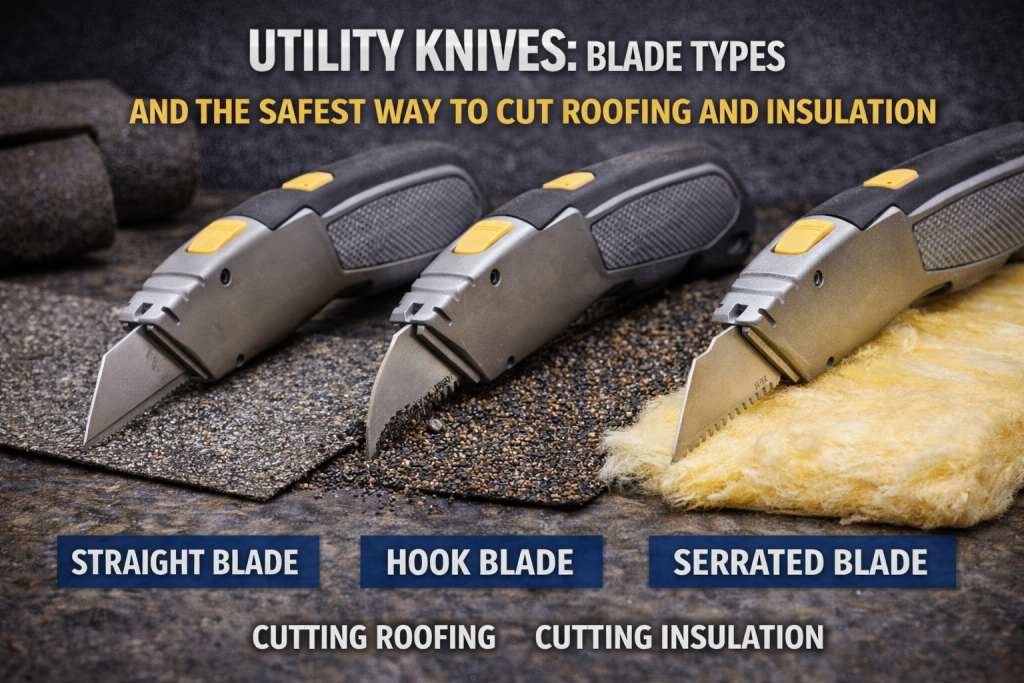
Standard Straight Blades

These are the most common utility knife blades, with a straight cutting edge and snap-off or replaceable design.

Best uses:

  • Drywall
  • Cardboard
  • Foam board
  • Light insulation
  • Packaging

Strengths:

  • Clean, precise cuts
  • Easy to control
  • Widely available

Limitations:

  • Dull quickly on abrasive materials
  • Require frequent blade changes

Standard blades are ideal for general cutting, but they struggle on thick or abrasive roofing materials.

Hook Blades

Hook blades feature a curved cutting edge that pulls material into the blade as you cut.

Best uses:

  • Roofing shingles
  • Vinyl flooring
  • Carpet
  • Rubber membranes
  • Insulation faced with foil or kraft paper

Strengths:

  • Cuts from the surface down
  • Reduces slip-through
  • Safer for layered materials
  • Excellent control

Hook blades are the safest and most effective option for cutting roofing materials because they prevent over-penetration.

Serrated Blades

Serrated utility blades use a saw-like edge to tear through fibrous materials.

Best uses:

  • Fiberglass insulation
  • Mineral wool
  • Carpet padding
  • Thick foam

Strengths:

  • Cuts without compressing material
  • Better on soft or fibrous products
  • Less dragging and tearing

Limitations:

  • Rougher cut edge
  • Not ideal for precision work

Serrated blades are underrated for insulation work and reduce the need to force straight blades through dense fibers.

Snap-Off Blades

Snap-off blades allow you to expose a fresh cutting edge by breaking off dull sections.

Best uses:

  • Light-duty cutting
  • Drywall scoring
  • Repetitive trimming

Limitations:

  • Weaker blade structure
  • Not suitable for roofing or insulation
  • Higher breakage risk

Snap-off blades should not be used on roofing materials or thick insulation.

Safest Way to Cut Roofing Materials

Roofing materials are tough, layered, and abrasive — which increases injury risk.

Best practices:

  • Use a hook blade
  • Cut away from your body
  • Make multiple shallow passes
  • Let the blade pull itself through
  • Keep the blade shallow to avoid decking damage

Hook blades reduce the chance of slipping through shingles and cutting too deep, which protects both the user and the roof surface.

Never force a straight blade through shingles — this is one of the most common causes of hand injuries.

Safest Way to Cut Insulation

Insulation materials vary widely, so blade choice matters.

For fiberglass and mineral wool:

  • Use a serrated blade
  • Compress insulation slightly
  • Use long, steady strokes
  • Cut on a stable surface

For rigid foam:

  • Use a straight blade
  • Score first, then snap
  • Change blades often

For foil-faced insulation:

  • Use a hook blade
  • Cut with light pressure
  • Avoid tearing the facing

Always wear gloves, long sleeves, and eye protection when cutting insulation.

Common Mistakes We See

Using dull blades
Dull blades require more force and slip more easily.

Using straight blades on roofing
This leads to deep cuts, slips, and damaged surfaces.

Cutting toward your hand or leg
Most utility knife injuries are self-inflicted during awkward cuts.

Trying to cut in one pass
Multiple shallow passes are safer and cleaner.

How to Choose the Right Utility Knife Setup

Use straight blades for:

  • Drywall
  • Foam board
  • General trimming

Use hook blades for:

  • Roofing
  • Vinyl
  • Carpet
  • Foil-faced insulation

Use serrated blades for:

  • Fiberglass insulation
  • Mineral wool
  • Carpet padding

Change blades early
Sharp blades are safer than dull ones.

Final Takeaway

Utility knives are only safe when paired with the right blade and cutting technique. Hook blades are the safest choice for roofing, serrated blades work best for insulation, and straight blades are ideal for general cutting.

If you’re forcing the cut or feeling uncomfortable, the blade type is probably wrong. Using the right blade makes the job faster, cleaner, and far safer.

Post comment

Utility Knives Blade types + safest way to cut roofinginsulation

Utility Knives: Blade types + safest way to cut roofing/insulation

Utility knives look simple, but they cause more jobsite injuries than almost any other hand tool. The blade type you use — and how you cut — determines whether the job goes cleanly or ends with a ruined cut, damaged material, or a trip to urgent care.

This guide covers common utility knife blade types, when to use each, and the safest techniques for cutting roofing materials and insulation without unnecessary risk.

Why Utility Knife Choice Matters

Utility knives affect:

  • Cut quality
  • Control and accuracy
  • User fatigue
  • Injury risk
  • Material waste

Most cutting accidents happen not because the blade is sharp, but because the wrong blade or cutting method is used.

Common Utility Knife Blade Types

Standard Straight Blades

These are the most common utility knife blades, with a straight cutting edge and snap-off or replaceable design.

Best uses:

  • Drywall
  • Cardboard
  • Foam board
  • Light insulation
  • Packaging

Strengths:

  • Clean, precise cuts
  • Easy to control
  • Widely available

Limitations:

  • Dull quickly on abrasive materials
  • Require frequent blade changes

Standard blades are ideal for general cutting, but they struggle on thick or abrasive roofing materials.

Hook Blades

Hook blades feature a curved cutting edge that pulls material into the blade as you cut.

Best uses:

  • Roofing shingles
  • Vinyl flooring
  • Carpet
  • Rubber membranes
  • Insulation faced with foil or kraft paper

Strengths:

  • Cuts from the surface down
  • Reduces slip-through
  • Safer for layered materials
  • Excellent control

Hook blades are the safest and most effective option for cutting roofing materials because they prevent over-penetration.

Serrated Blades

Serrated utility blades use a saw-like edge to tear through fibrous materials.

Best uses:

  • Fiberglass insulation
  • Mineral wool
  • Carpet padding
  • Thick foam

Strengths:

  • Cuts without compressing material
  • Better on soft or fibrous products
  • Less dragging and tearing

Limitations:

  • Rougher cut edge
  • Not ideal for precision work

Serrated blades are underrated for insulation work and reduce the need to force straight blades through dense fibers.

Snap-Off Blades

Snap-off blades allow you to expose a fresh cutting edge by breaking off dull sections.

Best uses:

  • Light-duty cutting
  • Drywall scoring
  • Repetitive trimming

Limitations:

  • Weaker blade structure
  • Not suitable for roofing or insulation
  • Higher breakage risk

Snap-off blades should not be used on roofing materials or thick insulation.

Safest Way to Cut Roofing Materials

Roofing materials are tough, layered, and abrasive — which increases injury risk.

Best practices:

  • Use a hook blade
  • Cut away from your body
  • Make multiple shallow passes
  • Let the blade pull itself through
  • Keep the blade shallow to avoid decking damage

Hook blades reduce the chance of slipping through shingles and cutting too deep, which protects both the user and the roof surface.

Never force a straight blade through shingles — this is one of the most common causes of hand injuries.

Safest Way to Cut Insulation

Insulation materials vary widely, so blade choice matters.

For fiberglass and mineral wool:

  • Use a serrated blade
  • Compress insulation slightly
  • Use long, steady strokes
  • Cut on a stable surface

For rigid foam:

  • Use a straight blade
  • Score first, then snap
  • Change blades often

For foil-faced insulation:

  • Use a hook blade
  • Cut with light pressure
  • Avoid tearing the facing

Always wear gloves, long sleeves, and eye protection when cutting insulation.

Common Mistakes We See

Using dull blades
Dull blades require more force and slip more easily.

Using straight blades on roofing
This leads to deep cuts, slips, and damaged surfaces.

Cutting toward your hand or leg
Most utility knife injuries are self-inflicted during awkward cuts.

Trying to cut in one pass
Multiple shallow passes are safer and cleaner.

How to Choose the Right Utility Knife Setup

Use straight blades for:

  • Drywall
  • Foam board
  • General trimming

Use hook blades for:

  • Roofing
  • Vinyl
  • Carpet
  • Foil-faced insulation

Use serrated blades for:

  • Fiberglass insulation
  • Mineral wool
  • Carpet padding

Change blades early
Sharp blades are safer than dull ones.

Final Takeaway

Utility knives are only safe when paired with the right blade and cutting technique. Hook blades are the safest choice for roofing, serrated blades work best for insulation, and straight blades are ideal for general cutting.

If you’re forcing the cut or feeling uncomfortable, the blade type is probably wrong. Using the right blade makes the job faster, cleaner, and far safer.

Post comment