
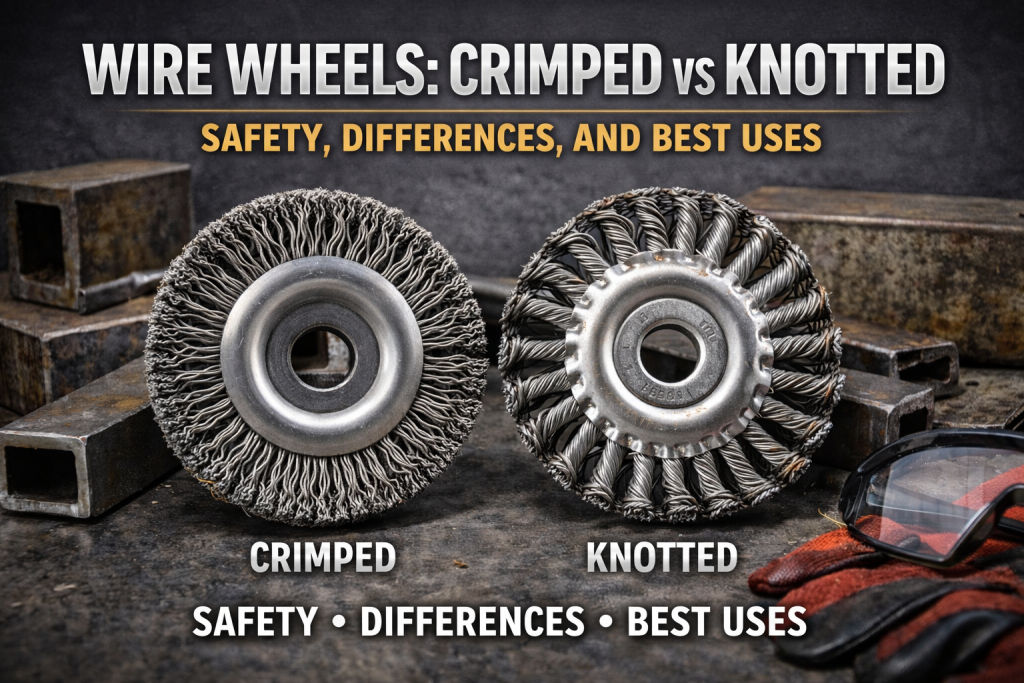
Wire wheels are simple tools that get abused, misused, and misunderstood more than almost any abrasive. Choosing between crimped and knotted wire wheels isn’t just about aggressiveness — it affects finish quality, safety, control, and tool life.
This guide explains the real differences between crimped and knotted wire wheels, when to use each, and how to use them safely without throwing wires across the shop.
What Wire Wheels Are Actually For
Wire wheels are designed for surface cleaning and preparation, not material removal. They’re commonly used to:
- Remove rust and scale
- Strip paint and coatings
- Clean welds
- Prep metal for welding or painting
- Remove slag and spatter
They are not grinding wheels and should never be treated like one.
Crimped Wire Wheels: Lighter Touch, Better Control
Crimped wire wheels use individual wires that are bent or crimped, making them more flexible and forgiving. They’re ideal for lighter cleaning jobs and applications where surface finish matters.
Best uses:
- Light rust removal
- Paint stripping
- Surface cleaning
- Sheet metal
- Thin materials
Strengths:
- Smoother, more controlled action
- Less aggressive
- Better for uneven or delicate surfaces
- Lower kickback
Limitations:
- Shorter lifespan
- Less effective on heavy rust or scale
- Can flatten quickly under pressure
Crimped wire wheels are the right choice when you want cleaning without gouging or damaging the base material.
Knotted Wire Wheels: Aggressive Cleaning Power
Knotted wire wheels use twisted wire bundles, making them far stiffer and more aggressive. They’re built for heavy-duty cleaning where rust, scale, or weld slag won’t come off easily.
Best uses:
- Heavy rust and scale
- Thick steel
- Structural steel
- Weld cleanup
- Concrete form work
- Industrial maintenance
Strengths:
- Aggressive cleaning
- Longer wire life
- Better performance under pressure
- Faster removal of heavy buildup
Limitations:
- Rougher finish
- Higher kickback risk
- Not suitable for thin materials
- Requires better control
Knotted wheels are for tough jobs where speed and aggression matter more than surface finish.
Side-by-Side Comparison
Crimped Wire Wheels
Best for: Light cleaning, prep work
Aggressiveness: Low to moderate
Surface finish: Smoother
Control required: Low
Knotted Wire Wheels
Best for: Heavy rust and scale
Aggressiveness: High
Surface finish: Rougher
Control required: High
Common Mistake: Using Knotted Wheels Everywhere
One of the most common mistakes is using knotted wire wheels for every job. On thin material, this can cause gouging, distortion, or even tear-through. Crimped wheels often do a better job with fewer risks.
Aggressive doesn’t always mean better.
Wire Wheel Safety: This Matters
Wire wheels are one of the most dangerous abrasives when used incorrectly.
Safety essentials:
- Always wear eye protection and a face shield
- Expect wires to eject — it’s normal
- Wear gloves and long sleeves
- Match wheel RPM rating to the grinder
- Never exceed rated speed
- Keep a firm two-handed grip
- Do not side-load the wheel
If wires start shedding excessively or the wheel becomes unbalanced, replace it immediately.
Grinder Speed and Control
Wire wheels work best at controlled speeds. High RPM combined with excessive pressure increases wire breakage and kickback. Let the wheel do the work — pressing harder shortens life and increases risk.
Final Takeaway
Crimped wire wheels are best for lighter cleaning and surface prep, while knotted wire wheels handle heavy rust, scale, and industrial cleanup. Choosing the right wire wheel improves safety, finish quality, and efficiency.
If you’re unsure which wire wheel fits your job, ask — we’ll help match the wheel to the material so you get clean results without unnecessary risk.