
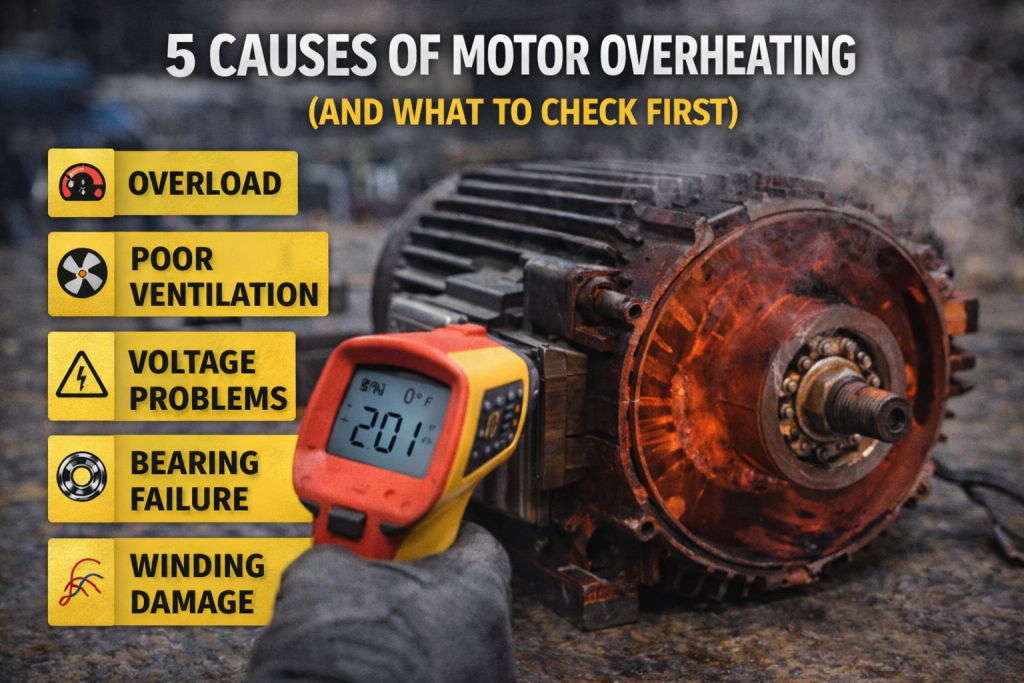
Motor overheating is one of the most common reasons motors fail — and in many cases, it’s preventable. When a motor runs too hot, insulation breaks down, bearings fail, and windings deteriorate long before the motor ever stops turning.
This guide covers the five most common causes of motor overheating, what symptoms to look for, and what you should check first before permanent damage occurs.
Why Motor Overheating Is Serious
Excessive heat:
- Breaks down winding insulation
- Shortens bearing life
- Causes premature motor failure
- Increases energy consumption
- Leads to unplanned downtime
A motor can overheat for weeks before it fails catastrophically. Catching the cause early often saves the motor.
1. Overloading the Motor
Overloading is the number one cause of overheating.
Common overload causes:
- Driven equipment binding or seizing
- Increased process demand
- Incorrect motor sizing
- Mechanical drag
- Worn bearings or belts
What to check first:
- Measure motor amperage under load
- Compare readings to nameplate FLA
- Inspect driven equipment for resistance
If the motor is pulling more current than rated, heat buildup is inevitable.
2. Poor Ventilation or Cooling Airflow
Motors rely on airflow to remove heat. Restricted airflow causes temperatures to rise quickly.
Common airflow issues:
- Blocked cooling vents
- Dirt, dust, or grease buildup
- Damaged or missing cooling fan
- Motor mounted in confined spaces
What to check first:
- Inspect air vents and cooling fins
- Verify fan rotation and condition
- Check clearance around the motor
Even a properly sized motor will overheat if it cannot shed heat.
3. Voltage Problems (Too High, Too Low, or Unbalanced)
Electrical supply issues create excess heat inside the windings.
Common voltage problems:
- Low voltage increases current draw
- High voltage increases core losses
- Voltage imbalance causes uneven heating
- Single-phasing on three-phase motors
What to check first:
- Measure line voltage at the motor terminals
- Check phase balance (should be within 1–2%)
- Inspect connections and contactors
Voltage imbalance as low as 3% can increase winding temperature by over 20%.
4. Bearing Problems
Failing bearings create friction, which translates directly into heat.
Common bearing issues:
- Lack of lubrication
- Over-greasing
- Contaminated grease
- Misalignment
- Worn or damaged bearings
What to check first:
- Listen for unusual noise
- Check bearing temperature
- Inspect grease condition and quantity
Bearing failures often masquerade as electrical problems, but the heat source is mechanical.
5. Winding or Insulation Damage
Internal electrical damage causes localized heating inside the motor.
Common causes:
- Aged insulation
- Previous overheating events
- Moisture ingress
- Ground faults
- Partial shorts
What to check first:
- Perform insulation resistance (megger) testing
- Look for discoloration or burnt odor
- Review motor repair or rewind history
Once insulation begins to fail, overheating accelerates rapidly.
What to Check First: A Quick Diagnostic Order
If a motor is running hot, start here:
- Measure amperage under load
- Inspect ventilation and cleanliness
- Check voltage balance and supply
- Listen and feel for bearing issues
- Test insulation resistance
This sequence catches the most common and least expensive problems first.
Common Mistakes We See
Ignoring nameplate ratings
Motors are designed to operate within specific limits.
Assuming heat is “normal”
Warm is normal. Hot enough to burn is not.
Continuing to run overheated motors
Each overheating cycle permanently damages insulation.
Treating symptoms instead of causes
Cooling fans don’t fix overloads or voltage problems.
When Overheating Means Repair or Rewind
Overheating often indicates the need for:
- Bearing replacement
- Electrical repair
- Insulation restoration
- Full motor rewind
A professional inspection determines whether the motor can be saved or should be replaced.
Final Takeaway
Motor overheating is almost always caused by overload, cooling issues, voltage problems, bearing failure, or winding damage. Checking amperage, airflow, voltage, and bearings first can prevent costly failures and downtime.
If a motor feels hotter than usual, it’s telling you something — and ignoring it is usually the most expensive option.