
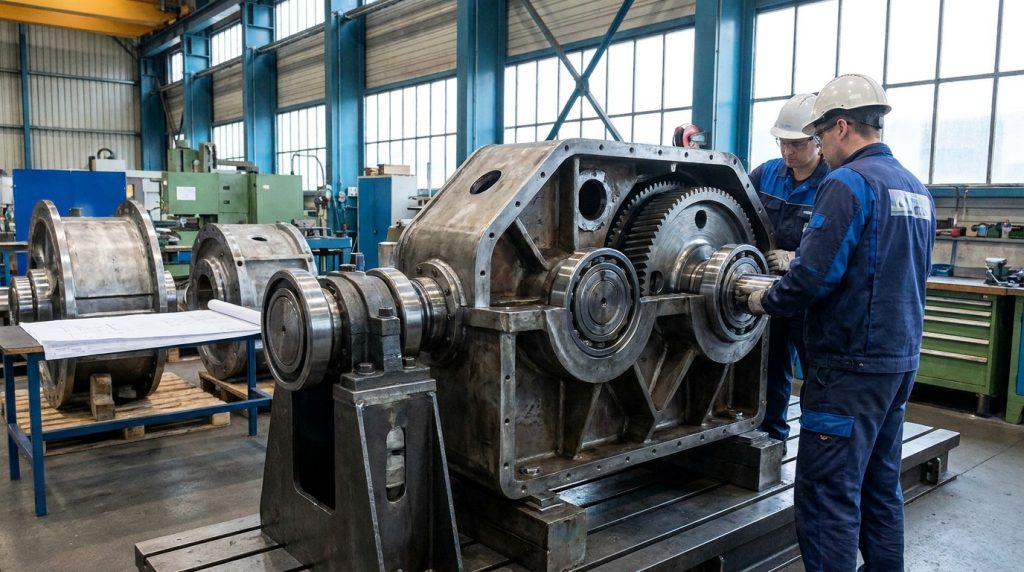
The Case for Custom Industrial Gearboxes: Precision Engineering for Unique Demands
In the demanding world of industrial operations, efficiency, reliability, and longevity are paramount. While standard, off-the-shelf industrial gearboxes serve a vast array of applications, there comes a point where their inherent limitations become a bottleneck to optimal performance. For plant managers, maintenance professionals, industrial engineers, manufacturers, agricultural operators, and equipment buyers, understanding when a custom industrial gearbox is not just a luxury, but a necessity, is crucial for driving productivity and minimizing downtime. This article delves into the complexities of custom industrial gearbox solutions, exploring the scenarios that necessitate them, the design considerations involved, and the significant advantages they offer over conventional units.
When Standard Industrial Gearboxes Fall Short: Identifying the Need for Customization
The decision to invest in a custom industrial gearbox is typically driven by operational requirements that fall outside the scope of readily available catalog components. These situations often arise from unique application parameters, challenging environmental conditions, or stringent performance specifications that standard units simply cannot meet without compromise.
For those exploring the intricacies of custom industrial gearboxes, understanding the importance of proper identification and selection is crucial. A related article that delves into this topic is the Gearbox Identification Checklist, which provides valuable insights on nameplate details, ratio considerations, shaft dimensions, and more. This resource can help ensure that you choose the right gearbox for your specific application needs. You can read the article here: Gearbox Identification Checklist.
Specialized Torque and Speed Requirements
One of the most common drivers for custom gearboxes is the need for highly specific torque and speed ratios. Standard gearboxes are manufactured with predetermined gear teeth counts and module sizes, resulting in a finite set of available ratios. When an application demands a precise, intermediate ratio that isn’t offered, or requires exceptionally high or low torque capacities that exceed standard ratings, customization becomes the only viable path.
Unique Mounting and Integration Challenges
Industrial machinery is rarely designed with a universal mounting interface in mind. Custom gearboxes allow for tailored housing designs, shaft configurations, and bolt patterns to ensure seamless integration into existing or new equipment layouts. This can involve specific flange types, integrated mounting feet, or compact designs to fit within constrained spaces. For complex machinery with intricate mechanical linkages, a standard gearbox might necessitate costly and inefficient adapter plates or structural modifications.
Extreme Environmental Conditions
Many industrial processes operate in environments that are hostile to standard mechanical components. Exposure to high temperatures, corrosive chemicals, abrasive dust, excessive moisture, or extreme vibration can significantly degrade the lifespan and performance of conventional gearboxes. Custom industrial gearboxes can be engineered with specialized materials, enhanced sealing solutions (e.g., multi-lip seals, labyrinth seals), and robust construction to withstand these harsh conditions, ensuring reliable operation where standard units would quickly fail.
When exploring the complexities of custom industrial gearboxes, it’s essential to understand the scenarios where standard units may fall short. For a deeper insight into this topic, you might find the article on industrial supply solutions particularly enlightening, as it discusses various applications and innovations in the field. Custom gearboxes can provide tailored solutions that enhance efficiency and performance, making them a crucial consideration for many industries.
Noise and Vibration Reduction Mandates
In certain industries, particularly those with stringent noise regulations or where operator comfort is a priority, reducing noise and vibration is a critical design consideration. Standard gearboxes can often produce audible noise due to gear meshing, bearing imperfections, or housing resonance. Custom gearboxes can incorporate features like precision-ground gears, helical or double-helical tooth profiles for smoother operation, advanced lubrication systems, and vibration-dampening housing materials to minimize acoustic and mechanical disturbances.
Enhanced Efficiency and Power Density
While standard gearboxes offer acceptable efficiency, custom designs can be optimized to achieve higher levels of efficiency for specific operating points. This can translate to reduced energy consumption and lower operating costs. Furthermore, custom solutions can be designed for increased power density, meaning a smaller, lighter gearbox can deliver the same or even greater power output than a larger standard unit. This is invaluable in space-constrained applications or where weight is a significant factor.
Extended Service Life and Reduced Maintenance Needs
When a critical piece of equipment relies on a gearbox for its primary function, unexpected failures can lead to substantial financial losses. Custom gearboxes can be designed with oversized components, superior lubrication systems, and advanced materials to significantly extend their service life and reduce the frequency of maintenance interventions. This proactive approach to design can lead to a lower total cost of ownership over the equipment’s lifecycle.
The Custom Industrial Gearbox Design and Engineering Process
Developing a custom industrial gearbox is a collaborative effort between the end-user and the engineering team of a specialized manufacturer like CEM Industrial Supply. It’s a meticulous process that begins with a thorough understanding of the application’s demands and concludes with a robust, tailor-made solution.
Initial Consultation and Requirements Gathering
The cornerstone of any successful custom gearbox project is a comprehensive consultation. This involves detailed discussions with the client to understand:
- Application specifics: What is the driven equipment? What is its operational profile?
- Performance metrics: Required input and output speeds, torque (continuous and peak), power, and duty cycle.
- Environmental conditions: Temperature range, presence of contaminants, humidity levels, exposure to chemicals, vibration levels.
- Space constraints: Dimensions of the installation envelope, mounting points, shaft orientations.
- Integration requirements: How the gearbox will connect to the motor and driven load, any specific shaft end configurations.
- Regulatory or industry standards: Any compliance requirements (e.g., API standards for oil and gas, ATEX for explosive atmospheres).
- Desired lifespan and maintenance intervals.
- Budgetary considerations.
Engineering Analysis and Concept Development
Once the requirements are clearly defined, the engineering team performs detailed analyses. This may include:
- Load calculations: Determining the actual forces and stresses the gearbox will experience.
- Thermal analysis: Predicting heat generation and ensuring adequate dissipation.
- Vibration and noise modeling: Simulating potential acoustic and mechanical issues.
- Material selection: Choosing appropriate alloys for gears, shafts, housings, and seals based on strength, wear resistance, and environmental compatibility.
Based on these analyses, conceptual designs are developed. This often involves exploring different gearbox types (e.g., helical, bevel, worm, planetary) and configurations to determine the most suitable approach. CAD software is extensively used to create preliminary designs and 3D models.
Detailed Design and Material Specification
With a chosen concept, the detailed design phase commences. This involves:
- Gear design: Precisely defining tooth geometry, pressure angles, and helix angles to achieve the desired ratios, efficiency, and load-bearing capacity. Standards like AGMA (American Gear Manufacturers Association) or ISO (International Organization for Standardization) are often referenced for gear design best practices.
- Shaft and bearing selection: Calculating shaft diameters to withstand bending and torsional loads, and selecting appropriate bearings (ball, roller, thrust) based on load, speed, and life expectancy.
- Housing design: Creating a robust housing that provides adequate support, protection, and features for mounting and lubrication.
- Sealing solutions: Specifying seals that will effectively prevent ingress of contaminants and egress of lubricant, tailored to the specific environmental challenges.
- Lubrication system design: Developing an appropriate lubrication method (splash, forced, mist) and specifying the correct lubricant type and viscosity.
- Manufacturing drawings and specifications: Generating detailed drawings with all necessary dimensions, tolerances, material callouts, and finishing requirements.
Prototyping and Testing
In some cases, a prototype may be built and subjected to rigorous testing to validate the design and performance. This can include:
- Static load testing: Applying loads to verify structural integrity.
- Dynamic testing: Operating the gearbox under load and at speed to measure torque, speed, efficiency, temperature rise, noise, and vibration.
- Endurance testing: Running the gearbox for extended periods to assess long-term reliability.
Manufacturing and Quality Control
Once the design is finalized and validated, the custom industrial gearbox is manufactured. This requires specialized machining capabilities and strict adherence to quality control procedures.
- Precision machining: Utilizing CNC machinery to achieve tight tolerances on gears, shafts, and housings.
- Heat treatment: Implementing processes like case hardening or induction hardening to improve the wear resistance and strength of critical components.
- Surface finishing: Applying coatings or treatments to enhance corrosion resistance or reduce friction.
- Assembly and inspection: Meticulous assembly by experienced technicians, followed by thorough inspection and performance verification.
Types of Custom Industrial Gearbox Configurations
The term “custom industrial gearbox” encompasses a wide range of modifications and entirely new designs. CEM Industrial Supply offers expertise in tailoring various gearbox types to meet specific needs.
Modified Standard Gearboxes
Often, a standard gearbox can be effectively modified to meet unique requirements. This might involve:
- Altering shaft configurations: Changing shaft lengths, diameters, keyways, or splines.
- Modifying mounting arrangements: Adapting bolt patterns or adding specialized flanges.
- Upgrading seals and bearings: Installing more robust seals or higher-capacity bearings.
- Adjusting gear ratios: Swapping out gear sets to achieve a slightly different ratio within the existing housing.
- Implementing specialized coatings or materials: Applying corrosion-resistant coatings or using hardened steels for specific components.
Fully Custom Designed Gearboxes
For applications with highly unusual demands, a completely new gearbox design may be necessary. This allows for complete freedom in tailoring every aspect of the unit, including:
- Novel gear arrangements: Incorporating unique combinations of gear types or multi-stage designs not found in standard configurations.
- Integrated components: Building in features like hydraulic pumps, brakes, or clutches directly into the gearbox housing.
- Optimized housing geometries: Creating compact or uniquely shaped housings for extremely space-limited applications.
- Advanced lubrication and cooling systems: Designing integrated cooling jackets or specialized internal oil passages.
Specific Gearbox Families Amenable to Customization
- Helical Gearboxes: Highly efficient and capable of transmitting high torque, helical gearboxes are frequently customized for specific ratios, shaft orientations, and mounting configurations.
- Bevel Gearboxes: Used for changing the direction of rotation, custom bevel gearboxes are engineered for precise angle requirements, high shock load capacity, and specialized shaft configurations.
- Worm Gearboxes: Known for their high reduction ratios and self-locking capabilities, custom worm gearboxes might involve specialized materials for worm and gear pairs to handle increased loads or operate in specific environmental conditions.
- Planetary Gearboxes: Offering high torque density and compact design, custom planetary gearboxes are often built for extremely precise output speeds, high shock load resistance, or specific input/output shaft arrangements.
- Spur Gearboxes: While basic, custom spur gearboxes can be designed for specific tooth profiles, materials, and housing configurations to meet precise requirements where other types might be over-engineered.
Applications Driving the Demand for Custom Industrial Gearboxes
The need for custom solutions spans a broad spectrum of industries, each with its own unique challenges and operational demands.
Manufacturing and Automation
In advanced manufacturing facilities, precision and reliability are paramount.
- Robotics and Articulated Arms: Requiring high precision, zero backlash, and compact designs for complex movements.
- Specialty Machinery: Tailored gearboxes for unique production lines, packaging equipment, and material handling systems where standard units cannot integrate seamlessly.
- High-Speed Machining: Gearboxes designed for extremely high input and output speeds with minimal thermal expansion.
Oil and Gas
This sector faces extreme environmental conditions and demands exceptional durability.
- Offshore Drilling Rigs: Gearboxes resistant to saltwater corrosion, extreme temperatures, and heavy shock loads.
- Pumping Systems: Custom units for precise flow control and high-pressure applications.
- Conveyor Systems in Harsh Environments: Gearboxes designed to withstand abrasive dust, petrochemical vapors, and wide temperature fluctuations.
Agriculture
The agricultural sector relies on robust equipment that can handle demanding tasks and varying conditions.
- Forage Harvesters and Balers: Requiring high torque, shock load resistance, and resistance to dust and moisture.
- Irrigation Systems: Custom gearboxes for precise speed control in large-scale irrigation pivots.
- Specialty Farm Equipment: Tailored solutions for unique implements like seeders, spreaders, or specialized harvesting machinery.
Mining and Construction
These industries demand gearboxes built for extreme durability and heavy-duty operation.
- Crushing and Screening Equipment: Gearboxes capable of handling immense shock loads and abrasive materials.
- Conveyor Systems: High-torque units designed for continuous operation in dusty and corrosive environments.
- Tunnel Boring Machines (TBMs): Custom gearboxes for precise control of cutter heads and propulsion systems in challenging subterranean conditions.
Material Handling and Logistics
Efficient movement of goods requires reliable and often specialized drive systems.
- Automated Warehousing Systems: Gearboxes for precise positioning and high-speed operation of automated guided vehicles (AGVs) and sorters.
- Heavy-Duty Cranes and Hoists: High-torque, low-speed gearboxes with integrated braking systems for safe and controlled lifting.
- Specialty Conveyors: Systems designed for unique product handling requirements, such as inclines, declines, or variable speed needs.
Selecting the Right Custom Industrial Gearbox Partner
Choosing the right partner for your custom industrial gearbox needs is as critical as the design itself. CEM Industrial Supply, based in Coldwater, Michigan, brings decades of experience and a deep understanding of industrial drive systems to every project.
Expertise and Technical Acumen
A reputable custom gearbox provider must possess a team of experienced engineers with a thorough understanding of mechanical design principles, gear theory, material science, and various industry standards. This expertise allows them to accurately assess your needs and develop innovative, reliable solutions.
Manufacturing Capabilities and Quality Assurance
The ability to manufacture to precise specifications is crucial. Look for partners with advanced CNC machining, heat treatment capabilities, and robust quality control processes. This ensures that the final product meets all design parameters and performs as expected.
Responsiveness and Customer Service
Effective communication and a collaborative approach are vital throughout the design and manufacturing process. A good partner will be responsive to your inquiries, provide clear updates, and work with you to overcome any unforeseen challenges.
Proven Track Record and References
Inquire about their experience with similar applications and request references from previous clients. A solid track record speaks volumes about their reliability and ability to deliver on promises.
CEM Industrial Supply: Your Partner for Custom Industrial Gearbox Solutions
At CEM Industrial Supply, we understand that standard solutions don’t always fit the intricate needs of modern industry. Our team of experts is dedicated to designing and manufacturing custom industrial gearboxes that deliver unparalleled performance, reliability, and longevity. Whether you require a specialized ratio, a unique mounting configuration, or a gearbox built to withstand extreme conditions, we have the expertise and capabilities to meet your exact specifications.
Addressing Common Concerns and Troubleshooting Custom Gearboxes
While custom gearboxes are engineered for specific applications, like any mechanical component, they can encounter issues. Proactive maintenance and understanding common problems can significantly extend their lifespan.
Common Troubleshooting Scenarios
- Premature Wear: Can be caused by inadequate lubrication, contamination, incorrect material selection, or exceeding load ratings.
- Overheating: May indicate insufficient cooling, overloaded operation, incorrect lubricant viscosity, or bearing issues.
- Excessive Noise/Vibration: Often points to gear misalignment, worn gears, improper bearing lubrication, or resonant frequencies within the housing.
- Shaft Breakage: A sign of fatigue due to excessive bending or torsional loads, often exacerbated by improper shaft-motor alignment.
- Seal Leakage: Caused by worn seals, improper installation, excessive shaft runout, or housing damage.
Preventative Maintenance Strategies
Regular inspection and maintenance are key to preventing issues. This includes:
- Lubricant Analysis: Regularly sampling and analyzing gearbox oil for wear particles, water content, and viscosity changes can provide early warnings of impending failure.
- Temperature Monitoring: Utilizing infrared thermometers or permanent sensors to track operating temperatures.
- Vibration Analysis: Employing portable or online vibration monitoring systems to detect imbalances, bearing defects, or gear issues.
- Visual Inspections: Regularly checking for leaks, unusual noises, and external damage.
- Alignment Checks: Ensuring proper alignment between the motor, gearbox, and driven equipment is critical to preventing excessive stress on shafts and bearings.
Repair and Rebuilding Services for Custom Gearboxes
When a custom industrial gearbox requires attention, it’s essential to work with specialists who understand its unique design. CEM Industrial Supply offers comprehensive repair and rebuilding services for custom gearboxes. Our experienced technicians can diagnose issues, source or fabricate necessary replacement parts, and restore the gearbox to its optimal operating condition, often extending its service life significantly. Our expertise in custom solutions means we can often replicate or improve upon original specifications, ensuring continued optimal performance.
Conclusion: The Strategic Advantage of Custom Industrial Gearboxes
In an industrial landscape increasingly defined by precision, efficiency, and operational resilience, the limitations of standard components can no longer be ignored. Custom industrial gearboxes represent a strategic investment for businesses seeking to overcome unique engineering challenges, optimize performance, and achieve a significant competitive advantage. By partnering with experienced specialists like CEM Industrial Supply, you gain access to the engineering prowess and manufacturing capabilities needed to develop tailor-made solutions that drive your operations forward.
Don’t let standard limitations dictate your operational efficiency. If your application demands more than what off-the-shelf gearboxes can provide, it’s time to explore the world of custom industrial gearbox solutions.
Frequently Asked Questions (FAQs)
Q1: What is the typical lead time for a custom industrial gearbox?
A1: Lead times for custom industrial gearboxes can vary significantly depending on the complexity of the design, the availability of specialized materials, and the current manufacturing schedule. Typically, design and engineering can take several weeks, followed by manufacturing which can range from 8 to 20+ weeks. We provide detailed project timelines during the initial consultation phase.
Q2: Can CEM Industrial Supply work with existing designs or reverse-engineer a worn-out custom gearbox?
A2: Absolutely. CEM Industrial Supply has extensive experience in reverse-engineering existing custom gearboxes. If you have outdated or damaged units with no existing documentation, our engineers can analyze the unit, identify its specifications, and recreate or improve upon the original design for manufacturing. We can also work from your existing design files if available.
Q3: What are the advantages of using helical gears in a custom gearbox versus spur gears?
A3: Helical gears offer several advantages over spur gears, especially in custom applications requiring higher torque transmission, smoother operation, and quieter performance. Their angled teeth engage gradually, resulting in less shock and vibration, leading to higher load-carrying capacity and a longer service life. They are also generally more efficient. Spur gears are simpler and less expensive but are limited to lower torque applications and can be noisier.
Q4: How does CEM Industrial Supply ensure the quality and reliability of a custom gearbox?
A4: Quality and reliability are central to our process. We employ rigorous design reviews, utilize advanced CAD/FEA software for analysis, select high-grade materials, and adhere to strict manufacturing tolerances. Each custom gearbox undergoes comprehensive testing, including performance verification and inspection, before it leaves our facility. We also offer comprehensive warranties on our work.
Q5: What information do I need to provide to get a quote for a custom industrial gearbox?
A5: To provide an accurate quote, we need as much detail about your application as possible. This typically includes required input and output speeds, torque (continuous and peak), shaft orientation and dimensions, mounting requirements, environmental conditions (temperature, contaminants, etc.), duty cycle, desired lifespan, and any specific industry standards or certifications required. The more information you can provide, the more precise our quotation and design will be.