
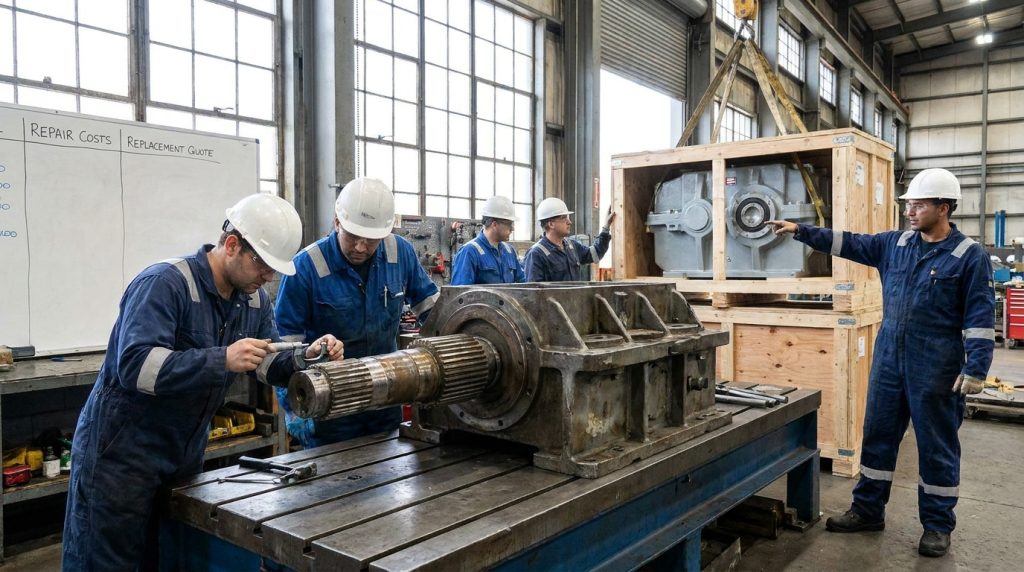
Understanding the True Cost of Industrial Gearbox Management: Repair vs. Replacement
For any industrial operation, from manufacturing floors and agricultural processing plants to critical infrastructure, the reliability and efficiency of machinery are paramount. At the heart of many of these systems lies the industrial gearbox, a robust piece of engineering responsible for transmitting power and modifying torque and speed. When a gearbox begins to exhibit signs of wear, inefficiency, or outright failure, plant managers, maintenance professionals, and equipment buyers face a critical decision: to repair the existing unit or invest in a complete replacement. This choice is far from simple, involving a complex interplay of immediate costs, long-term implications, operational downtime, and the overall health of production processes. This article, presented by CEM Industrial Supply, a trusted partner based in Coldwater, Michigan, delves into a comprehensive cost comparison of industrial gearbox repair versus replacement, empowering you to make the most informed decision for your facility. We will examine the factors that influence this decision, explore the processes involved in each option, and provide practical guidance to minimize costs and maximize uptime.
When considering the decision between repairing or replacing an industrial gearbox, it’s essential to evaluate all aspects of the equipment’s performance and longevity. A related article that discusses the importance of selecting the right tools and equipment for industrial applications can be found at CEM Industrial Supply. This resource provides valuable insights into how the right choices can impact overall operational efficiency, which is crucial when weighing the costs associated with gearbox repair versus replacement.
Assessing Gearbox Condition: The First Step in Cost Evaluation
Before any financial analysis can begin, a thorough assessment of the gearbox’s current condition is indispensable. This diagnostic phase is crucial for understanding the extent of the damage, identifying the root cause of the problem, and accurately estimating the feasibility and cost of repair. Neglecting this initial step can lead to miscalculations, unnecessary expenses, and prolonged downtime.
Indicators of Gearbox Distress
Several observable and measurable signs can signal that an industrial gearbox requires attention. Early detection is key to preventing catastrophic failure and often makes repair a more viable and cost-effective option.
- Audible Anomalies: Unusual noises such as grinding, whining, clicking, or knocking can indicate worn or damaged gear teeth, bearing issues, or improper lubrication. The specific sound often provides clues about the nature of the problem.
- Vibration Patterns: Excessive or abnormal vibrations can point to imbalances, worn bearings, shaft misalignment, or loose components. Modern diagnostic tools can measure and analyze these vibrations to pinpoint the source of the issue.
- Temperature Fluctuations: Unexplained increases in gearbox operating temperature can be a sign of increased friction due to poor lubrication, worn bearings, or overloaded components. Overheating can lead to rapid degradation of seals and internal parts.
- Leaking Lubricants: Oil or grease leaks are not only messy but also indicate a breach in the gearbox’s sealing system. This can lead to lubricant starvation within the unit, accelerating wear and increasing the risk of internal damage.
- Performance Degradation: A noticeable decrease in output speed, a reduction in torque capacity, or increased power consumption by the motor driving the gearbox are clear indicators of internal issues.
- Visual Inspection: External signs like corrosion, physical damage to the housing, or visible signs of lubricant contamination can offer further insights into the gearbox’s health.
Diagnostic Methodologies
A comprehensive diagnosis utilizes a combination of techniques to provide a clear picture of the gearbox’s internal state.
- Vibration Analysis: Using accelerometers and specialized software, maintenance professionals can detect subtle vibrations that indicate bearing defects, gear mesh problems, imbalance, and looseness. Standards such as ISO 10816 provide guidelines for acceptable vibration levels for various machinery types.
- Oil Analysis: Lubricant analysis is a powerful diagnostic tool. By examining a sample of the gearbox oil, technicians can identify wear metals (indicating specific component wear), viscosity changes, contamination (water, dirt, other fluids), and the presence of additive depletion. This proactive approach can forecast potential failures weeks or months in advance.
- Thermography: Infrared cameras can detect hot spots on the gearbox housing, highlighting areas of increased friction or potential bearing failure.
- Performance Testing: Measuring input and output speeds, torque, and power consumption under load can reveal inefficiencies or performance deficits.
- Non-Destructive Testing (NDT): Techniques like magnetic particle inspection (MPI) or dye penetrant testing can detect surface cracks or flaws in critical components that might not be visible to the naked eye.
- Disassembly and Inspection: In many cases, a full internal inspection after partial or complete disassembly is the only way to accurately diagnose the extent of wear and damage. This allows for direct examination of gears, bearings, seals, shafts, and the housing.
The findings from these diagnostic procedures will heavily influence the decision between repair and replacement, providing data to support a cost-benefit analysis.
The Economics of Industrial Gearbox Repair
Repairing an existing industrial gearbox can often be a significantly more cost-effective solution than purchasing a new unit, especially when addressed proactively. The primary driver of this cost advantage lies in leveraging the existing components and infrastructure.
Cost Components of Gearbox Repair
The expenses associated with industrial gearbox repair can be broken down into several categories:
- Labor Costs: This includes the time spent by skilled technicians for disassembly, cleaning, inspection, component replacement, reassembly, and testing. For specialized gearboxes or complex repairs, this can be a substantial portion of the total cost.
- Parts and Materials: This is often the most variable cost. It includes the price of replacement gears, bearings, seals, gaskets, fasteners, and any necessary housing repairs. The availability and cost of OEM (Original Equipment Manufacturer) or high-quality aftermarket parts play a significant role.
- Diagnostic and Testing Expenses: Costs associated with vibration analysis, oil analysis, NDT, and performance testing before, during, and after the repair process.
- Shipping and Logistics: If the gearbox needs to be transported to a specialized repair facility, shipping costs can be considerable, particularly for larger or heavier units.
- Overhead and Profit: The repair shop’s operational costs, including facility maintenance, tooling, and profit margin.
Benefits of Repair
Beyond the immediate cost savings, opting for repair offers several strategic advantages:
- Reduced Capital Expenditure: Repair costs are typically a fraction of the price of a new gearbox, freeing up capital for other critical investments.
- Faster Turnaround Time: In many cases, a repaired gearbox can be operational significantly faster than sourcing and installing a new one, especially if lead times for new units are long. This minimizes production downtime.
- Environmental Sustainability: Repairing and reusing existing equipment reduces waste and the environmental impact associated with manufacturing new components.
- Preservation of Existing Infrastructure: Repairing a gearbox means avoiding the potential costs and complexities associated with modifying existing mounting systems, driveshafts, or control interfaces that a new unit might necessitate.
- Expertise and Knowledge: Specialized gearbox repair services, like those offered by CEM Industrial Supply, possess in-depth knowledge of various gearbox designs and common failure modes, often leading to more effective and durable repairs than a general maintenance team might achieve.
When Repair is the Optimal Choice
- Minor Wear and Tear: When components like bearings, seals, or gaskets are worn but gears and shafts are in good condition.
- Proactive Maintenance: Addressing issues detected early through vibration or oil analysis before significant damage occurs.
- Availability of Parts: If replacement parts are readily available and reasonably priced.
- Cost Sensitivity: When budget constraints make replacement prohibitive.
- Limited Downtime Tolerance: If the repair can be completed within an acceptable window of production interruption.
CEM Industrial Supply in Coldwater, Michigan, offers comprehensive industrial gearbox repair services designed to bring your worn units back to optimal performance, often at a fraction of the cost of a new unit. Our experienced technicians utilize advanced diagnostic tools and quality replacement parts to ensure a lasting solution.
The Case for Industrial Gearbox Replacement
While repair is often the most economical choice, there are situations where replacing an industrial gearbox is the more prudent, albeit more expensive, long-term solution. This decision is typically driven by the extent of damage, the age and obsolescence of the existing unit, or the need for improved performance or efficiency.
Cost Components of Gearbox Replacement
The financial outlay for replacing a gearbox includes several key elements:
- Purchase Price of the New Gearbox: This is the most significant cost and varies widely based on the type, size, power rating, gear ratio, and brand of the gearbox. High-performance or specialized units can be exceptionally expensive.
- Installation Costs: This involves labor for removal of the old unit, preparation of the mounting surface, installation of the new gearbox, alignment of shafts, connection of ancillary systems (lubrication, cooling), and initial commissioning.
- Ancillary Component Upgrades/Replacements: It may be necessary to replace or upgrade associated components like motors, couplings, driveshafts, or mounting hardware to ensure compatibility and optimal performance with the new gearbox.
- Engineering and Design Changes: If the replacement gearbox has different specifications or mounting dimensions, engineering time and potential modifications to the surrounding machinery may be required.
- Disposal Costs: Proper disposal or recycling of the old gearbox can incur fees.
- Downtime: The cost of lost production during the entire replacement process, from shutdown to full operational readiness.
When Replacement is the Optimal Choice
- Severe Internal Damage: When gears, shafts, or housing are significantly worn, cracked, or broken, making repair economically unfeasible or technically impossible to restore to original specifications.
- Obsolete or Outdated Technology: If the existing gearbox is an older design with poor efficiency, limited torque capacity, or lacks features required for modern operations. Replacement with a newer, more efficient unit can lead to long-term energy savings and improved productivity.
- Unavailability of Parts: If critical replacement parts for the existing gearbox are no longer manufactured or are prohibitively expensive.
- Need for Upgraded Performance: When operational requirements have changed, demanding higher torque, different speed ratios, increased duty cycles, or improved environmental resistance that the current gearbox cannot meet.
- Chronic Repair Issues: If a gearbox has a history of frequent failures requiring constant repairs, the cumulative cost of these repairs can quickly exceed the cost of a new unit.
- Warranty and Reliability: New gearboxes come with warranties, offering peace of mind and protection against premature failure.
Evaluating Long-Term Value
When considering replacement, it’s essential to look beyond the initial purchase price. Factors such as energy efficiency, expected lifespan, maintenance requirements, and potential for performance enhancements should be factored into the total cost of ownership (TCO). A modern, energy-efficient gearbox, for instance, can generate significant savings over its operational life, offsetting a higher initial investment.
CEM Industrial Supply can assist in selecting the right replacement gearbox, offering a wide range of options from reputable manufacturers and providing expert guidance on compatibility and integration. For those considering custom solutions to meet unique operational demands, our capabilities extend to designing and supplying specialized gearboxes.
When considering the decision between repairing or replacing an industrial gearbox, it’s essential to evaluate the long-term implications of each option. A related article that provides valuable insights into the various types of abrasives used in industrial applications can enhance your understanding of the broader context of maintenance and repair. For instance, the grit guide for flap discs offers a comprehensive overview of how different materials can impact the efficiency and longevity of machinery, which is crucial when making informed choices about gearbox maintenance.
The Critical Role of Lubrication and Preventative Maintenance
Regardless of whether a gearbox is repaired or replaced, proper lubrication and a robust preventative maintenance (PM) program are the cornerstones of its longevity and operational efficiency. Neglecting these aspects can quickly negate the benefits of a costly repair or a new investment, leading to premature failure.
Lubrication Best Practices
Lubrication is critical for reducing friction, dissipating heat, preventing wear, and protecting internal components from corrosion.
- Correct Lubricant Selection: Using the appropriate type, grade, and viscosity of lubricant is paramount. Consult the gearbox manufacturer’s specifications or industry standards like AGMA (American Gear Manufacturers Association) lubrication standards. CEM Industrial Supply can provide expert advice on selecting the optimal lubricant for your specific application and operating conditions.
- Proper Fill Level: Overfilling or underfilling can lead to lubrication inefficiencies, overheating, or foaming. Adhere strictly to the manufacturer’s recommended fill levels.
- Regular Oil Changes and Filtration: Lubricant degrades over time due to thermal stress, oxidation, and contamination. Establishing a regular oil change schedule based on operating hours, load, and environmental conditions is crucial. Implementing filtration systems can extend lubricant life and protect against wear particles.
- Monitoring Lubricant Condition: As mentioned in the diagnostic section, regular oil analysis is a vital component of a PM program, allowing for early detection of wear and contamination.
Preventative Maintenance Strategies
A well-structured PM program goes beyond just lubrication.
- Scheduled Inspections: Regular visual checks for leaks, unusual noises, and vibrations.
- Vibration Monitoring: Implementing a proactive vibration monitoring program to detect developing issues before they cause failure. This can be done manually with portable analyzers or through continuous monitoring systems.
- Thermographic Surveys: Periodically using infrared cameras to identify potential hot spots.
- Seal Inspection and Replacement: Seals are critical for preventing contamination and lubricant loss. Inspect them regularly and replace them proactively if wear or damage is suspected.
- Alignment Checks: Ensuring proper alignment between the gearbox, motor, and driven equipment minimizes stress on shafts and bearings. Standards like ANSI/ASA (American National Standards Institute/American Society of Shaft Alignment) provide guidelines for precision shaft alignment.
- Bolt Torque Checks: Periodically verifying that all mounting bolts and fasteners are torqued to specification.
The Cost-Benefit of Preventative Maintenance
Investing in a comprehensive PM program is significantly less expensive than the cost of unexpected downtime, emergency repairs, or premature replacement. The savings realized through reduced breakdowns, extended equipment life, and optimized energy consumption far outweigh the costs of implementing and maintaining such a program.
CEM Industrial Supply can work with your team to develop customized preventative maintenance plans for your industrial gearboxes, helping to maximize their lifespan and reliability.
When considering the decision between repairing or replacing an industrial gearbox, it’s essential to weigh the long-term implications of each option. A related article that delves into the importance of maintaining equipment efficiency can be found at this link. Understanding how proper insulation and maintenance can enhance the lifespan of machinery may provide valuable insights that complement your cost comparison analysis.
Making the Informed Decision: A Comparative Framework
When faced with a failing industrial gearbox, the repair versus replacement decision requires a systematic approach that weighs both immediate and long-term financial implications alongside operational considerations.
Key Factors for Comparison
- Total Cost of Ownership (TCO):
- Repair: Initial repair cost + anticipated remaining lifespan of repaired unit + potential for future repairs.
- Replacement: Purchase price of new unit + installation costs + engineering costs + potential for reduced operating costs (energy efficiency) + expected lifespan of new unit + warranty benefits.
- Downtime:
- Repair: Duration of repair process (including shipping if applicable) vs. potential for expedited repair services.
- Replacement: Lead time for new unit + installation time.
- Performance and Efficiency:
- Repair: Can the repair restore the gearbox to its original performance specifications?
- Replacement: Can a new unit offer improved efficiency, higher torque, or other performance enhancements that justify the investment?
- Lifespan and Reliability:
- Repair: What is the projected lifespan of the repaired unit? Is there a warranty on the repair work?
- Replacement: New units typically come with warranties and are designed for a full service life.
- Availability of Parts and Expertise:
- Repair: Are OEM or equivalent parts readily available and affordable? Is there a reputable repair facility with the necessary expertise?
- Replacement: Are there readily available new units that meet specifications?
- Technology Advancement:
- Repair: Does the existing unit represent outdated technology that may hinder future operations?
- Replacement: Can a new unit incorporate advancements in design, materials, or efficiency?
Tools for Decision Making
- Detailed Cost-Benefit Analysis: Quantify all associated costs for both options and project potential savings or losses over a defined period.
- Return on Investment (ROI) Calculation: For replacement, calculate the ROI based on projected energy savings, increased productivity, and reduced maintenance costs.
- Risk Assessment: Evaluate the risks associated with each option, such as the possibility of hidden damage requiring further repairs or the risk of premature failure of a repaired unit.
The CEM Industrial Supply Advantage
At CEM Industrial Supply, we understand that this decision is critical for your operations. Our approach is to provide you with the objective data and expert consultation needed to make the best choice. We can:
- Provide accurate repair quotes after thorough diagnostics, allowing for a direct comparison with new unit pricing.
- Offer insights into the expected lifespan of a properly repaired gearbox.
- Assist in sourcing and selecting appropriate replacement gearboxes that meet or exceed your performance requirements.
- Evaluate the feasibility and cost-effectiveness of custom gearbox solutions for unique applications.
Ultimately, the decision between industrial gearbox repair and replacement is an economic and strategic one. By carefully assessing the condition of your existing unit, understanding the costs and benefits of each option, and partnering with an experienced supplier like CEM Industrial Supply, you can ensure the continued efficiency and reliability of your vital industrial equipment.
Frequently Asked Questions (FAQs) about Industrial Gearbox Repair vs. Replacement
Q1: How long does a repaired industrial gearbox typically last?
A1: The lifespan of a repaired industrial gearbox is highly dependent on the extent of the original damage, the quality of the repair, the replacement parts used, and importantly, the ongoing preventative maintenance program implemented. When repairs are performed by experienced technicians using high-quality parts and the gearbox is then maintained diligently, a repaired unit can often provide many years of reliable service, sometimes approaching the lifespan of a new unit, especially if the core components like the housing and shafts were not significantly compromised.
Q2: What are the signs that indicate a gearbox is beyond repair?
A2: Several factors can render a gearbox irreparable or make repair economically unfeasible. These include: severely worn or cracked gear teeth, damaged shafts (bent or cracked), significant scoring or pitting on bearing races, fractured or heavily damaged housing, or evidence of extensive overheating that has warped critical components. In such cases, the cost and complexity of attempting a repair would likely exceed the price of a new or remanufactured unit.
Q3: Is it always cheaper to repair an industrial gearbox?
A3: Not always. While repair is often the more cost-effective option, especially for minor issues, there are scenarios where replacement is the better long-term investment. If a gearbox has a history of repeated failures, requires extensive internal part replacements making the repair cost close to a new unit, or if a new unit offers significant energy efficiency gains that will lead to substantial operational savings, replacement might be the more economical choice over the life of the equipment.
Q4: What is the typical downtime for industrial gearbox repair versus replacement?
A4: Downtime varies significantly. A typical repair might take anywhere from a few days to several weeks, depending on the complexity of the issue, parts availability, and the repair shop’s workload. Replacement can also vary; if a suitable unit is in stock, installation might be completed within a few days. However, if a specialized or custom gearbox needs to be ordered, lead times can extend to many weeks or even months. Expedited repair services can sometimes significantly reduce downtime for both options.
Q5: How can I determine the total cost of ownership when comparing repair and replacement?
A5: To determine the Total Cost of Ownership (TCO), you must consider more than just the initial price. For repair, include the repair cost, any anticipated minor maintenance during the repaired unit’s remaining lifespan, and the cost of potential future repairs. For replacement, include the purchase price, installation costs, potential engineering or modification costs, energy savings from a more efficient unit, projected maintenance costs over its lifespan, and the value of any warranty. Comparing these figures over a projected operational period will provide a clearer picture of which option is more cost-effective.
At CEM Industrial Supply, we are committed to helping you navigate these complex decisions. Whether you require expert industrial gearbox repair services, are looking for a reliable replacement gearbox, or need a custom-engineered solution, our team in Coldwater, Michigan, is ready to assist. Contact us today to discuss your specific needs and find the most efficient and cost-effective path forward for your operations.