
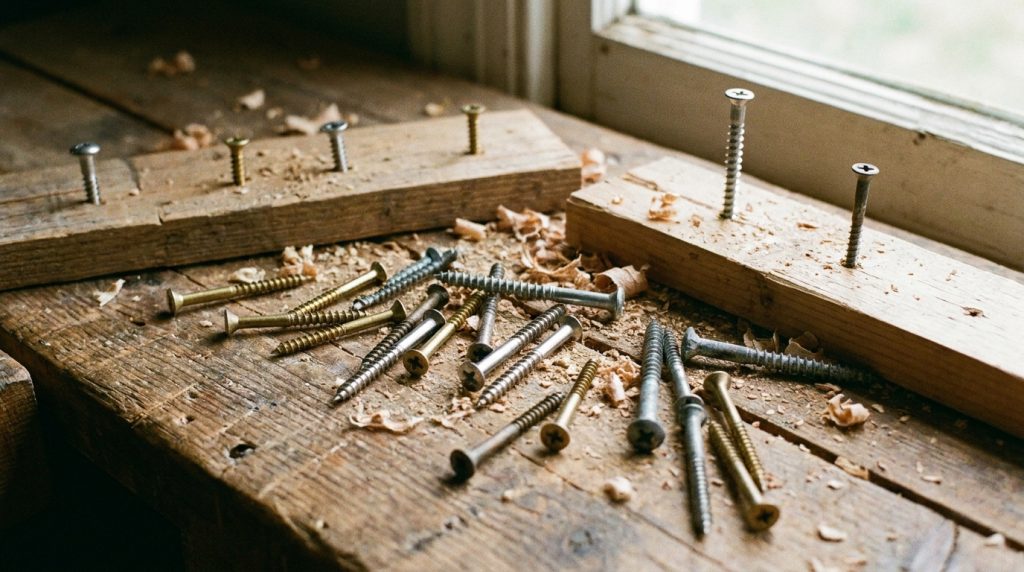
Wood screws are small components with a big impact on job quality, structural performance, serviceability, and long-term durability. Whether you are building cabinets, installing deck boards, assembling furniture, hanging millwork, repairing equipment crates, or specifying fasteners for production, choosing the right wood screw affects holding power, finish appearance, corrosion resistance, and installation speed.
For contractors, maintenance professionals, manufacturers, mechanics, and industrial buyers, the goal is not simply to “buy screws.” The goal is to match the screw type, size, head style, drive, material, coating, and thread design to the wood species, load requirements, environment, and application method.
This guide covers the most common types of wood screws, standard sizes, best applications, selection criteria, installation tips, and purchasing considerations so you can specify and use wood screws with confidence.
Wood screws are threaded fasteners designed to join wood to wood or attach hardware, sheet metal, plastics, and other materials to wood substrates. Unlike machine screws, which are typically used with tapped holes or nuts, wood screws cut into the wood fibers and create their own holding strength through thread engagement.
How Wood Screws Work
A wood screw holds by compressing and displacing wood fibers as its threads advance into the material. The threads provide pull-out resistance, while the shank and head help clamp the connected materials together.
Key parts of a wood screw include:
- Head: The top of the screw that accepts the drive bit and provides bearing surface.
- Drive recess: Phillips, square, Torx/star, slotted, or combination drive.
- Shank: The unthreaded or partially threaded section under the head, depending on screw design.
- Threads: The spiral ridges that grip the wood.
- Point: The tip that starts the screw into the wood.
Wood Screws vs. Other Screws
Wood screws are often confused with drywall screws, deck screws, sheet metal screws, and construction screws. They may look similar, but they are not always interchangeable.
| Fastener Type | Best Use | Key Difference |
|---|---|---|
| Wood screws | Wood-to-wood fastening and attaching hardware to wood | Designed to grip wood fibers and provide strong clamping force |
| Drywall screws | Attaching drywall to wood or metal studs | More brittle than structural wood screws and not intended for load-bearing wood assemblies |
| Deck screws | Exterior decking, fencing, and outdoor wood projects | Corrosion-resistant coatings with bugle or trim heads for outdoor durability |
| Sheet metal screws | Metal-to-metal and light-duty metal-to-wood fastening | Sharp threads designed to cut into thin metal; generally provide less clamping force in wood |
| Construction screws | Framing, structural connections, and general construction | Engineered for higher strength and often code-rated for structural applications |
| Lag screws (lag bolts) | Heavy-duty wood connections and structural timber fastening | Larger diameter fasteners installed with a wrench or socket for high-strength applications |
For related purchasing guidance, consider internal links such as Fastener Materials Guide, Deck Screws vs. Wood Screws, Lag Screws Size Chart, and How to Choose Corrosion-Resistant Fasteners.
For those looking to deepen their understanding of wood screws, including their various types, sizes, and best applications, a related article that provides valuable insights is available at CEM Industrial Supply. This resource offers a comprehensive overview that can enhance your knowledge and help you make informed decisions for your woodworking projects.
Common Types of Wood Screws
Wood screws are available in several designs, each suited for different materials and applications. Choosing the correct type reduces splitting, improves holding power, and improves the finished appearance.
Traditional Wood Screws
Traditional wood screws typically have a tapered body, sharp point, and either full or partial threads. They are commonly used in woodworking, furniture assembly, cabinetry, trim, and general carpentry.
Best applications include:
- Cabinet frames
- Furniture joints
- Wooden boxes and crates
- Interior trim
- Light-duty hardware attachment
Traditional wood screws are often available in brass, stainless steel, and steel with zinc or black oxide finishes.
Construction Wood Screws
Construction screws are engineered for jobsite fastening and are widely used by contractors in framing, blocking, subflooring, and heavy-duty wood assemblies. Many feature self-drilling points, aggressive threads, and high-torque drive systems such as Torx or star drive.
Best applications include:
- Framing connections
- Subfloor installation
- Blocking and bracing
- Wood-to-wood structural assemblies
- General carpentry where higher strength is required
When an application is structural or code-regulated, use screws with appropriate manufacturer data, approvals, or evaluation reports. Do not substitute ordinary wood screws for specified structural fasteners.
Deck Screws
Deck screws are wood screws designed for exterior wood projects. They usually include corrosion-resistant coatings or stainless steel construction to withstand exposure to moisture, treated lumber, and outdoor conditions.
Best applications include:
- Deck boards
- Fence boards
- Outdoor stairs
- Pergolas and garden structures
- Exterior trim and wood siding
For pressure-treated lumber, always verify that the coating or material is compatible with the wood treatment chemicals. Stainless steel is often preferred in highly corrosive environments such as coastal areas, but project requirements and budget should guide final selection.
Cabinet Screws
Cabinet screws are specialized wood screws designed for joining cabinet boxes, face frames, and installation rails. They often feature washer heads, trim heads, or deep drive recesses for secure fastening without damaging finished materials.
Best applications include:
- Cabinet installation
- Face frame assembly
- Drawer boxes
- Mounting cabinets to wall studs
- Shop-built casework
Cabinet screws are commonly used with square or star drives because they provide good torque transfer and reduce cam-out compared with standard Phillips drive.
Pocket Hole Screws
Pocket hole screws are designed for angled pocket hole joinery. They usually have a self-tapping point, wide washer head, and either coarse or fine threads.
Best applications include:
- Face frames
- Cabinet boxes
- Furniture assembly
- Shop fixtures
- Fast production joinery
Use coarse-thread pocket screws for softwoods, plywood, and composite panels. Use fine-thread pocket screws for hardwoods such as oak, maple, and cherry.
Trim Screws
Trim screws have small heads that are easier to conceal in finish carpentry. They are useful where appearance matters and a large head would be visible.
Best applications include:
- Baseboards
- Window and door casing
- Crown molding
- Fine trim
- Light cabinet and millwork installation
Because trim screw heads are small, they provide less bearing surface than standard flat or washer heads. They are best for finish work rather than heavy load-bearing connections.
Lag Screws
Lag screws, often called lag bolts, are heavy-duty fasteners for large wood members and high-load applications. They have coarse threads and hex heads and are typically driven with a wrench, socket, or impact tool.
Best applications include:
- Heavy timber connections
- Mounting ledger boards where specified
- Industrial wood platforms
- Equipment bases
- Structural wood brackets
Lag screws often require pilot holes to prevent splitting and ensure proper installation torque.
Wood Screw Head Types and Best Uses
The head style affects appearance, clamping force, countersinking behavior, and compatibility with hardware.
Flat Head Wood Screws
Flat head screws are designed to sit flush with or below the wood surface when countersunk. They are among the most common wood screw head styles.
Best for:
- Furniture
- Cabinetry
- Hinges
- Flush-mounted hardware
- General woodworking
Use a countersink bit to create a clean recess, especially in hardwoods or finished surfaces.
Round Head Wood Screws
Round head screws have a domed top and sit above the surface. They are often used where the screw head is visible or where the part being fastened is too thin for countersinking.
Best for:
- Decorative hardware
- Light-duty brackets
- Nameplates
- Electrical components mounted to wood
- Restoration work
Pan Head Wood Screws
Pan head screws have a slightly rounded top and a flat bearing surface underneath. They provide good clamping without requiring countersinking.
Best for:
- Metal brackets to wood
- Hinges and plates
- Equipment panels
- Light industrial assemblies
- General maintenance repairs
Oval Head Wood Screws
Oval head screws combine a countersunk underside with a rounded top. They are often used for a more finished appearance than flat head screws.
Best for:
- Decorative trim
- Furniture hardware
- Marine woodworking
- Finished cabinetry
- Restoration projects
Washer Head and Truss Head Screws
Washer head screws and truss head screws provide a larger bearing surface. This helps distribute load and reduce pull-through in softer materials.
Best for:
- Cabinet installation
- Drawer slides
- Thin panels
- Plywood
- Utility fastening
A washer head cabinet screw is a common choice for securing cabinets to wall studs because it provides strong clamping without requiring a separate washer.
Bugle Head Screws
Bugle head screws have a curved underside that helps distribute stress and seat smoothly without tearing the surface as aggressively as a flat head.
Best for:
- Deck boards
- Drywall to wood framing
- Some exterior wood applications
- Softwood fastening
Do not assume every bugle head screw is suitable for structural wood fastening. Match the screw to the application and rating requirements.
For more articles on industrial supply, visit https://cemindustrialsupply.com/news/ for the latest updates.
Wood Screw Drive Types
The drive type affects installation speed, bit engagement, cam-out resistance, and suitability for manual or powered installation.
Phillips Drive
Phillips drive screws are common and widely available. However, they are more prone to cam-out under high torque than square or star drives.
Best for:
- Light-duty woodworking
- Interior repairs
- Low-torque applications
- General-purpose use
Phillips screws are economical, but they may not be ideal for production environments or dense hardwoods.
Slotted Drive
Slotted screws are traditional and often used in restoration, decorative work, or applications requiring a specific historical appearance.
Best for:
- Antique furniture repair
- Decorative hardware
- Restoration carpentry
- Low-volume hand installation
They are not ideal for high-speed installation because the driver can slip out of the slot.
Square Drive
Square drive, also called Robertson drive, provides better bit engagement than Phillips and reduces cam-out.
Best for:
- Cabinetry
- Furniture production
- General woodworking
- Jobsite fastening
- Pocket hole screws
Square drive screws are popular among woodworkers and cabinet shops because they are easy to drive consistently.
Star Drive or Torx Drive
Star drive screws offer excellent torque transfer and reduced cam-out. They are common in construction screws, deck screws, and heavy-duty wood fasteners.
Best for:
- Structural wood screws
- Decking
- Framing
- Dense lumber
- Impact driver installation
For contractors and maintenance teams using cordless impact drivers, star drive screws can improve productivity and reduce stripped heads.
Hex Drive
Hex head and hex washer head screws are driven with sockets or nut drivers. They are common in heavy-duty and utility applications.
Best for:
- Lag screws
- Structural brackets
- Industrial wood assemblies
- Equipment mounting
- Maintenance work
Hex drives are useful when high torque is needed or when the screw head does not need to be flush.
When selecting the right wood screws for your project, it’s essential to consider not only the types and sizes but also how they fit into the broader context of your construction needs. For instance, if you’re working on a project that requires precise movement and stability, you might find it beneficial to explore linear rail systems, which can enhance the overall functionality of your assembly. To learn more about these innovative solutions, you can read about them in this related article on linear rail systems.
Wood Screw Materials and Coatings
Material and finish selection is critical for corrosion resistance, appearance, electrical considerations, and compatibility with treated wood.
Steel Wood Screws
Steel screws are strong and economical. They are commonly used for indoor applications and may be coated for corrosion resistance.
Common finishes include:
- Zinc-plated
- Black oxide
- Phosphate
- Yellow zinc
- Painted or color-matched coatings
Best for:
- Interior carpentry
- Furniture
- Cabinetry
- Dry environments
- General maintenance
Plain steel should not be used in wet or corrosive environments unless protected by an appropriate coating or finish.
Stainless Steel Wood Screws
Stainless steel wood screws offer corrosion resistance for exterior, marine, food-adjacent, and chemical-exposure applications. Common stainless grades include 18-8/304 and 316.
Best for:
- Coastal projects
- Outdoor furniture
- Marine applications
- Food processing maintenance areas
- Exterior trim
- Corrosion-sensitive environments
Type 316 stainless steel generally offers better chloride resistance than 304 stainless, making it a common choice for saltwater or coastal exposure.
Brass Wood Screws
Brass screws are used where appearance, corrosion resistance, or nonmagnetic properties are desired. Brass is softer than steel, so pilot holes are especially important.
Best for:
- Decorative hardware
- Fine furniture
- Marine interiors
- Electrical applications
- Restoration work
Use the correct screwdriver or bit and avoid over-torqueing brass screws, as heads can strip or twist off more easily than hardened steel screws.
Coated Deck and Construction Screws
Many deck and construction screws use proprietary corrosion-resistant coatings. These coatings may be designed for treated lumber, outdoor exposure, or specific manufacturer performance requirements.
Best for:
- Decking
- Fencing
- Outdoor framing
- Pressure-treated lumber
- Exterior construction
Always check the screw manufacturer’s compatibility guidance for treated wood, chemicals, and environmental conditions.
When considering the best types of wood screws for your projects, it’s also important to think about how to store your tools effectively. For insights on this topic, you might find the article on tool storage systems helpful, as it compares Packout style systems and job boxes, providing valuable information on what lasts in various work environments. You can read more about it here. Proper storage can enhance your workflow and ensure that your wood screws and other tools are organized and easily accessible.
Wood Screw Sizes Explained
Wood screw sizing can be confusing because screws are identified by gauge, length, thread type, head style, and sometimes diameter in inches or millimeters. For reliable results, select both diameter and length based on the materials being joined and the load requirements.
Wood Screw Gauge and Diameter
In U.S. sizing, many wood screws are identified by gauge numbers such as #4, #6, #8, #10, #12, and #14. Larger numbers indicate larger screw diameters.
| Screw Size | Approximate Major Diameter | Common Uses |
|---|---|---|
| #4 | 0.112 in. | Small crafts, hinges, and light hardware |
| #6 | 0.138 in. | Trim work, small cabinets, and light-duty fastening |
| #8 | 0.164 in. | General woodworking, cabinetry, and furniture assembly |
| #10 | 0.190 in. | Decking, heavier cabinetry, and utility projects |
| #12 | 0.216 in. | Heavy wood connections and exterior construction |
| #14 | 0.242 in. | Structural applications and heavy-duty fastening |
Actual dimensions may vary by screw standard and manufacturer. For engineered or critical assemblies, verify specifications from the supplier or manufacturer.
Wood Screw Length
Wood screw length is measured from the top of the head to the tip for flat head screws, and from under the head to the tip for pan, round, truss, and hex head screws.
Common wood screw lengths include:
- 1/2 inch
- 5/8 inch
- 3/4 inch
- 1 inch
- 1-1/4 inch
- 1-1/2 inch
- 2 inches
- 2-1/2 inches
- 3 inches
- 3-1/2 inches
- 4 inches and longer
General Length Selection Rule
As a practical guideline, the screw should pass through the top piece and embed deeply into the base material without protruding through the opposite side. For many wood-to-wood joints, aim for at least 1 to 1-1/2 inches of thread engagement in the receiving member when practical.
Examples:
- Fastening 3/4-inch cabinet side to a face frame: #7 or #8 screw, often 1-1/4 inch to 1-1/2 inch depending on joint design.
- Installing 5/4 deck boards: commonly #8 or #10 deck screws around 2-1/2 inches.
- Attaching a 2x bracket to framing: #10, #12, or structural screws depending on load and hardware requirements.
- Mounting light hardware to 3/4-inch plywood: #6 or #8 screws, often 5/8 inch to 1 inch depending on hardware thickness.
Thread Length: Fully Threaded vs. Partially Threaded
Wood screws may be fully threaded or partially threaded.
| Thread Style | Best Use | Benefit |
|---|---|---|
| Fully threaded | Thin materials, hardware-to-wood fastening, and sheet goods | Provides maximum thread engagement along the entire length of the screw |
| Partially threaded | Wood-to-wood clamping applications | Smooth shank helps draw the top piece tightly against the base material for a stronger joint |
| Dual-thread or specialty thread | Decking, structural fastening, and high-volume production | Can improve driving speed, increase clamping force, and help reduce wood splitting |
For joining two pieces of wood, partially threaded screws often provide better clamping because the threads grip only the lower piece while the shank pulls the top piece tight. Fully threaded screws can hold both pieces apart if no clearance hole is used.
Best Applications for Wood Screws by Project Type
The best wood screw for a project depends on the material, environment, load, finish requirements, and installation method.
Cabinetry and Casework
Cabinetry requires accurate fastening, clean appearance, and reliable clamping without splitting panels.
Recommended wood screws:
- #6 to #8 cabinet screws
- Washer head screws for installation
- Pocket hole screws for face frames
- Trim head screws for visible finish areas
- Confirmat screws for particleboard or MDF assemblies where appropriate
Best practices:
- Use pilot holes near panel edges.
- Use coarse threads for plywood and softwood.
- Use fine threads for hardwood face frames.
- Avoid overdriving screws into melamine or veneered panels.
- Use adjustable clutch settings for production consistency.
Furniture Manufacturing and Repair
Furniture applications often involve hardwoods, visible surfaces, and repeated stress at joints.
Recommended wood screws:
- Brass or stainless screws for decorative hardware
- #6, #8, or #10 flat head screws
- Pocket hole screws for concealed joinery
- Trim screws for hidden reinforcement
- Confirmat screws for engineered wood furniture components
Best practices:
- Drill pilot holes in hardwoods.
- Use countersinks for flush heads.
- Match screw finish to hardware.
- Avoid brittle fasteners in load-bearing chairs, tables, or frames.
- Use glue with screws when the joint design calls for permanent assembly.
Decking and Exterior Wood Construction
Decks and outdoor projects require corrosion resistance and proper holding strength under seasonal movement.
Recommended wood screws:
- Coated deck screws
- Stainless steel deck screws
- Structural screws for framing connections where specified
- Trim head stainless screws for exterior trim
- Ledger and connector screws approved for the application
Best practices:
- Confirm compatibility with pressure-treated lumber.
- Use stainless steel near saltwater or high-corrosion exposure.
- Leave proper spacing between deck boards.
- Avoid overdriving heads below the board surface.
- Follow local building codes and manufacturer instructions.
Maintenance and Industrial Repairs
Maintenance professionals often need fasteners for machinery bases, crates, guards, pallets, platforms, and facility repairs.
Recommended wood screws:
- Pan head screws for brackets and plates
- Hex head lag screws for heavy-duty wood connections
- Structural wood screws for framing repairs
- Stainless screws in washdown or chemical areas
- Washer head screws for thin panels or plywood
Best practices:
- Keep an organized assortment of common sizes.
- Match coating to environment.
- Use washers when needed to increase bearing area.
- Replace damaged or corroded screws instead of reusing them in critical areas.
- Document fastener type for repeat maintenance work.
Trim, Millwork, and Finish Carpentry
Finish carpentry requires holding power with minimal visual impact.
Recommended wood screws:
- Trim head screws
- Small flat head screws
- Stainless trim screws for exterior millwork
- Color-matched screws for finished panels
- Brass screws for decorative hardware
Best practices:
- Pre-drill to avoid splitting small profiles.
- Set screws slightly below the surface and fill as needed.
- Use clamps to align trim before fastening.
- Avoid screws that are too large for delicate molding.
- Match the head style to the final finish requirement.
How to Choose the Right Wood Screw
Selecting the right wood screw becomes easier when you evaluate the application step by step.
1. Identify the Materials Being Fastened
Softwood, hardwood, plywood, MDF, particleboard, pressure-treated lumber, and composite materials all behave differently.
General guidance:
- Softwood: Coarse threads usually work well.
- Hardwood: Fine threads and pilot holes help reduce splitting.
- Plywood: Coarse or deep threads improve grip.
- MDF/particleboard: Use screws designed for engineered wood or confirmat screws.
- Pressure-treated lumber: Use compatible coated or stainless screws.
2. Determine Indoor vs. Outdoor Exposure
Interior dry applications can often use zinc-plated or plain steel screws. Outdoor and corrosive environments require better protection.
Consider:
- Moisture exposure
- Salt air
- Chemical exposure
- Wood treatment chemicals
- Temperature changes
- Washdown conditions
When corrosion could create safety, staining, or maintenance problems, choose stainless steel or a coating rated for the environment.
3. Match the Head Style to the Application
Choose the screw head based on whether the screw must sit flush, clamp hardware, remain visible, or distribute load.
Quick guide:
- Flat head: Flush woodworking and countersunk hardware
- Pan head: Brackets, plates, and general hardware
- Washer head: Cabinets, plywood, thin materials
- Trim head: Concealed finish work
- Hex head: Heavy-duty fastening
- Bugle head: Decking and some softwood applications
4. Choose the Right Drive Type
For high-volume installation or dense materials, drive type matters.
Recommended choices:
- Star drive: Best for high torque, construction, decking
- Square drive: Excellent for cabinetry and woodworking
- Phillips drive: Common for light-duty general use
- Slotted drive: Restoration and decorative work
- Hex drive: Heavy-duty and industrial fastening
5. Select Proper Diameter and Length
Use a screw large enough to provide holding strength but not so large that it splits the wood or damages the component.
Consider:
- Thickness of the top material
- Depth available in the base material
- Load direction
- Edge distance
- Wood species
- Required appearance
- Whether the joint is structural or nonstructural
For critical applications, rely on manufacturer load data, engineering specifications, or building code requirements.
Pilot Holes, Countersinking, and Installation Best Practices
Even the best wood screw can fail if installed poorly. Proper drilling and driving techniques improve holding power and reduce defects.
When to Drill Pilot Holes
Pilot holes are recommended when:
- Driving screws into hardwood
- Working near board ends or edges
- Using brass screws
- Installing large-diameter screws
- Fastening into dense lumber
- Preventing splitting in finished work
- Installing lag screws or structural screws that require predrilling
Pilot hole size depends on screw diameter, thread design, and wood density. As a general rule, the pilot hole should be close to the screw’s root diameter, allowing threads to bite without forcing the wood apart.
Clearance Holes for Better Clamping
A clearance hole through the top piece allows the screw to pull the top material tightly against the base material. This is especially important when using fully threaded screws for wood-to-wood joints.
Use a clearance hole when:
- Joining two boards face-to-face
- Pulling a bowed board tight
- Installing furniture components
- Preventing jacking, where the top board lifts away from the lower board
Countersinking and Counterboring
Countersinking creates a tapered recess for flat head screws. Counterboring creates a flat-bottomed hole for plugs, washers, or bolt heads.
Use countersinking for:
- Flat head screws
- Finished furniture
- Hinges
- Cabinet hardware
- Flush surfaces
Use counterboring for:
- Wood plugs
- Heavy-duty assemblies
- Recessed bolt or lag screw heads
- Applications requiring a washer under the head
Driving Screws Correctly
Follow these installation tips:
- Use the correct bit size and type.
- Keep the driver aligned with the screw.
- Use a clutch setting to avoid overdriving.
- Reduce impact force for small or decorative screws.
- Lubricate screws with wax when driving into dense hardwood, if appropriate.
- Replace worn bits before they damage screw heads.
- Stop driving if the screw binds; remove it and inspect the pilot hole.
Overdriving can crush wood fibers, reduce holding strength, strip the recess, or damage coatings that protect against corrosion.
Wood Screw Size and Application Chart
The chart below provides general guidance for common wood screw sizes. Always verify suitability for the specific application, material, and load.
| Application | Common Screw Size | Common Length | Recommended Type |
|---|---|---|---|
| Small hinges and hardware | #4 to #6 | 1/2 in. to 1 in. | Flat, oval, or pan head |
| Interior trim | #6 to #8 | 1 in. to 2 in. | Trim head or flat head |
| Cabinet assembly | #6 to #8 | 1-1/4 in. to 2 in. | Cabinet screw, pocket-hole screw, or flat head |
| Cabinet installation to studs | #8 to #10 | 2-1/2 in. to 3 in. | Washer-head cabinet screw |
| Furniture construction | #6 to #10 | 1 in. to 2-1/2 in. | Flat head, pocket-hole screw, or brass screw |
| Deck boards | #8 to #10 | 2 in. to 3 in. | Coated or stainless steel deck screw |
| Fence boards | #8 to #10 | 1-5/8 in. to 3 in. | Exterior-coated or stainless steel screw |
| Heavy wood brackets | #10 to #14 | 2 in. to 5 in. | Structural screw or hex-head wood screw |
| Timber connections | 1/4 in. and larger | 3 in. and longer | Lag screw or structural wood screw |
Wood Screws for Hardwood, Softwood, and Engineered Wood
Wood type has a major effect on screw performance.
Best Screws for Hardwood
Hardwoods such as oak, maple, birch, walnut, and cherry are dense and can split if screws are installed without preparation.
Recommended features:
- Fine or standard threads
- Sharp points
- Strong drive recess such as square or star
- Pilot holes
- Countersinks for flat head screws
Avoid forcing large screws into hardwood without predrilling. This can split the workpiece or break the screw.
Best Screws for Softwood
Softwoods such as pine, fir, cedar, and spruce are easier to drive into, but they can strip if the screw is overdriven.
Recommended features:
- Coarse threads
- Bugle, flat, or washer heads depending on application
- Corrosion-resistant material for exterior softwoods
- Proper length to prevent pull-out
Use care with cedar and redwood outdoors, as some fasteners may cause staining. Stainless steel is commonly used where staining or corrosion is a concern.
Best Screws for Plywood, MDF, and Particleboard
Engineered wood products require thread designs that hold without crumbling the material.
Recommended features:
- Coarse threads for plywood
- Confirmat screws for particleboard and MDF furniture
- Washer heads for better clamping
- Pilot holes near edges
- Avoid excessive torque
MDF and particleboard have lower edge-holding strength than solid wood, so screw placement and pilot holes are especially important.
Corrosion Resistance and Treated Lumber Compatibility
Fastener corrosion can weaken connections, stain wood, and increase maintenance costs. This is especially important for contractors, industrial buyers, and facility managers purchasing screws in bulk.
Common Corrosion Risks
Corrosion risks include:
- Outdoor moisture
- Saltwater or coastal air
- Pressure-treated lumber chemicals
- Industrial chemicals
- Food processing washdown
- High humidity
- Dissimilar metal contact
Choosing Corrosion-Resistant Wood Screws
Use the following general guide:
| Environment | Suggested Fastener |
|---|---|
| Dry interior | Zinc-plated or plain steel, where appropriate |
| Humid interior | Zinc-plated, corrosion-resistant coated, or stainless steel |
| Exterior general use | Corrosion-resistant coated deck screws or stainless steel |
| Pressure-treated lumber | Fasteners with compatible corrosion-resistant coatings or stainless steel |
| Coastal or marine | 316 stainless steel where maximum corrosion resistance is required |
| Decorative brass hardware | Brass screws installed with properly sized pilot holes |
| Chemical or washdown areas | Stainless steel or another material selected for the specific chemical environment |
For treated lumber, follow both the lumber manufacturer’s and fastener manufacturer’s recommendations.
Buying Wood Screws for Commercial and Industrial Use
Industrial buyers and purchasing teams should evaluate more than unit price. A low-cost screw that strips, corrodes, fails inspection, or slows installation can increase total project cost.
Key Purchasing Criteria
When sourcing wood screws, compare:
- Material grade
- Coating type and compatibility
- Head style
- Drive type
- Thread design
- Screw diameter and length
- Packaging quantity
- Lot traceability if required
- Manufacturer specifications
- Application approvals or test data
- Bit availability
- Installation tool compatibility
Bulk Packaging and Inventory Planning
For contractors, shops, and maintenance departments, stocking the right assortment reduces downtime.
Useful inventory categories include:
- Interior wood screws: #6, #8, #10
- Cabinet screws: washer head and trim head
- Deck screws: coated and stainless
- Structural wood screws: common jobsite lengths
- Lag screws: 1/4 in., 5/16 in., 3/8 in., and larger
- Brass screws: decorative hardware sizes
- Stainless screws: exterior and washdown maintenance
Consider internal links such as Bulk Fastener Purchasing Guide, Screw Size Chart, Stainless Steel Fasteners, and Construction Fasteners for Contractors to support related buying decisions.
Quality Control for Manufacturers
Manufacturers using wood screws in production should standardize specifications to improve consistency.
Recommended steps:
- Create approved fastener lists by product line.
- Test screws in actual materials before production.
- Use torque-controlled drivers.
- Track strip-out, breakage, and splitting issues.
- Specify approved drive bits and replacement intervals.
- Document pilot hole requirements.
- Maintain supplier consistency for critical assemblies.
Common Wood Screw Problems and How to Prevent Them
Many fastening issues can be avoided by matching the screw to the material and using proper installation methods.
Wood Splitting
Causes:
- Screw too large
- No pilot hole
- Fastening too close to edge
- Dense hardwood
- Overdriving
Prevention:
- Drill pilot holes.
- Increase edge distance.
- Use smaller diameter screws.
- Use self-drilling screws where suitable.
- Reduce driver torque.
Stripped Screw Heads
Causes:
- Wrong bit
- Worn bit
- Poor drive alignment
- Excessive torque
- Low-quality screw recess
Prevention:
- Use the correct bit size.
- Replace worn bits.
- Choose square or star drive for higher torque.
- Keep steady pressure on the driver.
- Avoid overdriving.
Screws Pulling Out
Causes:
- Screw too short
- Threads not engaged deeply enough
- Weak substrate
- Oversized pilot hole
- Load exceeds screw capacity
Prevention:
- Use longer screws.
- Increase diameter if appropriate.
- Use washer head or larger head screws.
- Use inserts or anchors for weak materials.
- Follow load-rated fastener requirements for structural work.
Corrosion and Staining
Causes:
- Wrong material or coating
- Treated lumber incompatibility
- Salt exposure
- Dissimilar metals
- Damaged protective coating
Prevention:
- Use compatible coated or stainless screws.
- Avoid damaging coatings during installation.
- Choose 316 stainless for severe marine exposure when appropriate.
- Follow manufacturer recommendations.
- Do not mix incompatible metals in wet environments.
Frequently Asked Questions About Wood Screws
What Is the Best Screw for Wood?
The best screw for wood depends on the application. For general interior woodworking, #8 steel flat head or square drive screws are common. For decking, use coated or stainless deck screws. For cabinets, use cabinet screws or pocket hole screws. For structural work, use approved structural wood screws or specified connectors.
Do Wood Screws Need Pilot Holes?
Pilot holes are not always required, but they are strongly recommended for hardwoods, large screws, brass screws, screws near board ends, and finished work. Pilot holes reduce splitting and improve installation accuracy.
Are Deck Screws the Same as Wood Screws?
Deck screws are a type of wood screw designed for exterior use. They usually have corrosion-resistant coatings, outdoor-rated materials, and thread designs suited for decking. Standard indoor wood screws should not be used for decks unless they are rated for the environment and application.
Can You Use Drywall Screws in Wood?
Drywall screws can fasten drywall to wood studs, but they are not a good substitute for wood screws in furniture, decks, framing, or structural applications. Drywall screws can be brittle and may not provide the clamping or corrosion resistance required for wood assemblies.
What Screw Size Is Best for 2×4 Lumber?
For general 2×4 wood-to-wood fastening, #9, #10, or structural screws in lengths from 2-1/2 inches to 3-1/2 inches are commonly used, depending on the connection. For load-bearing applications, use the fastener type and size specified by the design, code, or hardware manufacturer.
What Screws Should Be Used with Pressure-Treated Wood?
Use screws specifically rated as compatible with pressure-treated lumber. Common choices include approved coated deck screws, exterior construction screws, or stainless steel screws. Always check compatibility with the treatment type and exposure conditions.
Conclusion: Choose Wood Screws Based on Material, Load, and Environment
Wood screws are essential fasteners for contractors, maintenance teams, manufacturers, mechanics, and industrial buyers. The right choice depends on more than size alone. You need the correct screw type, head style, drive, thread design, material, coating, diameter, and length for the job.
For interior cabinetry, square drive cabinet screws or pocket hole screws may be ideal. For decks and fencing, coated or stainless deck screws provide better corrosion resistance. For heavy wood connections, lag screws or structural wood screws may be required. For finish trim, small trim head screws create a clean appearance with minimal patching.
Before placing an order or starting installation, review the wood species, exposure conditions, load requirements, tool setup, and finish expectations. When in doubt, consult manufacturer specifications, building code requirements, or supplier technical data.
If you are sourcing wood screws for a jobsite, maintenance department, production line, or industrial inventory, choose a supplier that can provide consistent sizing, material options, coating guidance, bulk availability, and application support. Review your fastener requirements today and build a wood screw assortment that improves installation quality, reduces downtime, and supports long-term performance.