
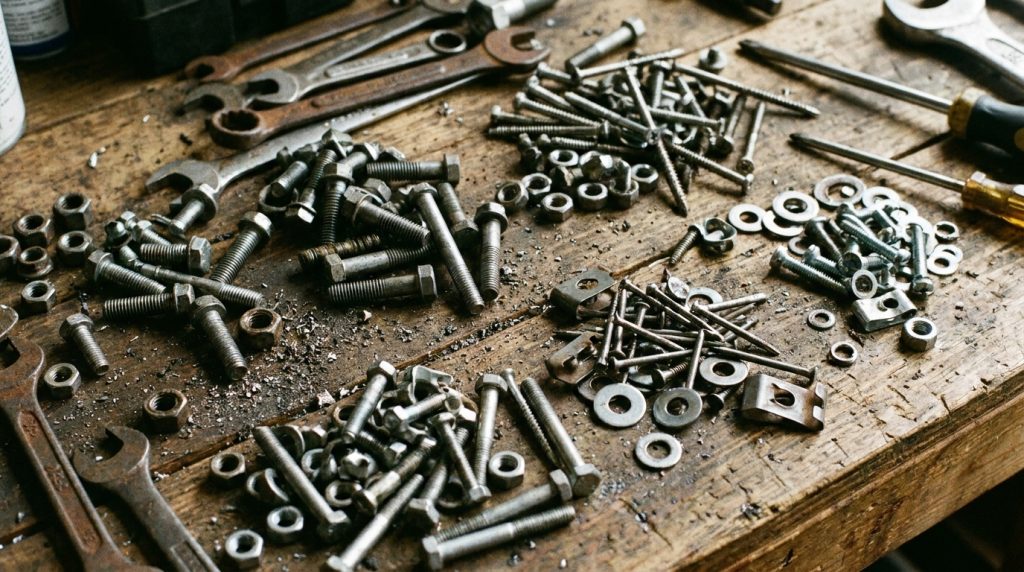
Industrial fasteners are small components with a big job: they hold machines, structures, assemblies, piping, electrical systems, vehicles, and production equipment together under load, vibration, temperature changes, and harsh environmental conditions. Choosing the wrong bolt, nut, screw, washer, rivet, or anchor can lead to downtime, rework, warranty claims, safety hazards, and premature equipment failure.
This industrial fasteners guide is designed for contractors, maintenance professionals, manufacturers, mechanics, plant engineers, procurement teams, and industrial buyers who need practical, reliable guidance. You’ll learn the most common types of industrial fasteners, where they are used, how materials and coatings affect performance, and what to consider before placing an order.
Whether you’re repairing conveyor equipment, assembling structural steel, maintaining fleet vehicles, anchoring machinery, or sourcing fasteners for OEM production, the right selection process starts with understanding the application.
Industrial fasteners are hardware components used to mechanically join, secure, clamp, or position two or more parts. They may create permanent, semi-permanent, or removable connections depending on the design and installation method.
Common industrial fasteners include:
- Bolts
- Screws
- Nuts
- Washers
- Threaded rods
- Studs
- Rivets
- Pins
- Anchors
- Clips and retaining rings
- Inserts
- Hose clamps
- Specialty fasteners
Unlike light-duty household hardware, industrial fasteners are selected based on load requirements, material compatibility, vibration resistance, corrosion exposure, temperature, installation method, standards compliance, and lifecycle cost.
Why Fastener Selection Matters
A fastener is often one of the lowest-cost parts in an assembly, but it can be one of the highest-risk failure points. Incorrect fastener selection can cause:
- Loose joints from vibration or improper torque
- Galvanic corrosion between dissimilar metals
- Thread stripping or galling
- Fatigue cracking under cyclic load
- Broken bolts due to over-tightening
- Leaks in flanged or gasketed joints
- Equipment misalignment
- Structural instability
- Costly shutdowns and emergency repairs
For industrial buyers and maintenance teams, the goal is not simply to buy the cheapest fastener. The goal is to choose the most suitable fastener for the working environment, load conditions, and service expectations.
Common Industrial Applications
Industrial fasteners are used across nearly every sector, including:
- Construction and structural steel
- Manufacturing and assembly lines
- Heavy equipment repair
- Automotive and fleet maintenance
- Oil and gas operations
- Food and beverage processing
- Power generation
- Marine and offshore environments
- Agriculture and material handling
- HVAC, plumbing, and electrical installations
- Mining and aggregate operations
- Aerospace and defense manufacturing
For related sourcing needs, internal linking opportunities may include pages such as /industrial-supplies/, /stainless-steel-fasteners/, /bolts-and-nuts/, /maintenance-repair-operations/, and /bulk-fastener-sourcing/.
For those interested in the broader implications of industrial components, you may find it beneficial to explore the article on motor maintenance, specifically addressing the 5 Causes of Motor Overheating and What to Check First. Understanding the types and uses of industrial fasteners can be crucial in ensuring that machinery operates efficiently, as improper fastening can lead to mechanical failures, including overheating issues in motors. This connection highlights the importance of selecting the right fasteners to maintain optimal performance in industrial applications.
Main Types of Industrial Fasteners
Industrial fasteners come in many forms, each designed for specific joining, holding, or positioning functions. Understanding the differences helps maintenance teams and purchasing departments reduce errors and improve assembly reliability.
Bolts
Bolts are externally threaded fasteners typically used with nuts or threaded holes. They are designed for strong, removable joints and are widely used in construction, machinery, vehicles, and industrial equipment.
Common bolt types include:
- Hex bolts: General-purpose bolts with a hexagonal head, commonly used in machinery, construction, and maintenance.
- Carriage bolts: Rounded head with a square neck, often used in wood-to-metal or security applications.
- Flange bolts: Built-in washer-like flange distributes load and can reduce the need for a separate washer.
- Structural bolts: Heavy-duty bolts used in steel construction and structural connections.
- Eye bolts: Feature a looped head for lifting, rigging, or securing cables.
- U-bolts: U-shaped bolts used to secure pipes, tubes, and round components.
- Shoulder bolts: Have an unthreaded precision shoulder used as a pivot, shaft, or mounting point.
Screws
Screws are externally threaded fasteners that generally form or engage threads in the mating material. They may be used with metal, wood, plastic, composites, or pre-tapped holes.
Common screw types include:
- Machine screws: Used with tapped holes or nuts in equipment, panels, and assemblies.
- Self-tapping screws: Cut or form their own threads in metal or plastic.
- Self-drilling screws: Include a drill point for fastening metal without pre-drilling in many applications.
- Socket head cap screws: High-strength screws with an internal hex drive, common in machinery and tooling.
- Set screws: Used to secure collars, gears, pulleys, and knobs to shafts.
- Sheet metal screws: Designed for fastening thin metal sheets and panels.
- Thread-forming screws: Create threads without removing material, useful in plastic or softer metals.
Nuts
Nuts are internally threaded fasteners used with bolts, studs, or threaded rods. Their design affects joint strength, locking capability, ease of installation, and serviceability.
Common nut types include:
- Hex nuts: Standard general-purpose nuts.
- Heavy hex nuts: Larger and stronger than standard hex nuts, often used with structural bolts.
- Lock nuts: Designed to resist loosening from vibration.
- Nylon insert lock nuts: Use a nylon collar to resist rotation.
- All-metal lock nuts: Suitable for higher-temperature applications where nylon is not appropriate.
- Flange nuts: Include a built-in flange to distribute load.
- Coupling nuts: Used to join threaded rods or studs.
- Wing nuts: Hand-tightened nuts for quick adjustment or removal.
Washers
Washers distribute load, protect surfaces, improve alignment, and help control loosening. While simple, they are critical to joint performance.
Common washer types include:
- Flat washers: Spread load and protect surfaces.
- Hardened washers: Used with high-strength bolts, especially in structural applications.
- Lock washers: Help resist loosening, though not always suitable for critical vibration applications.
- Belleville washers: Conical spring washers used to maintain tension.
- Fender washers: Large outside diameter for increased load distribution.
- Sealing washers: Include rubber or bonded material to reduce leaks.
- Shim washers: Used for spacing, leveling, or alignment.
Rivets
Rivets create permanent or semi-permanent joints by deforming during installation. They are often used when access to the backside is limited or welding is not practical.
Common rivet types include:
- Solid rivets: Strong permanent fasteners used in heavy-duty and aerospace applications.
- Blind rivets: Installed from one side, useful for panels, enclosures, and sheet metal.
- Structural blind rivets: Higher-strength blind rivets for load-bearing applications.
- Drive rivets: Installed by driving a pin into the rivet body.
- Semi-tubular rivets: Used in lighter-duty assemblies and manufacturing.
Anchors
Anchors secure materials to concrete, masonry, brick, or other base materials. They are common in construction, plant maintenance, equipment installation, and facility upgrades.
Common anchor types include:
- Wedge anchors: Heavy-duty concrete anchors for structural and machinery applications.
- Sleeve anchors: Versatile anchors for concrete, brick, and block.
- Drop-in anchors: Internally threaded anchors installed flush into concrete.
- Concrete screws: Removable anchors that cut threads into concrete or masonry.
- Chemical anchors: Use epoxy or adhesive to bond threaded rods or studs into drilled holes.
- Toggle bolts: Used for hollow walls or lighter-duty mounting.
Threaded Rods and Studs
Threaded rods and studs provide continuous threading for custom lengths, mounting, bracing, and joining applications.
Typical uses include:
- Pipe hangers
- HVAC supports
- Equipment leveling
- Flange connections
- Structural bracing
- Suspended platforms
- Electrical conduit supports
- Chemical anchoring systems
Threaded rod is available in plain steel, zinc-plated steel, stainless steel, alloy steel, brass, and other materials depending on the application.
Industrial Fastener Materials and Coatings
Material and coating selection directly affects strength, corrosion resistance, temperature performance, magnetic properties, and compatibility with the base material. This is one of the most important decisions in any industrial fasteners guide.
Common Fastener Materials
| Material | Key Benefits | Common Uses | Considerations |
|---|---|---|---|
| Carbon steel | Cost-effective, strong, and widely available | Construction, industrial machinery, equipment repair, and general maintenance | Requires a protective coating or finish to resist corrosion |
| Alloy steel | High strength, hardness, and wear resistance | Heavy equipment, tooling, structural connections, and high-load assemblies | Often requires a protective finish to prevent corrosion |
| Stainless steel | Excellent corrosion resistance with a clean appearance | Food processing, marine environments, chemical plants, outdoor equipment, and architectural applications | Can gall during installation; anti-seize is often recommended for threaded fasteners |
| Brass | Corrosion resistant, non-sparking, and electrically conductive | Electrical components, plumbing fittings, decorative hardware, and marine applications | Lower strength than steel and not suitable for heavy structural loads |
| Aluminum | Lightweight with good corrosion resistance | Aerospace, transportation, electronics, and lightweight assemblies | Lower strength than steel and threads can be more easily damaged |
| Silicon bronze | Outstanding corrosion resistance, especially in marine environments | Marine hardware, electrical systems, wood construction, and architectural applications | Higher cost than carbon steel and generally lower strength than alloy steels |
| Titanium | Exceptional strength-to-weight ratio and excellent corrosion resistance | Aerospace, chemical processing, medical equipment, and other specialty applications | Expensive, less common, and often reserved for demanding applications |
Carbon Steel Fasteners
Carbon steel is one of the most common fastener materials because it offers a practical balance of strength, availability, and cost. It is used in construction, machinery, automotive repair, MRO work, and general manufacturing.
However, plain carbon steel can rust quickly in outdoor, wet, or chemical environments. It is often zinc plated, hot-dip galvanized, phosphate coated, or otherwise protected.
Stainless Steel Fasteners
Stainless steel fasteners are preferred when corrosion resistance is critical. Common grades include:
- 304 stainless steel: General-purpose corrosion resistance for indoor, outdoor, food processing, and washdown environments.
- 316 stainless steel: Better resistance to chlorides, saltwater, and chemical exposure; commonly used in marine and coastal environments.
- 410 stainless steel: Hardenable stainless often used for self-drilling screws where strength and wear resistance are needed.
Stainless steel is not always stronger than alloy steel, so buyers should verify mechanical requirements before substitution. Stainless fasteners may also experience galling, especially in threaded assemblies. Anti-seize compounds and proper installation speed can help reduce this risk.
Alloy Steel Fasteners
Alloy steel fasteners are used for high-strength applications, such as machinery, dies, presses, heavy equipment, tooling, and automotive systems. Socket head cap screws and high-strength bolts are often made from alloy steel.
These fasteners may be heat-treated for increased tensile strength and hardness. Because corrosion resistance varies, coatings or plating may be required in harsh environments.
Common Coatings and Finishes
| Coating or Finish | Purpose | Typical Applications |
|---|---|---|
| Zinc plating | Provides basic corrosion protection | Indoor equipment, general-purpose fasteners, and light outdoor applications |
| Hot-dip galvanizing | Delivers heavy-duty corrosion protection through a thick zinc coating | Structural steel, outdoor construction, utility infrastructure, and fencing |
| Black oxide | Provides mild corrosion resistance while reducing glare | Tools, industrial machinery, firearms, and indoor equipment |
| Phosphate coating | Improves lubricity and provides corrosion protection when used with oil | Automotive components, industrial assemblies, and threaded fasteners |
| Nickel plating | Increases wear resistance while improving corrosion protection | Decorative hardware, industrial components, and precision equipment |
| Zinc-nickel plating | Offers enhanced corrosion resistance compared to standard zinc plating | Automotive components, heavy equipment, and demanding industrial environments |
| PTFE coating | Reduces friction and provides excellent chemical resistance | Chemical processing equipment, threaded assemblies, and low-friction applications |
| Cadmium plating | Provides corrosion resistance for specialized applications | Aerospace, defense, and legacy military applications where permitted by regulations |
Environmental regulations and industry specifications may restrict certain coatings. Always verify compliance for aerospace, defense, food processing, potable water, or regulated manufacturing applications.
For more articles on industrial supply, visit https://cemindustrialsupply.com/news/ for the latest updates.
Fastener Grades, Standards, and Strength Ratings
Industrial fasteners are commonly specified by grade, class, or standard. These designations help buyers understand mechanical properties such as tensile strength, yield strength, hardness, and proof load.
SAE Fastener Grades
SAE grades are commonly used for inch fasteners in the United States.
| SAE Grade | Head Marking | Typical Use | Relative Strength |
|---|---|---|---|
| Grade 2 | No radial lines | Light-duty general applications, woodworking, and non-critical assemblies | Low |
| Grade 5 | Three radial lines | Automotive repair, industrial equipment, agricultural machinery, and general manufacturing | Medium |
| Grade 8 | Six radial lines | High-strength mechanical assemblies, heavy equipment, structural machinery, and demanding industrial applications | High |
Grade 8 bolts are stronger than Grade 5 bolts, but stronger is not always better. A high-strength bolt may be less ductile and may not be appropriate for every joint. Always match the fastener grade to the engineering requirements.
Metric Property Classes
Metric fasteners use property class markings, such as 8.8, 10.9, and 12.9.
| Metric Class | Approximate Application | Relative Strength |
|---|---|---|
| Class 4.6 | Light-duty fastening, general-purpose assemblies, and non-critical applications | Low |
| Class 8.8 | General industrial equipment, automotive applications, and machinery | Medium to high |
| Class 10.9 | High-strength machinery, heavy equipment, and structural mechanical assemblies | High |
| Class 12.9 | Socket head cap screws, tooling, dies, molds, and other very high-strength applications | Very high |
Metric and inch fasteners are not interchangeable. Mixing thread systems can cause stripped threads, poor engagement, and unsafe assemblies.
ASTM and Industrial Standards
Many industries require fasteners that meet specific ASTM, ASME, ISO, DIN, or industry standards. Examples include:
- ASTM A325 / F3125: Structural bolts for steel construction
- ASTM A193: Alloy and stainless bolting for high-temperature or pressure applications
- ASTM A194: Nuts for high-pressure or high-temperature service
- ASTM F593: Stainless steel bolts, hex cap screws, and studs
- ASTM F594: Stainless steel nuts
- ASME B18 standards: Dimensional standards for bolts, screws, nuts, and washers
- ISO 898: Mechanical properties for metric fasteners
For critical applications, request certificates of compliance, material test reports, lot traceability, and applicable documentation from your supplier.
For those looking to enhance their knowledge about industrial fasteners, a great resource is the Industrial Fasteners Guide: Types, Uses & Selection. This guide provides comprehensive insights into various fasteners and their applications. Additionally, if you’re interested in tools that can complement your fastening projects, you might want to check out this article on top Milwaukee tool deals that you can’t miss in Coldwater, MI, which highlights some excellent options for your toolkit.
How to Select the Right Industrial Fastener
Selecting the right fastener requires more than matching diameter and length. A strong selection process considers load, environment, materials, installation conditions, and maintenance needs.
Identify the Load Requirements
Start by understanding the forces acting on the joint.
Common load types include:
- Tensile load: Pulling force along the fastener axis
- Shear load: Force applied perpendicular to the fastener axis
- Clamp load: Compression force created by tightening
- Dynamic load: Repeated or changing load over time
- Impact load: Sudden shock or force
- Vibration: Repeated movement that can loosen fasteners
For engineered structures, lifting points, pressure systems, and safety-critical equipment, consult applicable codes, engineering drawings, or a qualified engineer.
Match the Fastener to the Base Materials
Fastener and base material compatibility affects strength and corrosion performance.
Examples:
- Steel bolts in aluminum may cause galvanic corrosion if moisture is present.
- Stainless steel fasteners in stainless threaded holes may gall without lubrication.
- Hardened fasteners may damage softer mating threads.
- Self-tapping screws may not hold well in thin or brittle materials.
- Concrete anchors must be selected based on concrete strength, embedment depth, edge distance, and load type.
Consider the Environment
Industrial environments can be demanding. Before choosing a fastener, evaluate exposure to:
- Moisture and washdown
- Salt spray or coastal air
- Chemicals and solvents
- High or low temperatures
- UV exposure
- Abrasion
- Vibration
- Food-grade or sanitary requirements
- Outdoor weathering
- Electrical conductivity or insulation needs
For example, a zinc-plated carbon steel bolt may work well indoors but fail prematurely in a coastal processing facility. In that case, 316 stainless steel or a specialized coating may be more appropriate.
Choose the Correct Thread Type
Thread selection affects fit, strength, installation speed, and resistance to loosening.
Common thread considerations include:
- UNC threads: Coarse inch threads, easier to assemble and more tolerant of dirt or damage.
- UNF threads: Fine inch threads, provide better adjustment and higher tensile stress area.
- Metric coarse threads: Standard for most metric applications.
- Metric fine threads: Used where precise adjustment or vibration resistance is needed.
- Acme threads: Used for power transmission and linear motion.
- Pipe threads: Used for sealing threaded pipe connections.
Never force mismatched threads. If a fastener does not start by hand, stop and verify thread pitch, diameter, and thread system.
Determine Length and Engagement
A fastener must be long enough to provide proper thread engagement but not so long that it bottoms out, interferes with moving parts, or creates a safety hazard.
General considerations:
- Bolts used with nuts should typically extend beyond the nut after tightening.
- Thread engagement in tapped holes depends on material strength and fastener diameter.
- Blind holes require careful length control to prevent bottoming.
- Washers, spacers, coatings, and brackets affect required grip length.
- For anchors, embedment depth is critical to performance.
Account for Installation and Maintenance
Some fasteners are easier to install in confined areas or with specific tools. Consider:
- Head style and wrench clearance
- Drive type, such as hex, socket, Torx, Phillips, or slotted
- Required torque values
- Need for removal and reuse
- Access to both sides of the joint
- Risk of tampering
- Field repair conditions
- Availability of replacement parts
For maintenance operations, standardizing fastener sizes can reduce downtime, simplify inventory, and improve repair efficiency.
Industrial Fastener Comparison Table
The following table provides a practical comparison of common industrial fastener types.
| Fastener Type | Best For | Removable? | Typical Industries | Key Selection Factors |
|---|---|---|---|---|
| Hex bolts | General machinery and structural connections | Yes | Construction, manufacturing, maintenance, and MRO | Grade, coating, thread type, diameter, and length |
| Socket head cap screws | High-strength machinery and precision assemblies | Yes | Tooling, automation, robotics, and industrial equipment | Strength class, available clearance, and drive access |
| Self-drilling screws | Fastening sheet metal without pre-drilling | Usually | HVAC, metal buildings, roofing, and fabrication | Drill point, material thickness, coating, and screw length |
| Machine screws | Panels, components, and tapped-hole assemblies | Yes | Electronics, machinery, control panels, and enclosures | Thread type, head style, drive type, and material |
| Rivets | Permanent fastening of sheet metal and panels | No | Fabrication, aerospace, transportation, and trailer manufacturing | Grip range, material compatibility, and shear strength |
| Wedge anchors | Heavy-duty anchoring into concrete | Semi | Construction, industrial plants, and facility maintenance | Embedment depth, concrete strength, load requirements, and anchor size |
| Threaded rod | Hangers, bracing, and custom-length fastening | Yes | HVAC, plumbing, electrical, construction, and industrial maintenance | Diameter, grade, coating, and required length |
| Lock nuts | Vibration-resistant bolted assemblies | Yes | Machinery, vehicles, conveyors, and heavy equipment | Temperature, reuse requirements, and locking method |
| Washers | Load distribution, spacing, and surface protection | Yes | All industries | Hardness, inside diameter, outside diameter, material, and finish |
Fastener Failure Modes and How to Prevent Them
Understanding how fasteners fail helps teams improve reliability and reduce unplanned maintenance.
Loosening from Vibration
Vibration is common in conveyors, pumps, motors, compressors, vehicles, agricultural equipment, and heavy machinery. It can reduce clamp load and allow nuts or bolts to back off.
Prevention methods include:
- Proper torque control
- Lock nuts
- Thread-locking compounds
- Safety wire in critical applications
- Belleville washers
- Prevailing torque nuts
- Flange fasteners
- Regular inspection schedules
Corrosion and Rust
Corrosion weakens fasteners and can make removal difficult. In severe cases, fasteners may seize, break, or lose load-carrying capacity.
Prevention methods include:
- Selecting stainless steel, galvanized steel, or corrosion-resistant alloys
- Using compatible materials to reduce galvanic corrosion
- Applying protective coatings
- Avoiding water traps in assembly design
- Using anti-seize where appropriate
- Replacing corroded fasteners during scheduled maintenance
Over-Tightening and Under-Tightening
Improper torque is one of the most common causes of fastener problems.
- Over-tightening can stretch, crack, or break fasteners and strip threads.
- Under-tightening can reduce clamp load and allow movement or loosening.
Use calibrated torque wrenches, follow manufacturer specifications, and train technicians on proper tightening procedures. For critical joints, torque-angle or tension-control methods may be required.
Thread Stripping
Thread stripping occurs when threads fail in the fastener or mating material. It is common when fasteners are installed in soft metals, plastics, or damaged tapped holes.
Prevention methods include:
- Using proper thread engagement
- Avoiding cross-threading
- Installing thread inserts where needed
- Matching fastener hardness to application
- Lubricating threads when specified
- Replacing damaged nuts or tapped components
Fatigue Failure
Fatigue occurs when repeated loads create cracks that grow over time. This can happen even if the load is below the fastener’s ultimate strength.
Prevention methods include:
- Maintaining proper preload
- Avoiding joint movement
- Using correct fastener grade
- Reducing stress concentrations
- Inspecting high-cycle equipment regularly
- Replacing fasteners after overload events
Fastener Head Styles and Drive Types
Head style and drive type affect installation speed, tool access, torque capacity, appearance, and tamper resistance.
Common Head Styles
- Hex head: Easy to install with wrenches or sockets; common for bolts.
- Socket head: Compact and strong; used in machinery and tooling.
- Button head: Low-profile rounded appearance; used where clearance matters.
- Flat head: Countersunk for flush installation.
- Pan head: Common in machine screws and sheet metal screws.
- Truss head: Wide, low-profile head for load distribution.
- Flange head: Built-in flange spreads load.
- Round head: Traditional style used in some equipment and fabrication.
Common Drive Types
- External hex: High torque and easy field service.
- Internal hex/socket: Good torque capacity with compact design.
- Torx/star: Reduces cam-out and supports efficient installation.
- Phillips: Common but can cam out under high torque.
- Slotted: Simple but limited torque control.
- Square drive: Good grip, common in construction screws.
- Tamper-resistant drives: Used for security panels, public facilities, and restricted-access equipment.
For production environments, drive type can significantly affect assembly speed, tool wear, and operator fatigue.
Buying Industrial Fasteners: What Industrial Buyers Should Check
Procurement teams need to balance cost, quality, availability, documentation, and supplier reliability. A low unit price may not be a good value if fasteners fail inspection, arrive late, or lack proper certification.
Key Purchasing Criteria
Before buying industrial fasteners, confirm:
- Fastener type and standard
- Diameter, thread pitch, and length
- Material and grade/class
- Coating or finish
- Head style and drive type
- Quantity and packaging
- Certification requirements
- Lot traceability
- Country-of-origin requirements, if applicable
- Industry compliance requirements
- Lead time and stocking availability
- Compatibility with existing inventory
Bulk Fastener Sourcing
For manufacturers, contractors, and maintenance departments, buying fasteners in bulk can reduce unit cost and improve availability. However, bulk sourcing should be managed carefully.
Best practices include:
- Standardize common sizes across equipment where possible.
- Use labeled bins and part numbers.
- Separate metric and inch fasteners clearly.
- Track high-use and critical fasteners.
- Maintain minimum and maximum stock levels.
- Review usage history before large purchases.
- Store fasteners in dry, clean conditions.
- Keep certificates and documentation organized.
Internal linking opportunities may include /vendor-managed-inventory/, /bulk-nuts-and-bolts/, /fastener-kitting-services/, and /mro-procurement/.
When to Request Certifications
Request documentation for:
- Structural applications
- Pressure vessels and piping
- Aerospace and defense
- Automotive production
- Food-grade or sanitary equipment
- Chemical processing
- High-temperature service
- Lifting and rigging components
- Safety-critical machinery
Certificates of compliance and material test reports help verify that fasteners meet required specifications. For critical applications, do not substitute materials, grades, or coatings without engineering approval.
Best Practices for Installation, Storage, and Maintenance
Even the correct fastener can fail if it is installed or stored improperly. Maintenance teams and mechanics should treat fastener handling as part of reliability management.
Installation Best Practices
Follow these practical steps:
- Verify the fastener matches the work order, drawing, or specification.
- Inspect threads for damage, rust, or contamination.
- Clean mating surfaces before assembly.
- Use the correct washer when required.
- Apply lubricant or threadlocker only when specified.
- Hand-start threaded fasteners to avoid cross-threading.
- Tighten in the correct sequence for flanges, covers, and structural joints.
- Use calibrated torque tools for controlled tightening.
- Mark critical fasteners after torque verification when required.
- Recheck joints after break-in where recommended.
Storage Best Practices
Proper storage prevents corrosion, mix-ups, and lost productivity.
Recommended practices include:
- Store fasteners indoors when possible.
- Keep bins sealed or covered.
- Avoid mixing similar-looking grades or thread types.
- Label containers with size, material, grade, and finish.
- Keep stainless, galvanized, and plain steel fasteners separated.
- Rotate stock to use older inventory first.
- Protect fasteners from moisture, chemicals, and metal shavings.
- Use dedicated storage for certified or traceable fasteners.
Maintenance and Inspection Tips
Routine inspection can identify problems before failure occurs.
Look for:
- Rust or pitting
- Missing washers
- Loose nuts or bolts
- Elongated holes
- Cracked heads
- Stretched or necked bolts
- Damaged threads
- Signs of movement around the joint
- Failed coatings
- Leaks around flanges or seals
Replace questionable fasteners rather than reinstalling damaged or corroded hardware. Reusing critical fasteners may not be acceptable in some applications, especially if they have been yielded, torqued beyond specification, or exposed to severe service conditions.
Industry-Specific Fastener Selection Examples
Different industries have different priorities. The best fastener for a dry indoor machine frame may not be suitable for a food processing washdown area or a marine dock.
Construction and Structural Steel
Contractors working with steel connections often require structural bolts, heavy hex nuts, and hardened washers that meet applicable ASTM standards. Proper bolt tension, hole alignment, and installation method are essential.
Common needs include:
- Structural bolts
- Anchor bolts
- Wedge anchors
- Hot-dip galvanized fasteners
- Threaded rod
- Beam clamps
- Concrete screws
Manufacturing and OEM Assembly
Manufacturers often prioritize repeatability, installation speed, and supply consistency. Fastener selection may be driven by assembly line tooling, torque control, automation compatibility, and long-term product performance.
Common needs include:
- Machine screws
- Socket head cap screws
- SEMS screws
- Thread-forming screws
- Rivets
- Inserts
- Custom fastener kits
- Vendor-managed inventory
Maintenance, Repair, and Operations
MRO teams need versatile fasteners that support rapid repairs and reduce equipment downtime. Standardization is especially valuable.
Common needs include:
- Grade 5 and Grade 8 bolts
- Lock nuts
- Flat washers
- Stainless fasteners
- Threaded rod
- Set screws
- Cotter pins
- Retaining rings
- Assorted fastener kits
Automotive, Fleet, and Heavy Equipment
Mechanics and fleet maintenance teams need fasteners that withstand vibration, road salt, heat, impact, and repeated service.
Common needs include:
- Flange bolts and nuts
- Grade 8 hardware
- Metric class 10.9 fasteners
- Wheel studs and lug nuts
- Clips and retainers
- Exhaust fasteners
- Zinc-nickel coated hardware
- Thread-locking fasteners
Food, Beverage, and Sanitary Processing
Food processing facilities require corrosion-resistant fasteners that tolerate washdowns and cleaning chemicals. Stainless steel is common, but fastener design should also avoid contamination traps.
Common needs include:
- 304 and 316 stainless steel fasteners
- Smooth-head screws
- Sealing washers
- Stainless anchors
- Hygienic hardware
- Non-corrosive clamps
Common Mistakes to Avoid When Choosing Industrial Fasteners
Avoiding mistakes can save time, money, and liability.
Choosing Based on Price Alone
The cheapest fastener may have inconsistent dimensions, inadequate coating, poor documentation, or insufficient strength. Evaluate total cost, including downtime, rework, installation time, and failure risk.
Mixing Metric and Inch Hardware
Metric and inch fasteners can look similar but have different thread forms and pitches. Mixing them can cause damaged threads and unsafe joints. Use thread gauges and clear labeling.
Ignoring Corrosion Conditions
Indoor-rated fasteners may fail quickly outdoors, in washdown areas, or around chemicals. Consider the actual operating environment, not just the installation location.
Substituting Grades Without Approval
Replacing a specified fastener with a different grade, material, or coating can change joint behavior. Higher strength, different hardness, or alternate coatings may create new problems.
Reusing Damaged Fasteners
Fasteners with stretched threads, rounded heads, corrosion, cracks, or unknown history should not be reused in important applications.
Quick Industrial Fastener Selection Checklist
Use this checklist before ordering or installing fasteners:
- What parts or materials are being joined?
- Is the joint permanent or removable?
- What loads will the fastener experience?
- Is the load static, dynamic, tensile, shear, or impact?
- Will the fastener face vibration?
- Is the environment wet, corrosive, hot, cold, or chemical-exposed?
- What material is required?
- What coating or finish is appropriate?
- What grade, class, or standard is specified?
- What diameter, thread pitch, and length are needed?
- Is a washer, nut, insert, or anchor required?
- Is torque control required?
- Are certifications or traceability needed?
- Are there industry or safety standards to meet?
- Is the fastener available in the quantity and packaging needed?
Conclusion: Build Stronger, Safer Assemblies with the Right Industrial Fasteners
Industrial fasteners are essential to safe construction, reliable machinery, efficient maintenance, and consistent manufacturing. The right choice depends on more than size alone. Material, grade, coating, thread type, load conditions, environment, standards compliance, and installation method all influence performance.
For contractors, mechanics, maintenance teams, manufacturers, and industrial buyers, a structured selection process helps reduce failures, control costs, and improve uptime. Use this industrial fasteners guide as a practical starting point, and always verify critical applications against engineering requirements, industry standards, and supplier documentation.
If you’re sourcing fasteners for a project, production line, repair program, or facility maintenance inventory, work with a knowledgeable industrial supplier that can help you match the right fastener to the job. Explore related product categories such as bolts, nuts, washers, stainless steel fasteners, anchors, threaded rod, and MRO supplies—or contact a fastener specialist to review your application and build a dependable sourcing plan.