
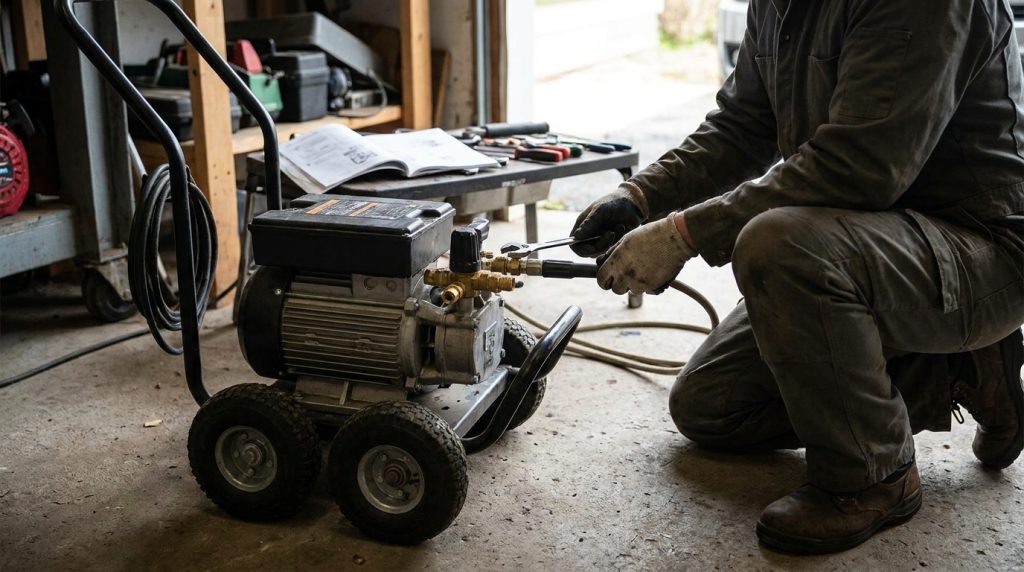
Pressure washer maintenance is one of the simplest ways to protect your equipment investment, reduce downtime, and keep cleaning jobs running safely. Whether you operate a pressure washer in a shop, on a farm, at a fleet yard, around a manufacturing facility, or for property maintenance in Coldwater, Branch County, or Southern Michigan, regular service keeps the pump, engine, hoses, nozzles, and fittings working as designed.
As an industrial supply team working with contractors, maintenance crews, agricultural operations, and facility managers, CEM Industrial Supply sees the same pattern often: most pressure washer failures are preventable. The problems usually start small—dirty inlet screens, old pump oil, cracked hoses, clogged nozzles, loose fittings, or improper winter storage. Left alone, those small issues can turn into pump failure, pressure loss, leaks, unsafe hose bursts, or hard-starting engines.
A well-maintained pressure washer delivers:
- More consistent pressure and flow
- Longer pump and engine life
- Safer operation for employees and crews
- Better cleaning results
- Lower repair costs
- Less unplanned downtime
- Improved fuel and energy efficiency
Pressure washers are hard-working machines. They handle water, heat, vibration, chemicals, dirt, sand, and repeated start-stop cycles. That makes preventive maintenance essential—not optional.
At CEM Industrial Supply, we regularly help local customers source the maintenance items that keep pressure washers dependable, including hoses, quick couplers, spray nozzles, fittings, lubricants, degreasers, safety supplies, hand tools, and shop maintenance products. The following guide is designed to help you build a practical pressure washer maintenance routine that works in real-world industrial and commercial environments.
Proper maintenance of your pressure washer is crucial for ensuring its longevity and optimal performance. For those interested in tools and their maintenance, a related article that provides valuable insights is available at this link: Pliers: Types, Uses, and the Best Options for Every Job. This article discusses various types of pliers and their applications, which can be beneficial for anyone looking to enhance their tool maintenance skills, including those used in pressure washer upkeep.
Understanding the Main Components of a Pressure Washer
Before building a maintenance schedule, it helps to understand the key parts of the machine. Most pressure washer maintenance tasks are simple, but knowing what each component does makes troubleshooting much easier.
Pump
The pump is the heart of the pressure washer. It takes incoming water and pressurizes it before sending it through the hose and spray gun. Most commercial and industrial units use triplex plunger pumps, while smaller consumer units may use axial cam pumps.
Common pump maintenance needs include:
- Checking pump oil
- Changing pump oil at recommended intervals
- Inspecting seals for leaks
- Cleaning inlet screens
- Preventing cavitation from poor water supply
- Protecting the pump from freezing temperatures
Pump problems are often expensive, so this is one area where preventive maintenance pays off quickly.
Engine or Electric Motor
Gas-powered pressure washers use small engines that require standard engine maintenance, including oil changes, air filter service, fuel system care, and spark plug inspection.
Electric pressure washers use motors that require less frequent service but still need attention to cords, switches, ventilation, wiring, and electrical safety.
For industrial settings, always match the pressure washer to the duty cycle. A light-duty machine used for heavy commercial cleaning will wear out quickly, regardless of how well it is maintained.
Hoses and Connections
High-pressure hoses carry pressurized water from the pump to the spray gun. These hoses are exposed to abrasion, kinking, dragging, vehicle traffic, chemicals, and weather.
Inspect hoses frequently for:
- Bulges
- Cuts
- Abrasion
- Soft spots
- Leaks near crimps
- Damaged fittings
- Flattened or kinked areas
A failed pressure washer hose is not just inconvenient—it can be dangerous. CEM Industrial Supply carries hose-related supplies, fittings, couplers, clamps, and accessories commonly used by maintenance teams to keep equipment safe and operational.
Spray Gun, Wand, and Nozzles
The spray gun controls the water flow. The wand directs the spray, and the nozzle determines spray angle and cleaning intensity. Worn or clogged nozzles can reduce cleaning performance and cause pressure irregularities.
A nozzle that appears “mostly fine” may still be worn enough to reduce pressure. For crews that clean daily, nozzle replacement should be treated as routine maintenance.
Unloader Valve
The unloader valve redirects water flow when the trigger is released. It prevents pressure from building dangerously inside the system. A faulty unloader can cause pressure spikes, pump strain, pulsing, or overheating.
Because the unloader is critical for safety and pump life, it should be inspected whenever you notice irregular pressure or unusual cycling.
Water Supply System
Pressure washers depend on an adequate water supply. If the unit cannot get enough water, the pump may cavitate, overheat, or fail prematurely.
Always verify:
- Adequate water flow in gallons per minute
- Clean inlet filter or screen
- Proper hose diameter
- No collapsed supply hose
- No air leaks in the inlet side
- Water source is not contaminated with sediment
In rural areas of Branch County and Southern Michigan, well water, farm wash bays, and outdoor tanks can sometimes introduce sediment or debris. Filtration is especially important in these conditions.
Daily Pressure Washer Maintenance Checklist
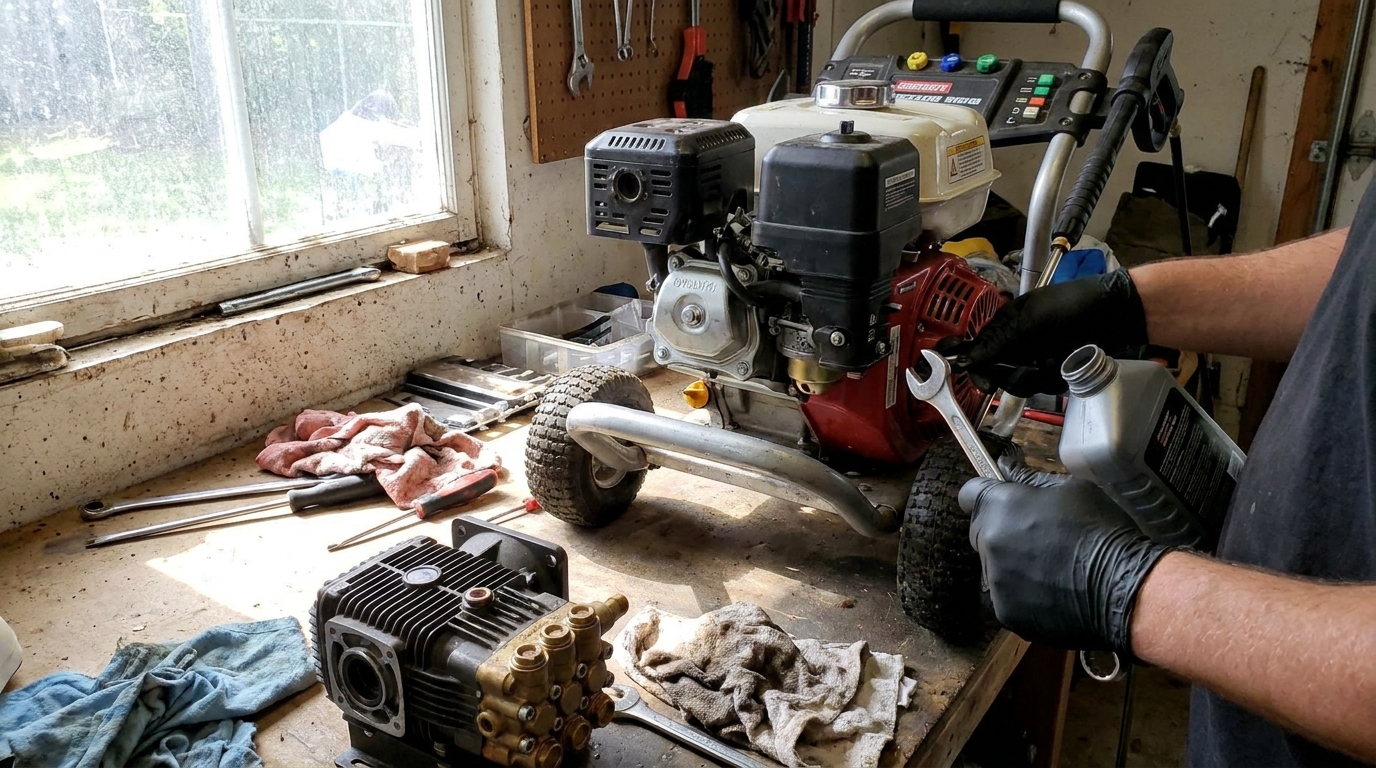
For commercial or industrial use, daily pressure washer maintenance should be quick, visual, and consistent. A five-minute inspection before use can prevent hours of downtime later.
Before Each Use
Use this checklist before starting the pressure washer:
- Check engine oil level on gas-powered units
- Check pump oil level if your pump has a sight glass or dipstick
- Inspect hoses for cuts, bulges, or leaks
- Verify fittings and quick couplers are secure
- Inspect spray gun and wand for damage
- Confirm the correct nozzle is installed
- Check water inlet screen for debris
- Make sure the water supply is fully turned on
- Verify fuel level and fuel condition on gas units
- Confirm electrical cords and GFCI protection on electric units
- Look for loose bolts, vibration damage, or missing guards
- Clear the work area of trip hazards and bystanders
This daily inspection is especially important for shared equipment. When several employees use the same pressure washer, small problems can go unreported unless the inspection process is standardized.
During Operation
While the pressure washer is running, pay attention to how it sounds and feels. Operators should stop the machine if they notice:
- Sudden pressure loss
- Pulsing or surging pressure
- Unusual vibration
- Pump knocking
- Smoke from the engine
- Water leaking from pump seals
- Hose swelling
- Trigger gun sticking
- Burner problems on hot water units
- Unusual chemical odor or fuel smell
Never ignore a change in performance. Pressure washers often give warning signs before a major failure.
After Each Use
At the end of the job:
- Turn off the pressure washer according to the manufacturer’s instructions
- Release pressure from the system
- Disconnect hoses carefully
- Drain water from hoses and spray gun
- Flush detergent or chemical lines with clean water
- Wipe dirt and overspray from the unit
- Coil hoses without kinks
- Store nozzles where they will not be lost or damaged
- Check for leaks that appeared during use
- Store the machine in a clean, dry area
For crews in Coldwater and surrounding Southern Michigan communities, end-of-day draining is particularly important during spring and fall temperature swings. A machine left with water inside can freeze overnight and crack pump components.
Please visit our latest post at https://cemindustrialsupply.com/news/ for more information.
Weekly and Monthly Pressure Washer Maintenance
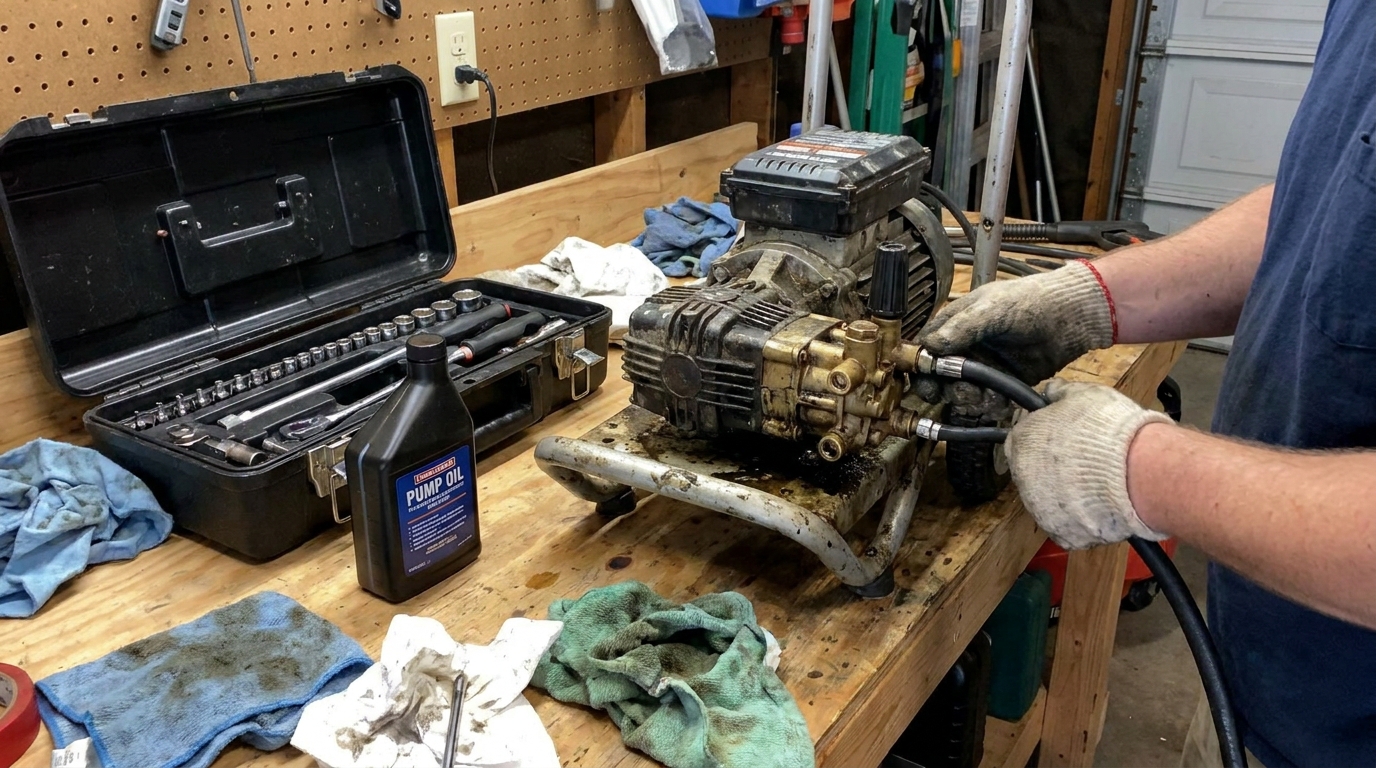
Daily checks are the foundation, but weekly and monthly maintenance keeps the system reliable over time. Your exact schedule should follow the equipment manufacturer’s manual, but the following guidelines work well for many commercial users.
Weekly Maintenance Tasks
For pressure washers used several times per week, complete these tasks weekly:
- Clean the water inlet filter
- Inspect and clean spray nozzles
- Check all hose connections
- Inspect quick couplers for wear or corrosion
- Check tire pressure on portable units
- Clean dirt and debris from the engine or motor area
- Inspect belts on belt-drive units
- Verify the unloader is operating smoothly
- Check detergent pickup tube and filter
- Lubricate moving parts if specified by the manufacturer
Nozzle cleaning should be done carefully. Never use a soft metal object that can enlarge the nozzle opening. A damaged nozzle can affect spray pattern, pressure, and cleaning performance.
Monthly Maintenance Tasks
Monthly pressure washer maintenance should be more detailed:
- Inspect pump oil condition
- Tighten accessible fasteners
- Inspect frame and mounting points
- Check engine air filter
- Inspect spark plug condition on gas engines
- Test safety devices
- Inspect electrical cords and plug ends
- Check burner components on hot water units
- Inspect fuel lines
- Inspect chemical hoses for brittleness
- Look for corrosion around fittings and valves
If your pressure washer is used in a harsh environment—salt, fertilizer, manure, chemicals, heavy mud, or industrial grease—you may need to shorten the maintenance interval.
Maintenance Schedule Table
| Maintenance Task | Daily | Weekly | Monthly | Seasonal |
||:|:|:|:|
| Inspect high-pressure hose | Yes | Yes | Yes | Yes |
| Check engine oil | Yes | | Yes | Yes |
| Check pump oil | Yes | | Yes | Yes |
| Clean inlet screen | Yes | Yes | | Yes |
| Flush chemical system | Yes | | | Yes |
| Inspect nozzles | Yes | Yes | Yes | Yes |
| Inspect quick couplers | | Yes | Yes | Yes |
| Check air filter | | | Yes | Yes |
| Change engine oil | | | As needed | Yes |
| Change pump oil | | | As needed | Yes |
| Winterize pump | | | | Yes |
| Inspect belts | | Yes | Yes | Yes |
| Check spark plug | | | Yes | Yes |
This table is a general guide. Always follow the pressure washer manufacturer’s recommended service intervals for your specific model.
Proper pressure washer maintenance is crucial for ensuring optimal performance and longevity of your equipment. For those looking to enhance their cleaning capabilities, it’s beneficial to explore related topics such as essential construction supplies. You can find valuable insights in this article on essential construction supplies, which covers a range of tools and materials that can complement your pressure washing tasks. By understanding the right supplies to use alongside your pressure washer, you can achieve better results and maintain your equipment more effectively.
Pump Maintenance: Protecting the Most Expensive Component
Pump failure is one of the most common and costly pressure washer problems. Good pump maintenance starts with clean water, proper oil, and correct operating habits.
Check and Change Pump Oil
Many commercial pressure washer pumps use oil to lubricate internal components. If the pump has a sight glass, the oil level should usually be near the center of the glass when the machine is level.
Watch for:
- Milky oil, which may indicate water contamination
- Dark or burnt oil
- Low oil level
- Metal particles
- Oil leaking around seals
Pump oil should be changed according to the manufacturer’s schedule. A common recommendation is after the first 50 hours of use and then every 3 months or 500 hours, but this varies by pump brand and model.
Use the correct pump oil. Do not assume engine oil and pump oil are interchangeable. CEM Industrial Supply can help customers source appropriate lubricants, oil drain tools, absorbents, funnels, and shop supplies for routine pressure washer service.
Prevent Pump Cavitation
Cavitation happens when the pump does not receive enough water. Air bubbles form and collapse inside the pump, causing damage to internal parts. It may sound like gravel or knocking inside the pump.
Common causes of cavitation include:
- Water supply flow too low
- Supply hose too small
- Kinked inlet hose
- Dirty inlet filter
- Air leaks on inlet fittings
- Water tank not feeding properly
- Long or restrictive supply hose
To prevent cavitation:
- Use a supply hose with adequate diameter
- Keep inlet hose runs as short as practical
- Clean inlet screens regularly
- Ensure the water source can meet the machine’s GPM rating
- Avoid running the pump dry
- Repair leaking fittings immediately
Avoid Overheating the Pump
Many operators damage pumps by leaving the pressure washer running with the trigger released for too long. When the trigger is not pulled, water recirculates through the pump and heats up quickly.
Best practice:
- Do not let the unit run in bypass mode for extended periods
- If you need to pause for more than a minute or two, shut the unit down
- Use thermal relief protection where applicable
- Train operators not to walk away from a running pressure washer
Overheating can damage seals, valves, and packings. It can also create unsafe pressure conditions.
Proper maintenance of your pressure washer is essential for ensuring its longevity and optimal performance. For those looking to dive deeper into the topic, you might find the article on Pressure Washer Maintenance particularly helpful. It covers various tips and techniques that can help you keep your equipment in top shape, ultimately saving you time and money in the long run. Regular upkeep not only enhances efficiency but also prevents costly repairs down the line.
Engine and Motor Maintenance for Reliable Starts
Pressure washer maintenance is not complete without caring for the power source. A perfect pump will not help if the engine will not start or the motor trips breakers.
Gas Engine Maintenance
For gas pressure washers, maintain the engine just like other small industrial engines.
Key tasks include:
- Check oil before each use
- Change oil at recommended intervals
- Use fresh fuel
- Replace or clean the air filter
- Inspect the spark plug
- Check fuel lines for cracks
- Keep cooling fins clean
- Inspect recoil starter rope
- Avoid stale fuel during storage
In Southern Michigan, where seasonal use is common, stale gasoline is a major cause of starting problems. If the unit will sit for more than 30 days, consider draining the fuel system or using a fuel stabilizer according to the engine manufacturer’s recommendations.
Electric Motor Maintenance
Electric pressure washers require less engine-style maintenance, but they still need inspection.
Check regularly for:
- Damaged power cords
- Loose plug ends
- Tripped GFCI devices
- Overheating motor housing
- Blocked ventilation openings
- Water intrusion
- Switch problems
- Damaged extension cords
Use only properly rated extension cords, and avoid undersized cords that can cause voltage drop and motor damage. In wet environments, electrical safety is critical. Always follow OSHA requirements, manufacturer instructions, and facility lockout/tagout procedures where applicable.
Hot Water Pressure Washer Burner Maintenance
Hot water pressure washers add another system: the burner. These units are common in industrial cleaning, fleet washing, agriculture, and grease removal.
Burner maintenance may include:
- Checking fuel filters
- Inspecting burner nozzle
- Cleaning electrodes
- Inspecting coil for soot buildup
- Checking thermostat operation
- Verifying airflow
- Inspecting fuel pump pressure
- Checking for leaks
If your hot water unit produces smoke, soot, poor heating, or fuel odor, stop using it and have the burner system inspected. Combustion issues can become serious safety hazards.
Hose, Fitting, Nozzle, and Accessory Maintenance
Pressure washer hoses and accessories take a beating. They are dragged across concrete, pulled around corners, exposed to chemicals, and often stored improperly. Keeping these parts in good condition improves both safety and productivity.
High-Pressure Hose Inspection
A pressure washer hose is a wear item. Even a high-quality hose has a service life. Inspect hoses before each use and remove damaged hoses from service immediately.
Replace the hose if you see:
- Wire braid exposure
- Bulges or bubbles
- Deep cuts
- Cracked outer cover
- Leaks at fittings
- Kinks that do not relax
- Flattened sections
- Severe abrasion
Do not repair high-pressure hoses with tape, clamps, or makeshift fittings. A failed hose can inject water into skin or cause serious injury.
Quick Couplers and Fittings
Quick couplers make setup faster, but worn couplers can leak, disconnect unexpectedly, or restrict flow.
Maintenance tips:
- Keep couplers clean
- Replace worn O-rings
- Inspect locking balls and collars
- Apply appropriate lubricant if recommended
- Match fittings by size and pressure rating
- Avoid mixing incompatible metals when corrosion is a concern
CEM Industrial Supply supports maintenance teams with industrial fittings, adapters, hose accessories, thread sealants, hand tools, and related shop supplies needed for equipment upkeep.
Nozzle Care and Selection
Nozzles are small but critical. The wrong nozzle can damage surfaces, reduce cleaning efficiency, or create unsafe recoil.
Common pressure washer nozzle colors:
| Nozzle Color | Spray Angle | Common Use |
||:||
| Red | 0° | Very concentrated spray; use with extreme caution |
| Yellow | 15° | Heavy-duty cleaning on durable surfaces |
| Green | 25° | General cleaning |
| White | 40° | Light cleaning and rinsing |
| Black | Soap/low pressure | Detergent application |
A worn nozzle can make the machine seem weak because the opening enlarges over time. If pressure drops gradually and everything else checks out, compare the nozzle with a new one.
Detergent and Chemical System Maintenance
Chemical injectors and detergent lines can clog or degrade if not flushed.
After using detergents:
- Run clean water through the chemical line
- Remove chemical pickup from detergent container
- Check the filter at the end of the pickup tube
- Inspect tubing for brittleness
- Store detergents according to label directions
- Use chemicals compatible with your pressure washer
For industrial cleaning, using the correct degreaser, cleaner, or detergent matters. CEM Industrial Supply provides cleaning and janitorial supplies, degreasers, absorbents, PPE, and related maintenance products for shops, plants, farms, and service crews.
Seasonal Pressure Washer Maintenance in Southern Michigan
Coldwater, Branch County, and Southern Michigan experience freezing temperatures, humid summers, mud season, road salt, agricultural debris, and long storage periods. Seasonal maintenance is especially important in this region.
Spring Start-Up Checklist
Before the first heavy use of the season:
- Inspect the entire unit for winter damage
- Check pump oil and engine oil
- Install fresh fuel if needed
- Inspect hoses and fittings
- Clean inlet screen
- Test spray gun and wand
- Check tires and frame
- Inspect electrical cords
- Start the unit and check for leaks
- Verify pressure output
- Flush old antifreeze or pump saver according to instructions
If the pressure washer was stored improperly over winter, watch closely for cracked pump manifolds, leaks, or damaged seals.
Summer Use Considerations
During hot weather and heavy cleaning season:
- Avoid running the pump in bypass too long
- Keep engine cooling areas clean
- Store the unit out of direct sun when possible
- Check hoses for heat damage
- Monitor workers for heat stress
- Keep fresh water supply available
- Use PPE appropriate for chemicals and splash hazards
Summer is also a high-use period for fleet washing, agricultural cleaning, construction equipment washdowns, and facility maintenance. Increase inspection frequency during peak use.
Fall Maintenance
Fall is the time to prepare for freezing temperatures.
Recommended tasks:
- Complete oil changes before storage
- Replace worn hoses and fittings
- Flush chemical systems
- Clean dirt and debris from frame and engine
- Inspect pump for leaks
- Treat or drain fuel system
- Plan winterization before the first freeze
Do not wait until the first hard freeze. In Southern Michigan, early cold snaps can arrive quickly.
Winterizing a Pressure Washer
Winterization is one of the most important pressure washer maintenance tasks in cold climates. Water left in the pump, hose, gun, or coil can freeze and expand, cracking expensive parts.
Basic winterizing steps typically include:
- Shut off water supply.
- Disconnect and drain hoses.
- Remove spray wand and gun, then drain.
- Flush detergent system with clean water.
- Add pump antifreeze or pump saver according to manufacturer instructions.
- Protect engine fuel system.
- Store indoors if possible.
- Cover the unit to keep dust and moisture off.
Hot water units with coils require extra attention because water can remain trapped inside. Follow the manufacturer’s specific winterization procedure.
Troubleshooting Common Pressure Washer Problems
Even with good maintenance, issues can happen. The table below can help identify likely causes.
Pressure Washer Troubleshooting Table
| Problem | Common Causes | What to Check |
||||
| Low pressure | Worn nozzle, clogged inlet filter, poor water supply, air leak | Nozzle, inlet screen, hose, fittings |
| Pulsing pressure | Air in system, clogged nozzle, faulty unloader, water restriction | Bleed air, clean nozzle, inspect unloader |
| Pump leaking water | Worn seals, loose fittings, freeze damage | Pump head, seals, fittings |
| Pump oil is milky | Water entering oil chamber | Pump seals, oil condition |
| Engine hard to start | Stale fuel, dirty air filter, bad spark plug | Fuel, filter, plug |
| Engine stalls under load | Fuel restriction, clogged filter, unloader issue | Fuel system, unloader |
| No detergent draw | Wrong nozzle, clogged injector, blocked pickup tube | Soap nozzle, injector, tube filter |
| Hose leaks | Damaged hose, bad O-ring, worn fitting | Hose cover, crimps, couplers |
| Excessive vibration | Loose bolts, pump issue, engine problem | Mounts, pump, engine |
| Hot water unit smokes | Burner issue, bad fuel, airflow problem | Burner nozzle, filter, air adjustment |
If a pressure washer shows signs of major pump failure, electrical problems, fuel leaks, or burner malfunction, stop using it until it can be properly serviced.
Safety Tips for Pressure Washer Maintenance and Operation
Pressure washers are powerful tools. Even smaller machines can cause injury if used incorrectly. Safety should be part of every maintenance program.
Personal Protective Equipment
Recommended PPE may include:
- Safety glasses or face shield
- Waterproof gloves
- Steel-toe or safety-toe boots
- Hearing protection
- Long pants
- Chemical-resistant apron or suit when needed
- Respirator if chemicals or mist hazards require it
CEM Industrial Supply offers safety products and PPE commonly used in industrial cleaning, maintenance shops, manufacturing facilities, and field service work.
Safe Operating Practices
Follow these practices:
- Never point the spray gun at people or animals
- Keep hands and feet away from the spray stream
- Do not use a zero-degree nozzle unless absolutely necessary
- Avoid spraying electrical panels, outlets, or live equipment
- Use proper ventilation for gas engines and hot water units
- Do not operate gas units indoors
- Secure the work area from pedestrians
- Watch for slippery surfaces
- Use caution on ladders or elevated platforms
- Release pressure before disconnecting hoses
- Lock out equipment before maintenance where required
High-pressure injection injuries are medical emergencies. If water or chemical penetrates the skin, seek immediate medical care.
Chemical Safety
When using detergents, degreasers, or sanitizing chemicals:
- Read the Safety Data Sheet
- Follow dilution instructions
- Wear proper PPE
- Avoid mixing chemicals
- Store chemicals in labeled containers
- Flush the system after use
- Prevent runoff from entering drains or waterways when prohibited
Industrial cleaning often involves oils, fuels, grease, manure, fertilizers, and other contaminants. Make sure your cleaning process follows local regulations and facility environmental policies.
Buying Guide: Maintenance Supplies for Pressure Washers
A pressure washer maintenance program works better when the right supplies are on hand. For businesses in Coldwater, Branch County, and Southern Michigan, having replacement parts and maintenance products available can reduce downtime.
Essential Pressure Washer Maintenance Supplies
Keep these items stocked:
- Pump oil
- Engine oil
- Air filters
- Spark plugs
- Fuel stabilizer
- Pump saver or antifreeze
- Replacement O-rings
- Quick couplers
- Spray nozzles
- Inlet screens
- High-pressure hoses
- Hose reels or storage hooks
- Thread sealant
- Degreasers and detergents
- Absorbent pads
- Shop towels
- Safety glasses
- Gloves
- Hearing protection
- Basic hand tools
CEM Industrial Supply can support these needs through product categories such as safety supplies, janitorial and cleaning products, lubricants, hoses and fittings, abrasives, tools, fasteners, and general MRO supplies.
Choosing Replacement Hoses
When buying a replacement pressure washer hose, match the hose to the machine and the job.
Consider:
| Hose Feature | What to Look For |
|||
| Pressure rating | Must meet or exceed machine PSI |
| Flow rating | Should support machine GPM |
| Temperature rating | Required for hot water units |
| Length | Long enough for work area without excessive pressure loss |
| Diameter | Common sizes include 1/4″, 3/8″, and others depending on unit |
| Cover material | Abrasion resistance for industrial use |
| Fittings | Match thread type and quick-connect style |
| Flexibility | Important for cold weather and frequent movement |
Do not choose a hose based only on price. In commercial use, a durable hose with the correct rating is safer and more cost-effective.
Choosing Nozzles and Accessories
Good accessories improve productivity and reduce wear.
Useful pressure washer accessories include:
- Surface cleaners for flat concrete
- Turbo nozzles for heavy buildup
- Foam cannons
- Extension wands
- Hose reels
- Chemical injectors
- Sandblast attachments for specialized work
- Gutter cleaners
- Rotating brushes
Always confirm accessory compatibility with your machine’s PSI and GPM ratings.
When to Repair vs. Replace a Pressure Washer
Repair may make sense when:
- The pump and engine are in good condition
- The issue is a hose, fitting, nozzle, or seal
- The frame is solid
- Parts are readily available
- The machine meets current workload needs
Replacement may be better when:
- Pump repair costs approach replacement cost
- The engine is worn out
- The unit is undersized for your work
- Parts are obsolete
- Frequent downtime is affecting productivity
- Safety features are damaged or missing
For industrial users, total cost of ownership matters more than purchase price alone. A properly sized, maintainable pressure washer will usually cost less over time than an underpowered unit pushed beyond its limits.
Building a Pressure Washer Maintenance Program for Your Facility
For companies with multiple operators or multiple machines, informal maintenance is not enough. A simple written program improves accountability.
Assign Responsibility
Designate who is responsible for:
- Daily inspections
- Weekly maintenance
- Oil changes
- Hose replacement
- Chemical inventory
- Safety supplies
- Recordkeeping
- Scheduling professional service
If no one owns the process, maintenance often gets skipped.
Use Maintenance Logs
A pressure washer maintenance log should include:
- Date
- Machine ID or serial number
- Hour meter reading
- Operator name
- Inspection results
- Oil changes
- Parts replaced
- Problems found
- Corrective action taken
Logs help identify patterns. For example, frequent hose failures may point to poor storage, rough surfaces, wrong hose selection, or improper operator handling.
Train Operators
Operator training should cover:
- Startup and shutdown procedure
- Nozzle selection
- Hose handling
- Chemical use
- PPE requirements
- Freeze protection
- Signs of equipment problems
- Emergency response
- Reporting defects
A trained operator is one of the best maintenance tools you have.
Standardize Supplies
Using consistent hoses, fittings, nozzles, oils, and PPE helps reduce confusion. Standardization also makes inventory easier.
For local maintenance teams in Coldwater, Branch County, and Southern Michigan, working with a reliable industrial supplier like CEM Industrial Supply helps keep common MRO and cleaning supplies available when needed.
Professional Tips from the Field
After years of working around industrial equipment and maintenance operations, these are the pressure washer habits that make the biggest difference.
Do Not Starve the Pump
Most pump damage starts at the inlet side. Make sure the water supply is clean, unrestricted, and adequate for the machine’s GPM rating.
Replace Nozzles Before They Look Bad
Nozzles wear internally. A worn nozzle may look acceptable but reduce pressure and cleaning performance. Keep spares on hand.
Protect Hoses from Abuse
Do not drag hoses over sharp edges, pinch them under doors, run them over with vehicles, or pull equipment by the hose.
Never Store a Unit Wet in Freezing Weather
In Michigan, freeze damage is one of the most preventable pressure washer failures. Winterize early.
Flush Chemicals Every Time
Chemical residue shortens the life of injectors, tubing, seals, and fittings. Clean water flushing takes only a few minutes.
Match the Machine to the Job
A light-duty pressure washer used every day in an industrial setting will wear out quickly. Choose equipment and accessories based on actual use, not just maximum PSI.
Pressure Washer Maintenance FAQs
How often should I change pressure washer pump oil?
Follow your manufacturer’s manual. Many commercial pumps require an initial oil change after the break-in period, then regular changes based on hours of use. If the oil looks milky, dark, low, or contaminated, service it immediately.
Why does my pressure washer lose pressure?
Common causes include a worn nozzle, clogged inlet screen, poor water supply, air leaks, a faulty unloader valve, or pump wear. Start with the simple checks: water flow, inlet filter, nozzle condition, and hose connections.
Can I leave gas in my pressure washer over winter?
It is not recommended unless treated properly. Stale fuel can clog carburetors and cause hard starting. For seasonal storage in Southern Michigan, use fuel stabilizer or drain the fuel system according to the engine manufacturer’s instructions.
How do I winterize a pressure washer?
Drain water from the pump, hose, spray gun, and wand. Flush chemical lines, then use pump antifreeze or pump saver as directed by the manufacturer. Store the machine indoors if possible.
Is it safe to repair a leaking high-pressure hose?
No. Do not patch high-pressure hoses with tape, clamps, or makeshift repairs. Replace damaged hoses with properly rated replacements.
Why does my pressure washer pulse when I pull the trigger?
Pulsing can be caused by air in the system, a clogged nozzle, restricted water flow, a dirty inlet filter, or an unloader valve problem. Bleed air from the system and inspect the water supply and nozzle first.
What nozzle should I use for general cleaning?
A green 25-degree nozzle is commonly used for general cleaning. A white 40-degree nozzle is better for lighter rinsing, while yellow 15-degree nozzles are more aggressive. Use red 0-degree nozzles with extreme caution.
How long can a pressure washer run without pulling the trigger?
Avoid leaving the unit running in bypass mode for more than a short period. Heat builds quickly in the pump. If you need to pause, shut the machine down.
What maintenance supplies should I keep in my shop?
Keep pump oil, engine oil, nozzles, O-rings, quick couplers, inlet screens, replacement hoses, filters, spark plugs, fuel stabilizer, pump saver, degreasers, absorbents, PPE, and basic tools available.
Where can businesses in Coldwater or Branch County find pressure washer maintenance supplies?
Local businesses, farms, contractors, and maintenance departments in Coldwater, Branch County, and Southern Michigan can source industrial maintenance supplies through CEM Industrial Supply, including safety products, cleaning supplies, lubricants, hoses, fittings, tools, and MRO essentials.
FAQs
What is pressure washer maintenance?
Pressure washer maintenance refers to the regular care and upkeep of a pressure washer to ensure it continues to function properly and efficiently. This includes tasks such as cleaning the machine, checking for leaks, changing the oil, and inspecting and replacing worn parts.
Why is pressure washer maintenance important?
Regular maintenance is important to keep a pressure washer in good working condition and to extend its lifespan. Neglecting maintenance can lead to decreased performance, costly repairs, and even safety hazards.
How often should pressure washer maintenance be performed?
The frequency of maintenance tasks can vary depending on the model and usage of the pressure washer. However, general guidelines suggest performing basic maintenance tasks such as cleaning the machine and checking for leaks after each use, and more in-depth maintenance tasks such as oil changes and part inspections on a monthly or quarterly basis.
What are some common maintenance tasks for pressure washers?
Common maintenance tasks for pressure washers include cleaning the machine after each use, checking for leaks, changing the oil, inspecting and replacing worn or damaged parts such as hoses and nozzles, and winterizing the machine if it will not be used during colder months.
Are there any safety precautions to keep in mind during pressure washer maintenance?
Yes, there are several safety precautions to keep in mind during pressure washer maintenance. These include wearing protective gear such as gloves and eye protection, ensuring the machine is turned off and disconnected from power sources before performing maintenance, and following the manufacturer’s guidelines for maintenance procedures.