
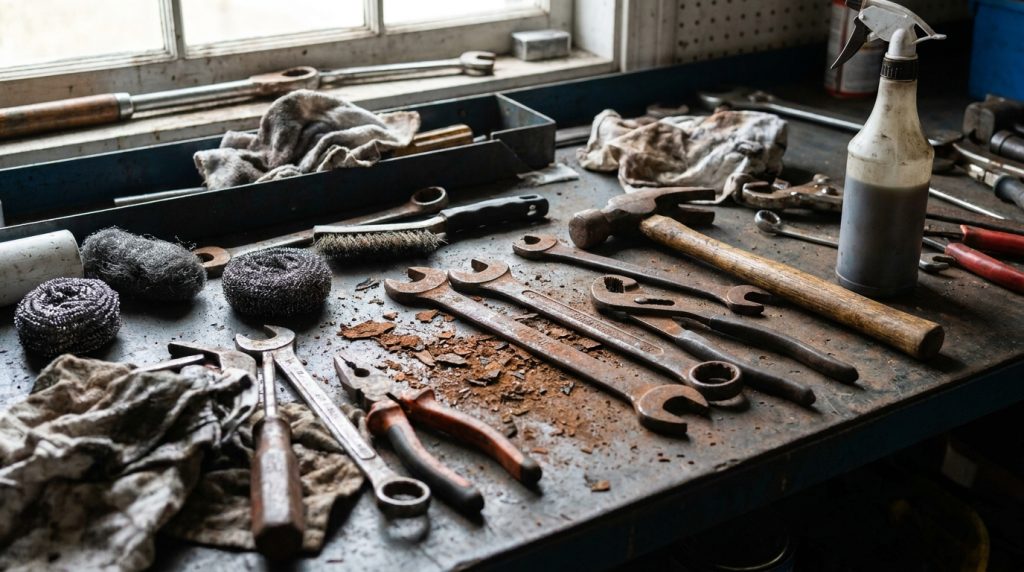
Rust is more than an eyesore. On hand tools, cutting tools, drill bits, wrenches, pliers, saw blades, clamps, vises, machine accessories, and shop equipment, corrosion reduces accuracy, weakens working surfaces, damages fasteners, and creates safety hazards. In an industrial shop, farm maintenance building, fabrication area, municipal garage, or home workshop, rusty tools cost time and money.
At CEM Industrial Supply, we work with maintenance teams, contractors, manufacturers, farmers, and serious DIY users throughout Coldwater, Branch County, and Southern Michigan who deal with real-world tool storage challenges: humidity, unheated garages, seasonal temperature swings, road salt exposure, and outdoor jobsite conditions. Knowing how to clean rust off tools properly helps extend tool life, protect your investment, and keep your work moving.
The good news: most lightly to moderately rusted tools can be restored with common supplies and the right process. The key is choosing the correct rust removal method for the tool type, rust severity, and finish you want to preserve.
If you’re looking for effective ways to maintain your tools and equipment, you might find it beneficial to explore the signs that indicate it’s time for industrial motor repair. Understanding when to repair your motor can prevent further damage and ensure optimal performance. For more information, check out this related article on the topic: Signs It’s Time for Industrial Motor Repair.
Understanding Tool Rust: What Causes It and When It Matters
Rust forms when iron or steel reacts with oxygen and moisture. In Michigan shops, that usually means humidity, condensation, wet work environments, or tools stored near chemicals, concrete floors, open doors, or temperature fluctuations.
Common Causes of Rust on Tools
Tools often rust because of:
- High humidity in garages, barns, and maintenance shops
- Condensation from hot/cold temperature swings
- Tools stored wet after outdoor work
- Sweat and skin oils left on handles or metal surfaces
- Road salt, fertilizer, and chemical exposure
- Poor storage in open toolboxes or unsealed cabinets
- Lack of protective oil or coating
- Water-based cutting fluids left on machine tools
In Southern Michigan, seasonal changes are a major factor. A tool chest in a cold garage can collect condensation when warm spring air moves in. That thin film of moisture is enough to start oxidation.
Types of Rust You May Find on Tools
Not all rust is the same. Before you clean rust off tools, identify how severe it is.
| Rust Level | Appearance | Best Cleaning Method | Tool Condition |
|||||
| Surface rust | Orange/brown haze or light film | Oil, abrasive pad, wire brush, vinegar | Usually easy to restore |
| Moderate rust | Rough patches, discoloration, stuck joints | Vinegar, commercial rust remover, mechanical cleaning | Restorable with effort |
| Heavy rust | Flaking, pitting, seized parts | Rust remover, electrolysis, wire wheel | May be usable but not like new |
| Structural damage | Deep pitting, cracks, weakened metal | Replace tool | Unsafe for critical work |
When Not to Restore a Rusted Tool
Restoration is not always the right answer. Replace tools if rust has caused:
- Cracked wrench jaws
- Mushroomed striking surfaces
- Deep pitting on lifting, rigging, or safety-critical tools
- Damaged sockets that no longer grip properly
- Severely weakened pry bars
- Compromised electrical tool components
- Broken insulation on electrical hand tools
- Excessive corrosion on precision measuring instruments
For safety-critical work, replacement is often cheaper than injury, downtime, or damaged equipment.
Best Ways to Clean Rust Off Tools
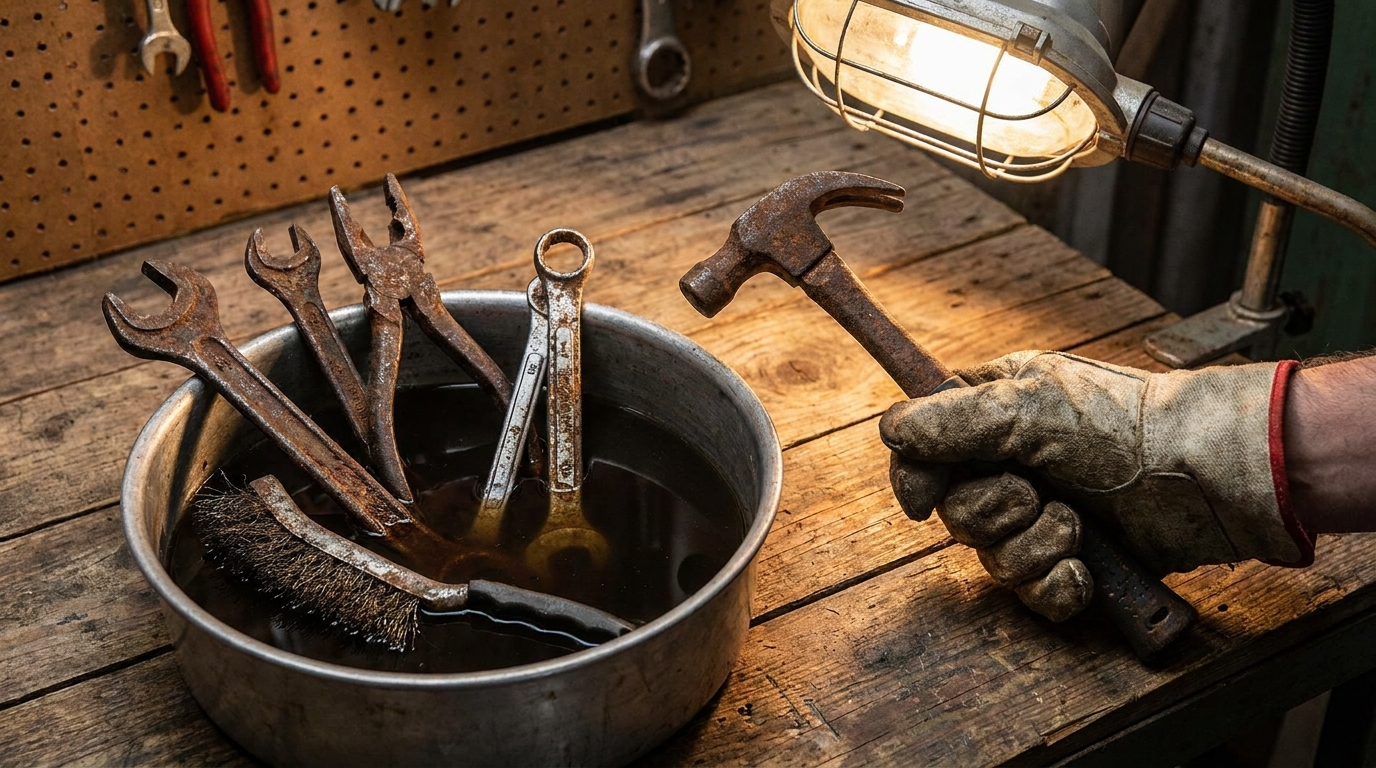
There are several proven methods for removing rust from tools. The best choice depends on the tool, rust severity, available time, and whether you want a quick cleanup or full restoration.
Quick Comparison of Rust Removal Methods
| Method | Best For | Pros | Cons |
|||||
| Penetrating oil and abrasive pad | Light rust, hand tools | Fast, safe, inexpensive | Not ideal for heavy rust |
| White vinegar soak | Moderate rust, small tools | Low cost, effective | Can darken metal if left too long |
| Baking soda paste | Light rust, delicate areas | Gentle, easy to control | Slower |
| Commercial rust remover | Moderate to heavy rust | Fast, reliable, shop-friendly | Requires product handling |
| Wire brush or wire wheel | Heavy rust, large tools | Removes scale quickly | Can scratch surfaces |
| Sandpaper/emery cloth | Flat surfaces, blades, shanks | Good control | Labor intensive |
| Electrolysis | Heavily rusted collectible tools | Removes rust without grinding | Requires setup and caution |
| Evapo-style rust remover | Precision parts, reusable solution | Non-acidic options available | More expensive than vinegar |
For professional shops and maintenance departments, a combination approach usually works best: loosen rust chemically, scrub mechanically, rinse/dry thoroughly, then protect the tool with oil or corrosion inhibitor.
Please visit our latest post at https://cemindustrialsupply.com/news/ for more information.
Step-by-Step: How to Clean Rust Off Hand Tools
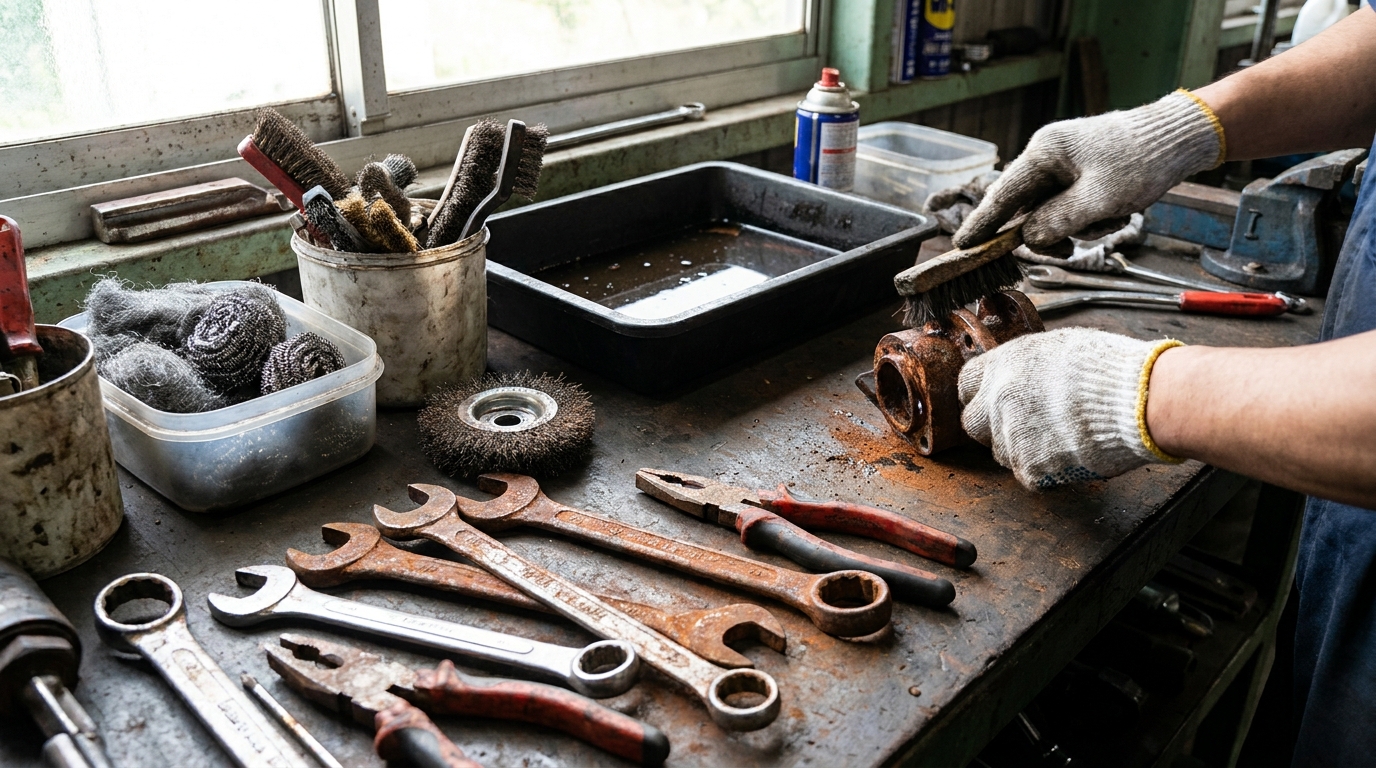
This process works well for wrenches, pliers, screwdrivers, chisels, sockets, clamps, punches, hammers, pry bars, and similar steel hand tools.
Step 1: Inspect the Tool
Before cleaning, look for damage.
Check for:
- Cracks
- Bent handles
- Rounded jaws
- Loose heads
- Seized pivots
- Deep pitting
- Damaged cutting edges
- Missing insulation or grips
If the tool is unsafe, do not restore it for service. Retire it or replace it.
Step 2: Remove Dirt, Grease, and Debris
Rust removal works better on clean metal. Wipe the tool with a rag and use a degreaser if needed.
Helpful supplies include:
- Shop towels or industrial wipes
- Degreaser
- Parts cleaning brush
- Safety gloves
- Eye protection
CEM Industrial Supply customers often pair rust removal work with general shop maintenance supplies, abrasives, brushes, lubricants, and PPE to make the process faster and safer.
Step 3: Choose the Right Rust Removal Method
For light rust, start with the least aggressive method:
- Apply penetrating oil or light machine oil.
- Scrub with a non-woven abrasive pad, steel wool, or brass brush.
- Wipe clean.
- Repeat as needed.
For moderate rust:
- Soak in white vinegar or a commercial rust remover.
- Scrub with a wire brush.
- Rinse or wipe according to product directions.
- Dry immediately.
For heavy rust:
- Use a wire wheel, rotary brush, or rust remover.
- Consider electrolysis for older tools or complex shapes.
- Inspect carefully after cleaning.
Step 4: Scrub the Rusted Areas
Use the right abrasive for the surface.
| Tool Surface | Recommended Abrasive |
|||
| Chrome-plated wrench | Brass brush, fine pad, light oil |
| Pliers pivot | Penetrating oil, small wire brush |
| Hammer head | Wire brush, emery cloth |
| Chisel | Sandpaper, sharpening stone after cleaning |
| Sockets | Bottle brush, light abrasive pad |
| Saw blade | Fine steel wool, rust eraser, oil |
| Drill bits | Fine abrasive, light oil, sharpening if needed |
Avoid aggressive grinding on precision surfaces. Removing too much metal changes fit and performance.
Step 5: Rinse, Neutralize, and Dry
If you use vinegar or an acidic rust remover, do not skip neutralizing and drying. Acid left on metal can encourage flash rust.
A simple process:
- Remove the tool from the soak.
- Scrub loosened rust.
- Rinse with water.
- Wipe with a baking soda and water solution to neutralize acid.
- Rinse again if needed.
- Dry immediately and completely.
- Apply oil or rust preventative.
Compressed air is useful for drying pivots, sockets, stamped markings, and textured handles.
Step 6: Lubricate and Protect
After rust removal, bare metal needs protection.
Use:
- Light machine oil
- Penetrating oil
- Tool oil
- Rust preventative spray
- Paste wax for table saws, vises, and flat surfaces
- Dry film lubricant where oil attracts dust
For moving parts like pliers, adjustable wrenches, ratchets, and snips, apply lubricant to pivots and work the tool until it moves freely.
If you’re looking to maintain your tools in top condition, it’s essential to know how to clean rust off them effectively. Proper maintenance not only extends the life of your tools but also ensures they perform at their best. For those interested in home improvement projects, understanding how to choose the right professionals is equally important. You can find valuable insights in this article about choosing top general contractors in your area, which can help you make informed decisions when tackling larger projects.
Cleaning Rust Off Different Types of Tools
Different tools require different techniques. A pipe wrench can take more aggressive cleaning than a micrometer. A shovel can be wire-brushed heavily, while a precision caliper needs delicate handling.
Wrenches, Sockets, and Ratchets
Chrome-plated tools often develop rust where plating is scratched or worn. Avoid grinding through the chrome.
Best method:
- Soak in penetrating oil or rust remover.
- Scrub with brass brush or fine abrasive pad.
- Clean socket interiors with a small wire or nylon brush.
- Lubricate ratchet mechanisms lightly.
For ratchets, do not soak the head for long periods unless you plan to disassemble and re-lubricate it. Trapped liquid can damage internal components.
Pliers, Cutters, and Hinged Tools
Rust commonly forms around pivots. Stiff pliers are frustrating and unsafe.
Recommended process:
- Apply penetrating oil to the pivot.
- Open and close the tool repeatedly.
- Scrub exposed rust with a wire brush.
- Wipe clean.
- Repeat until movement improves.
- Apply long-term lubricant.
For cutting tools, inspect the cutting edge. If the edges are chipped, misaligned, or deeply pitted, replacement may be better.
Hammers, Punches, Chisels, and Striking Tools
Striking tools require extra safety attention.
Check for:
- Mushroomed heads
- Cracks
- Loose handles
- Splintered wood
- Chipped striking faces
Use a wire brush or abrasive pad to remove rust. If a chisel or punch has a mushroomed head, dress it properly with a grinder, maintaining the correct shape and avoiding overheating. Always wear eye protection when working with striking tools.
Drill Bits, Taps, Dies, and Cutting Tools
Cutting tools can rust quickly if stored damp or left with coolant residue. Rust on flutes and cutting edges reduces accuracy and causes poor finishes.
For drill bits:
- Wipe with oil.
- Use fine abrasive carefully.
- Avoid rounding the cutting edges.
- Resharpen if needed.
For taps and dies:
- Clean with a brass brush.
- Use cutting oil to loosen residue.
- Avoid aggressive wire wheels that can damage threads.
- Store in a dry indexed case.
If rust has pitted the cutting edges, the tool may cut oversize, chatter, or break under load.
Garden, Farm, and Outdoor Tools
Shovels, hoes, axes, pruning tools, fence tools, and tractor maintenance tools often rust from soil, sap, fertilizer, and moisture.
Best method:
- Scrape off dirt.
- Wash and dry thoroughly.
- Remove rust with a wire brush or sandpaper.
- Sharpen edges if needed.
- Apply oil or paste wax.
- Treat wooden handles with linseed oil if appropriate.
For farms and properties around Branch County, it is smart to clean and oil seasonal tools before storing them for winter.
Precision Measuring Tools
Calipers, micrometers, gauge blocks, squares, and dial indicators require special care. Do not soak precision tools in vinegar or use aggressive abrasives.
Use:
- Clean lint-free cloth
- Light oil
- Very fine rust eraser if appropriate
- Manufacturer-recommended cleaner
- Desiccant storage
If rust appears on precision measuring faces, inspect accuracy before returning the tool to service. When measurement matters, calibration matters.
Rust Removal Supplies Worth Keeping in the Shop
A good rust removal kit saves downtime. Whether you manage a maintenance department in Coldwater, operate a fabrication shop in Southern Michigan, or maintain equipment on a Branch County farm, keeping the right supplies on hand makes tool care faster.
Basic Rust Removal Kit
Keep these items in your shop:
- Safety glasses
- Chemical-resistant gloves
- Shop towels
- Parts cleaning brush
- Brass wire brush
- Steel wire brush
- Nylon brush
- Non-woven abrasive pads
- Fine steel wool
- Emery cloth or sandpaper
- Penetrating oil
- Light machine oil
- Rust remover
- Degreaser
- Baking soda
- Small plastic tub for soaking
- Compressed air or drying towels
- Rust preventative spray
- Silica gel or desiccant packs
CEM Industrial Supply carries practical industrial categories that support rust removal and prevention, including abrasives, cutting tools, hand tools, lubricants, shop supplies, safety products, maintenance products, and storage solutions.
Choosing Brushes and Abrasives
The wrong abrasive can damage a tool. Use the softest effective option first.
| Abrasive Type | Best Use | Notes |
||||
| Nylon brush | Light dirt, delicate tools | Won’t scratch much |
| Brass brush | Chrome tools, softer cleaning | Less aggressive than steel |
| Steel wire brush | Heavy rust and scale | Can scratch polished surfaces |
| Non-woven pad | General rust removal | Good control |
| Steel wool | Light surface rust | Use with oil |
| Emery cloth | Flat surfaces, shafts, blades | Choose fine grit |
| Wire wheel | Heavy rust | Use PPE and secure workpiece |
Chemical Rust Removers vs. Household Options
Household solutions like vinegar work, but commercial rust removers are often more predictable for shop use.
| Option | Good For | Considerations |
||||
| White vinegar | Budget rust removal | Acidic; must neutralize and dry |
| Lemon juice and salt | Small light rust spots | Messy for shop use |
| Baking soda paste | Gentle surface cleaning | Not ideal for deep rust |
| Commercial rust remover | Efficient tool restoration | Follow SDS and label directions |
| Penetrating oil | Light rust and seized parts | Great first step |
| Electrolysis | Restoration projects | Requires setup and electrical caution |
For industrial environments, always follow the product label and Safety Data Sheet. Store chemicals properly and train employees on safe handling.
How to Clean Rust Off Tools with Vinegar
White vinegar is one of the most searched and commonly used methods for removing rust from tools. It is affordable and effective for moderate rust, but it must be used correctly.
Vinegar Rust Removal Process
- Clean dirt and grease from the tool.
- Place the metal part in a plastic container.
- Cover the rusted area with white vinegar.
- Soak for 30 minutes to 12 hours depending on rust level.
- Check periodically.
- Remove the tool and scrub with a brush or abrasive pad.
- Neutralize with baking soda and water.
- Rinse and dry immediately.
- Apply oil or rust preventative.
How Long Should Tools Soak in Vinegar?
Light rust may loosen in 30–60 minutes. Moderate rust may need several hours. Heavily rusted tools may require overnight soaking.
Do not leave tools in vinegar for days without checking them. Vinegar can darken steel, attack finishes, and affect plating.
What Not to Put in Vinegar
Avoid vinegar soaking for:
- Precision measuring tools
- Tools with sensitive coatings
- Ratchets with internal mechanisms unless disassembled
- Electrical tools
- Tools with wood handles attached
- Tools with delicate labels or markings
- Certain plated or specialty-finished tools
Vinegar is useful, but it is not the best method for every tool.
Mechanical Rust Removal: When to Brush, Sand, or Grind
Mechanical cleaning uses abrasion to physically remove rust. It is fast and effective, especially for heavy rust, but it can remove good metal if you are not careful.
Wire Brushing
Wire brushes are ideal for:
- Hammers
- Pry bars
- Shovels
- C-clamps
- Vises
- Bench tools
- Outdoor tools
- Weld tables
Use brass brushes on plated tools and steel brushes on rougher surfaces. For power tools, wear eye and face protection because wire bristles can break loose.
Sanding and Emery Cloth
Sanding is useful for flat or cylindrical surfaces where you want control.
Best applications:
- Chisel bodies
- Plane soles
- Shafts
- Scrapers
- Saw plates
- Machine tables
- Tool handles
Start with a grit aggressive enough to remove rust, then move finer if you need a smoother finish.
Wire Wheels and Power Tools
A bench grinder wire wheel or angle grinder cup brush can remove rust quickly from large, rugged tools. However, it can also remove markings, round corners, and create heat.
Safety rules:
- Wear safety glasses and face shield.
- Wear gloves carefully, avoiding loose material near rotating equipment.
- Secure the workpiece.
- Keep hands clear.
- Avoid excessive pressure.
- Do not use on small parts you cannot control.
- Inspect wire wheels for damage.
For industrial users, power brushing should be done with proper PPE and guards in place.
Preventing Rust After Cleaning Tools
Cleaning rust off tools is only half the job. If you do not protect the metal afterward, rust can return quickly—sometimes overnight in a humid shop.
Dry Tools Before Storage
Moisture is the enemy. After cleaning or use:
- Wipe tools dry.
- Blow out sockets and pivots with compressed air.
- Dry cutting tools after coolant exposure.
- Do not store wet tools in closed drawers.
- Let tool rolls air out after outdoor work.
Apply a Protective Coating
Use the right protection for the application.
| Protection | Best For | Notes |
||||
| Light oil | Hand tools, pivots | Easy and effective |
| Rust preventative spray | Storage and shop tools | Good for humid environments |
| Paste wax | Cast iron, table surfaces | Dry protection |
| Dry film lubricant | Dusty environments | Less residue |
| Grease | Long-term storage | Can attract dirt |
| VCI paper/products | Tool drawers and parts storage | Good passive protection |
Improve Tool Storage
Better storage prevents future rust.
Consider:
- Closed tool cabinets
- Drawer liners
- Desiccant packs
- VCI drawer liners
- Wall storage away from exterior doors
- Climate control where possible
- Dehumidifiers in damp shops
- Tool chests off concrete floors
- Separate storage for chemicals and fertilizers
For customers in Coldwater and Branch County, unheated garages and pole barns are common. In those spaces, rust prevention is about airflow, moisture control, and protective coatings.
Avoid Storing Tools Near Chemicals
Many chemicals release vapors or attract moisture. Keep tools away from:
- Pool chemicals
- Fertilizer
- Ice melt
- Acids
- Batteries
- Solvents
- Open coolant containers
- Cleaning chemicals
This is especially important for farm shops, municipal garages, and maintenance rooms.
Safety Tips for Cleaning Rust Off Tools
Rust removal is straightforward, but it still involves chemicals, sharp edges, rotating equipment, dust, and metal fragments.
Personal Protective Equipment
Wear appropriate PPE:
- Safety glasses
- Face shield for grinding or wire wheels
- Chemical-resistant gloves
- Nitrile gloves for oils and solvents
- Cut-resistant gloves when handling sharp tools
- Dust mask or respirator when creating dust
- Apron or shop coat
- Hearing protection when using power tools
CEM Industrial Supply supports safety-focused shops with PPE, abrasives, hand tools, maintenance products, and industrial supplies that help teams work efficiently and responsibly.
Chemical Safety
When using rust removers:
- Read the label.
- Review the Safety Data Sheet.
- Use ventilation.
- Do not mix chemicals.
- Label containers.
- Keep chemicals away from children and ignition sources.
- Dispose of used solutions properly.
- Wash hands after use.
Never mix vinegar with bleach or other cleaners. Chemical reactions can produce dangerous fumes.
Power Tool Safety
When using grinders, wire wheels, or rotary tools:
- Inspect the wheel or brush before use.
- Use guards.
- Secure the tool or workpiece.
- Keep loose clothing away.
- Stand out of the line of debris.
- Avoid excessive pressure.
- Let the tool do the work.
A rusted tool is not worth an eye injury or hand injury.
Shop Checklist: Clean Rust Off Tools Efficiently
Use this checklist for maintenance days, seasonal cleanup, or tool crib inspections.
Rust Removal Checklist
- [ ] Sort tools by rust severity.
- [ ] Remove unsafe tools from service.
- [ ] Clean grease and dirt first.
- [ ] Choose the least aggressive rust removal method.
- [ ] Use proper PPE.
- [ ] Soak, scrub, or brush as needed.
- [ ] Neutralize acids if used.
- [ ] Rinse only when appropriate.
- [ ] Dry completely.
- [ ] Lubricate moving parts.
- [ ] Sharpen cutting edges if needed.
- [ ] Apply rust preventative.
- [ ] Store in a dry location.
- [ ] Add desiccant or VCI protection.
- [ ] Schedule periodic inspections.
Seasonal Maintenance Checklist for Southern Michigan Shops
Before winter:
- [ ] Clean outdoor tools.
- [ ] Oil bare steel surfaces.
- [ ] Drain or protect tools exposed to water.
- [ ] Store tools away from road salt.
- [ ] Inspect snow removal and vehicle maintenance tools.
Before spring:
- [ ] Check for condensation rust.
- [ ] Re-oil tools stored in cold areas.
- [ ] Clean and sharpen garden and farm tools.
- [ ] Inspect toolboxes and drawers for moisture.
- [ ] Replace desiccant packs.
Buying Guide: When to Restore vs. Replace Rusty Tools
Not every rusty tool deserves the same level of effort. A high-quality wrench, specialty puller, machinist tool, or large clamp may be worth restoring. A badly pitted low-cost screwdriver may not be.
Restore the Tool If:
- It is a high-quality or specialty tool.
- Rust is mostly surface-level.
- The tool still fits and functions properly.
- Replacement cost is high.
- It has sentimental or historical value.
- It can be safely returned to service.
- Pitting does not affect performance.
Replace the Tool If:
- It is cracked, bent, or structurally weakened.
- Precision surfaces are damaged.
- Cutting edges are deeply pitted.
- Wrench jaws or socket points are rounded.
- Insulation is damaged.
- The cost of labor exceeds replacement cost.
- It is safety-critical.
Cost and Time Comparison
| Tool Condition | Restoration Time | Best Decision |
||:||
| Light surface rust on quality wrench | 5–10 minutes | Restore |
| Rusty pliers with stiff pivot | 10–20 minutes | Restore if jaws are good |
| Heavily pitted screwdriver | 10–30 minutes | Usually replace |
| Rusty drill bits | 5–15 minutes each | Restore only if quality bits |
| Rusted precision caliper | Varies | Inspect/calibrate or replace |
| Rusted shovel or hoe | 15–30 minutes | Restore and sharpen |
| Cracked striking tool | Do not restore | Replace |
CEM Industrial Supply can help local shops and maintenance crews source replacement hand tools, cutting tools, abrasives, lubricants, PPE, and shop supplies when restoration is not practical.
Professional Tips from the Shop Floor
After years of seeing tools come through maintenance departments, industrial shops, farms, and field service trucks, a few habits stand out.
Use Oil Early, Not After Rust Starts
A quick wipe with oil after use is far easier than removing rust later. Keep a rag lightly treated with tool oil near the bench for end-of-day wipe-downs.
Keep Jobsite Tools Separate
Tools used outdoors, around salt, or in wet environments should not go straight back into the main toolbox. Wipe and dry them first.
Do Not Over-Clean Precision Tools
More damage is done to precision tools by aggressive cleaning than by light rust. Use gentle methods and verify accuracy.
Label Restored Tools for Inspection
In a professional shop, restored tools should be inspected before returning to service. If there is any doubt, mark them for limited use or replacement.
Build Rust Prevention Into Your Workflow
Make rust prevention part of:
- Tool crib inspections
- Preventive maintenance schedules
- Seasonal shutdowns
- Vehicle service routines
- Farm equipment maintenance
- Safety audits
A few minutes per week can save hours of restoration later.
Local Support for Tool Care in Coldwater, Branch County, and Southern Michigan
Industrial maintenance in Southern Michigan has its own challenges. Cold winters, humid summers, agricultural environments, road salt, and unheated storage areas all accelerate corrosion. Whether you are maintaining manufacturing equipment, repairing farm machinery, servicing fleet vehicles, or organizing a home workshop, tool rust prevention should be part of your maintenance plan.
CEM Industrial Supply serves customers who need dependable industrial supplies without wasting time searching across multiple sources. For rust removal and prevention projects, relevant product categories may include:
- Hand tools
- Abrasives
- Wire brushes
- Cutting tools
- Lubricants and penetrants
- Degreasers and shop chemicals
- PPE and safety supplies
- Storage and organization products
- Maintenance, repair, and operations supplies
If you are in Coldwater, Branch County, or the surrounding Southern Michigan area, having the right rust removal supplies on hand helps reduce downtime and keeps your tools ready for work.
FAQs About Cleaning Rust Off Tools
What is the fastest way to clean rust off tools?
For light rust, the fastest method is penetrating oil plus a non-woven abrasive pad or wire brush. For moderate rust, a commercial rust remover is usually faster than vinegar. Heavy rust may require a wire wheel or a combined chemical and mechanical approach.
Can I use vinegar to remove rust from all tools?
No. Vinegar works well on many steel hand tools, but it is not ideal for precision measuring tools, ratchets with internal mechanisms, electrical tools, wood-handled tools, or tools with delicate coatings. Always monitor soak time and neutralize afterward.
How do I stop tools from rusting after cleaning?
Dry them completely and apply a protective coating such as light oil, rust preventative spray, dry film lubricant, or paste wax. Store tools in a dry cabinet or toolbox with desiccant or VCI protection.
Is WD-40 enough to remove rust from tools?
Penetrating oils and water-displacing sprays can help loosen light rust and protect tools temporarily, but they are not always enough for moderate or heavy rust. Use them with an abrasive pad or brush for better results.
Should I use a wire wheel on rusty hand tools?
A wire wheel is useful for heavy rust on rugged tools, but it can scratch chrome, remove markings, and damage precision surfaces. Use proper PPE, secure the tool, and avoid aggressive pressure.
How long should I soak rusty tools in vinegar?
Light rust may need 30–60 minutes. Moderate rust may need several hours. Check frequently and avoid soaking for days. After soaking, neutralize with baking soda and water, dry thoroughly, and oil the tool.
Can rusty tools be unsafe?
Yes. Rust can weaken metal, damage gripping surfaces, freeze moving parts, and hide cracks. Striking tools, lifting-related tools, cutting tools, and electrical tools should be inspected carefully before reuse.
What is the best rust prevention for tools stored in a garage?
Use a combination of dry storage, protective oil or rust preventative, drawer liners, desiccant packs, and good airflow. In humid or unheated garages, consider a dehumidifier or sealed tool cabinet.
How do I clean rust off pliers that will not open?
Apply penetrating oil to the pivot and let it soak. Work the handles gently back and forth. Scrub exposed rust with a wire brush. Repeat until the tool moves freely, then apply lubricant. If the jaws or pivot are badly damaged, replace the pliers.
What supplies should I keep for rust removal in a maintenance shop?
Keep safety glasses, gloves, wire brushes, abrasive pads, emery cloth, penetrating oil, rust remover, degreaser, shop towels, compressed air, and rust preventative spray. For industrial shops, also keep SDS information available for chemical products.
FAQs
1. What causes rust to form on tools?
Rust forms on tools when they are exposed to moisture and oxygen, which causes a chemical reaction with the metal, leading to the formation of iron oxide.
2. How can I prevent rust from forming on my tools?
To prevent rust from forming on tools, it is important to keep them clean and dry after use. Applying a thin layer of oil or using a rust inhibitor can also help protect the metal from moisture and oxygen.
3. What are some methods for removing rust from tools?
There are several methods for removing rust from tools, including using a wire brush, sandpaper, vinegar, or a commercial rust remover. It is important to wear protective gear and follow safety precautions when using these methods.
4. Can rust be removed from all types of tools?
Rust can be removed from most types of tools, including hand tools, power tools, and gardening tools. However, some delicate or intricate tools may require special care and attention when removing rust.
5. How can I restore the appearance and functionality of rusted tools?
After removing the rust from tools, it is important to clean and dry them thoroughly. Applying a protective coating, such as a rust-resistant paint or oil, can help restore the appearance and functionality of the tools and prevent future rusting.