
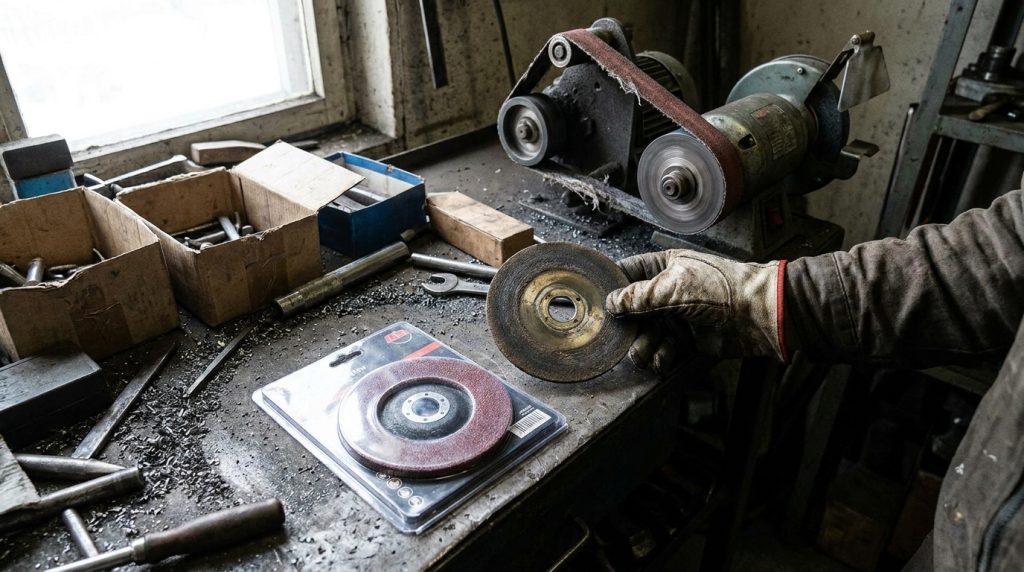
In grinding, cutting, sanding, deburring, and surface preparation, abrasives are consumables by design. They wear down, load up, glaze over, crack, lose grain, or simply stop cutting efficiently. The question is not whether an abrasive will wear out—it is whether your team can recognize the right time to replace it.
For maintenance shops, fabrication teams, machine builders, welders, and industrial facilities in Coldwater, Branch County, and across Southern Michigan, knowing when to replace abrasives directly affects:
- Worker safety
- Cut and finish quality
- Production speed
- Tool life
- Rework rates
- Heat damage to parts
- Overall operating cost
At CEM Industrial Supply, we regularly help customers select and manage abrasives for metalworking, maintenance, fabrication, woodworking, repair, and general industrial applications. The most expensive abrasive is often not the premium one—it is the worn-out one that slows production, damages parts, and puts operators at risk.
Abrasives should be replaced when they no longer cut efficiently, when they become unsafe, or when they cannot produce the required finish. That may sound simple, but the signs vary depending on the product: grinding wheels, cut-off wheels, flap discs, sanding belts, fiber discs, PSA discs, wire brushes, mounted points, and non-woven abrasives all wear differently.
This guide explains how to identify replacement timing, what warning signs to look for, how to extend abrasive life safely, and how to choose the right replacement abrasive for your job.
When considering the optimal timing for replacing abrasives, it’s essential to understand the broader context of equipment maintenance and performance. A related article that provides valuable insights is the Gearbox Identification Checklist, which discusses important factors such as nameplate information, ratio, shaft dimensions, and photos that can help in assessing the overall condition of machinery. For more information, you can read the article here: Gearbox Identification Checklist.
Common Signs It Is Time to Replace Abrasives
Abrasives rarely fail without warning. Most give clear signs that performance has dropped or safety has been compromised. Operators, maintenance teams, and purchasing managers should train around these indicators.
Reduced Cutting or Grinding Performance
The most common sign of a worn abrasive is slower cutting. If the operator has to push harder, increase dwell time, or make repeated passes to achieve the same result, the abrasive is likely past its useful life.
Watch for:
- Longer cut times
- Slower weld removal
- More pressure required
- Excessive tool vibration
- Poor stock removal
- More sparks than material removal
- Operator fatigue
A fresh abrasive should cut with controlled pressure. When the work starts to feel forced, replacement is usually more cost-effective than continuing.
Heat Buildup or Burning
When an abrasive stops cutting cleanly, friction increases. That can cause heat buildup on the workpiece, the tool, and the abrasive itself.
Common heat-related warning signs include:
- Blue discoloration on steel
- Burn marks on stainless steel
- Melted material on aluminum or plastics
- Smoke during sanding
- Workpiece warping
- Premature tool wear
- Glazing on the abrasive surface
Heat is especially problematic when working with stainless steel, aluminum, tool steels, and painted surfaces. Overheated metal can lose corrosion resistance, change hardness, or require extra rework.
Poor Surface Finish
If your abrasive is no longer producing the finish you expect, it may be worn, contaminated, loaded, or the wrong product for the application.
Examples include:
- Deep random scratches
- Uneven swirl marks
- Chatter marks
- Smearing instead of sanding
- Rougher finish than the grit should produce
- Inconsistent blending
- Edge gouging
Surface finish is a major concern for fabrication shops, automotive repair, food-grade stainless work, equipment repair, and manufacturing operations. A worn abrasive can turn a simple finishing step into expensive rework.
Visible Damage or Deformation
Any abrasive with visible damage should be removed from service immediately.
Replace abrasives showing:
- Cracks
- Chips
- Missing segments
- Frayed belt edges
- Torn backing
- Loose flaps
- Separation from the hub
- Warping
- Excessive wear at the center hole
- Uneven diameter loss
- Burned or glazed surfaces
This is especially important for bonded abrasives such as grinding wheels and cut-off wheels. A damaged wheel can break apart at high speed, creating a serious injury risk.
Change in Sound or Vibration
Experienced operators often notice a bad abrasive by feel or sound before they see the problem.
Replace or inspect immediately if you notice:
- New vibration
- Wobbling
- Rattling
- Thumping
- High-pitched squealing
- Unusual tool resistance
- Intermittent cutting
Never ignore vibration. It can indicate an out-of-balance wheel, damaged backing, incorrect mounting, or tool spindle issues.
When to Replace Different Types of Abrasives
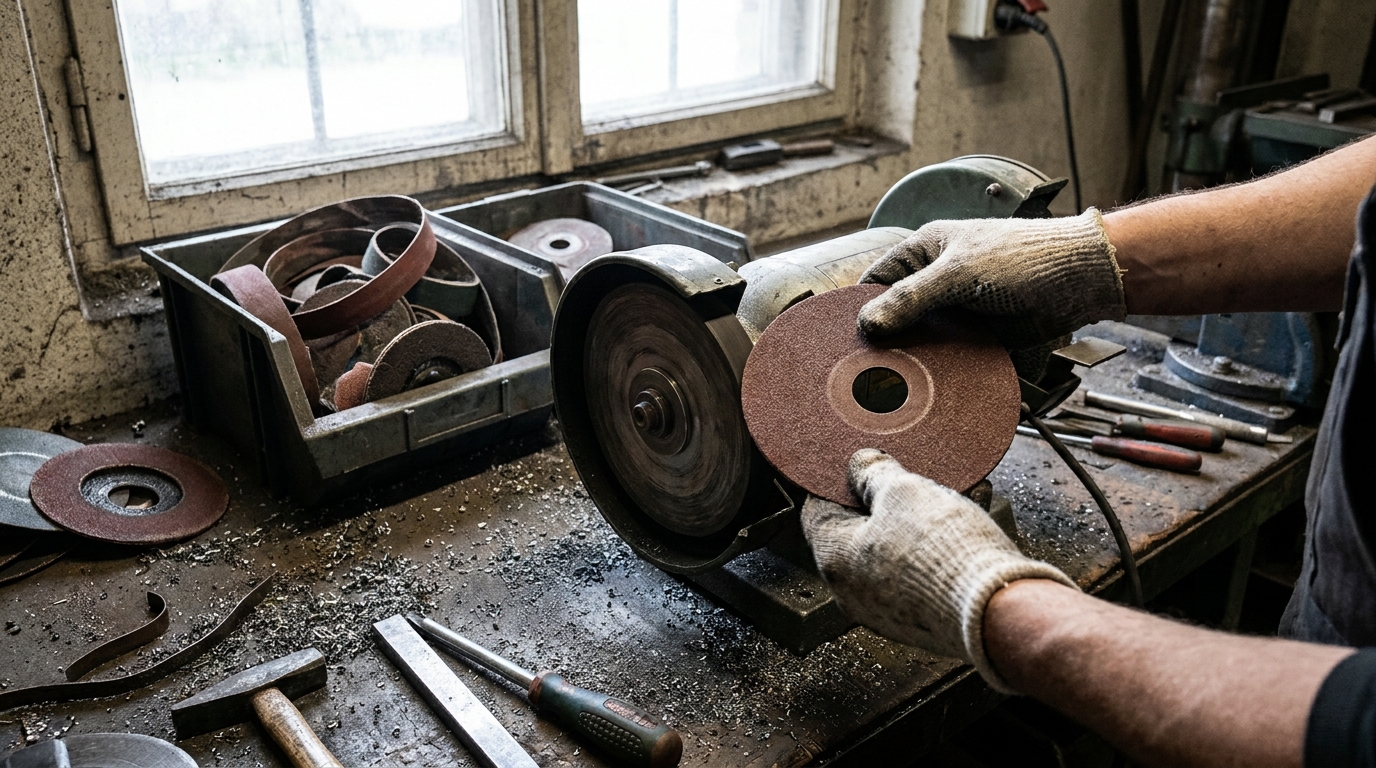
Different abrasive products wear in different ways. A cut-off wheel does not fail like a sanding belt, and a flap disc does not wear like a wire brush. Understanding the difference helps reduce waste while keeping the job safe.
Grinding Wheels
Grinding wheels are designed for stock removal, weld grinding, beveling, shaping, and heavy-duty metalwork. They should be replaced when they become too small, damaged, glazed, or no longer grind efficiently.
Replace grinding wheels when:
- The wheel diameter is too small for safe or effective use
- The wheel is cracked, chipped, or uneven
- Grinding becomes slow despite proper pressure
- The wheel surface becomes glazed and stops cutting
- The wheel vibrates or runs out of balance
- The wheel has been dropped or impacted
- The wheel is past its usable profile for the guard and application
For bonded grinding wheels, always inspect before mounting. If a wheel has been dropped, do not use it unless it passes inspection according to the manufacturer’s guidance.
Cut-Off Wheels
Cut-off wheels are thin bonded abrasives designed for cutting, not grinding. They are one of the most safety-sensitive abrasive products in the shop.
Replace cut-off wheels immediately if:
- The wheel is cracked or chipped
- The wheel has been side-loaded
- The wheel is bent or warped
- The wheel diameter is too small to complete the cut safely
- Cutting speed drops significantly
- The wheel binds repeatedly
- The wheel has been used for grinding
Never use the side of a cut-off wheel for grinding. Side pressure can weaken the wheel and cause breakage. For Southern Michigan maintenance teams working on pipe, angle iron, bolts, sheet metal, and equipment frames, this is one of the most important abrasive safety rules.
Flap Discs
Flap discs are popular because they grind and finish in one step. They are commonly used for weld blending, edge work, deburring, and surface prep.
Replace flap discs when:
- The flaps are worn down to the backing
- The disc no longer cuts efficiently
- Flaps are missing, loose, or uneven
- The backing plate contacts the workpiece
- Excess heat builds up
- The finish becomes inconsistent
- The disc vibrates or wobbles
A common mistake is throwing away flap discs too early. Many quality flap discs continue cutting as the abrasive cloth wears back and exposes fresh grain. However, once backing contact, vibration, or poor performance occurs, it is time to replace them.
Fiber Discs and Resin Discs
Fiber discs are aggressive, cost-effective abrasives often used on angle grinders with backing pads. They are excellent for grinding, blending, and weld removal.
Replace fiber discs when:
- The disc becomes smooth or glazed
- The edge curls or tears
- The disc loads up with material
- The backing becomes soft, cracked, or warped
- The disc loses cut rate
- The center hole becomes damaged
- The disc no longer stays flat on the backing pad
Fiber discs depend heavily on proper backing pads. If discs are wearing unevenly, check the pad as well. A worn or damaged backing pad can shorten abrasive life and create unsafe operation.
Sanding Belts
Sanding belts are used in metalworking, woodworking, fabrication, maintenance, and machine shops. Belt replacement timing depends on material, grit, pressure, speed, and machine condition.
Replace sanding belts when:
- The belt stops cutting and begins polishing
- The belt tracks poorly
- Edges are frayed
- The splice is lifting
- The belt is loaded with resin, paint, aluminum, or dust
- The finish becomes inconsistent
- The belt slips or overheats
- The belt breaks or stretches
For belt sanders and belt grinders, poor tracking may indicate the belt is worn—but also inspect contact wheels, platen wear, tension, and alignment.
Sanding Discs, PSA Discs, and Hook-and-Loop Discs
Sanding discs are common in fabrication, auto body, maintenance, woodworking, and finishing operations.
Replace sanding discs when:
- The abrasive surface is loaded
- The disc no longer removes material
- The disc tears or wrinkles
- Hook-and-loop backing no longer holds
- PSA adhesive releases
- The finish pattern becomes uneven
- Dust extraction holes clog badly
- Heat marks appear
If hook-and-loop discs are flying off early, inspect the backup pad. A worn pad can cause poor attachment and uneven sanding.
Wire Brushes and Wire Wheels
Wire brushes are not technically coated or bonded abrasives, but they are often used in the same surface preparation category. They remove rust, scale, paint, and weld spatter.
Replace wire brushes when:
- Wires are worn short
- Wires are breaking frequently
- The brush becomes out of balance
- The brush no longer removes rust or scale efficiently
- The wheel is distorted
- The arbor hole is damaged
- The brush vibrates excessively
Always wear proper PPE with wire wheels. Broken wires can eject at high speed and penetrate clothing or skin.
Non-Woven Abrasives
Non-woven abrasives are used for cleaning, blending, deburring, satin finishing, scuffing, and surface conditioning. They include discs, hand pads, belts, wheels, and rolls.
Replace non-woven abrasives when:
- The pad collapses or loses structure
- The abrasive stops cutting
- The finish becomes too fine or inconsistent
- The material loads with grease, paint, or metal
- Edges tear or shred
- Excess heat builds up
Non-woven products are often used for final finish work, so consistent replacement is important for repeatable results.
Please visit our latest post at https://cemindustrialsupply.com/news/ for more information.
Abrasive Replacement Guide by Application
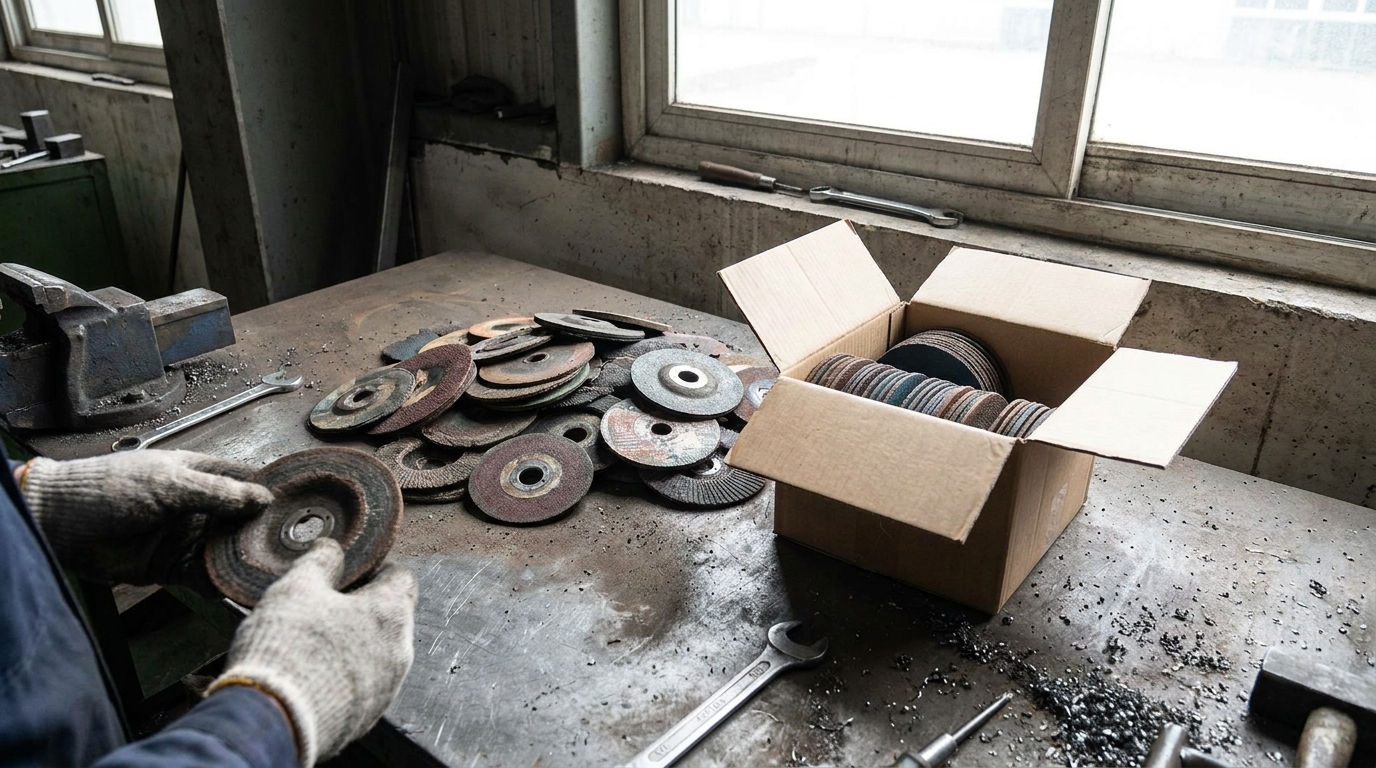
The right replacement timing depends heavily on the work being performed. Heavy weld grinding wears abrasives differently than light finishing or deburring.
| Application | Common Abrasives Used | Replace When | Key Risk of Waiting Too Long |
|||||
| Weld grinding | Grinding wheels, flap discs, fiber discs | Cut rate drops, glazing, vibration, backing contact | Heat damage, poor weld blending, operator fatigue |
| Metal cutting | Cut-off wheels | Diameter too small, cracks, slow cutting, binding | Wheel breakage, crooked cuts, safety hazard |
| Deburring | Flap discs, cartridge rolls, non-woven wheels | Poor edge break, inconsistent finish | Sharp edges, rework, part rejection |
| Rust removal | Wire wheels, non-woven discs, fiber discs | Wires worn, loading, reduced cleaning | Slow prep, poor coating adhesion |
| Paint removal | Sanding discs, non-woven abrasives, wire brushes | Loading, heat, smearing | Surface contamination, coating failure |
| Stainless finishing | Non-woven belts, flap discs, sanding discs | Discoloration, inconsistent grain pattern | Heat tint, corrosion issues, visual defects |
| Aluminum grinding | Specialty discs, flap discs, sanding belts | Loading, smearing, heat buildup | Disc clogging, poor finish, contamination |
| Wood sanding | Sanding belts, discs, sheets | Loading, burning, uneven scratch pattern | Burn marks, finish defects |
This type of replacement guide can be useful for maintenance teams and supervisors building standard work instructions for abrasive use.
When considering the optimal time to replace abrasives, it’s also important to evaluate the overall quality of your tools and materials. For instance, if you’re planning a home renovation, understanding how to choose reliable contractors can significantly impact the outcome of your project. You can find valuable insights in this article about finding reliable Jacuzzi bath remodel contractors nearby, which emphasizes the importance of quality in both service and materials. This connection highlights how maintaining high standards in all aspects of your project, including abrasives, can lead to better results.
Safety Reasons to Replace Abrasives Immediately
A worn abrasive is inefficient. A damaged abrasive is dangerous. Knowing the difference matters.
Cracks, Chips, or Structural Damage
Bonded abrasives operate at high RPM. A cracked grinding wheel or cut-off wheel can fail violently. Never attempt to “use up” a damaged wheel.
Immediate replacement is required if the abrasive has:
- Any visible crack
- Missing chunks
- Uneven wear that causes imbalance
- Signs of impact
- Damaged mounting hole
- Water or chemical contamination
- Unknown storage history
Before use, always verify the abrasive is rated for the tool speed. The maximum RPM marked on the abrasive must meet or exceed the tool RPM.
Incorrect Abrasive for the Tool
An abrasive should also be replaced if it is not correct for the tool or application.
Examples of unsafe mismatches include:
- Using a cut-off wheel for side grinding
- Using an abrasive rated below grinder RPM
- Using the wrong arbor size
- Running a wheel without the proper guard
- Using a damaged backing pad
- Using a non-ferrous abrasive on steel after aluminum contamination matters
- Using a product not designed for wet conditions in a wet environment
CEM Industrial Supply can help match abrasives to grinders, sanders, saws, die grinders, and finishing tools commonly used in industrial and maintenance environments.
Expired or Poorly Stored Abrasives
Bonded abrasives can degrade over time, especially if exposed to moisture, temperature swings, chemicals, or poor storage conditions.
Replace or discard abrasives that have been:
- Stored in damp areas
- Exposed to oil or solvents
- Left in direct sunlight or extreme heat
- Frozen and thawed repeatedly
- Stored under heavy weight
- Damaged in shipping or handling
- Sitting in unknown conditions for years
For shops in Coldwater and Branch County, seasonal humidity and temperature changes can affect storage areas, especially unheated shops, trailers, and maintenance rooms. Keep abrasives dry, clean, and organized.
Performance-Based Replacement: When “Still Usable” Is Costing You Money
Many shops try to get every last bit of use out of an abrasive. That makes sense in theory, but it can cost more in labor, rework, and tool wear.
Labor Costs Usually Exceed Abrasive Costs
Abrasives are consumables. Labor is expensive. If a worn flap disc saves $2 in product cost but adds five minutes to every weld blend, it is costing money.
Consider:
- Operator hourly rate
- Slower production
- Increased fatigue
- More rework
- Extra tool wear
- Missed deadlines
- Poor part quality
In most industrial settings, replacing abrasives based on performance is more economical than waiting until they are completely destroyed.
Watch for Increased Pressure
A properly selected abrasive should do the work with moderate pressure. If operators push harder to compensate for poor cutting, several problems follow:
- More heat
- Less control
- Higher injury risk
- Shorter tool life
- Premature abrasive failure
- Poor finish consistency
If more pressure is needed, check whether the abrasive is worn, loaded, wrong grit, wrong bond, or wrong material type.
Track Abrasive Life by Job Type
For repeat production work, record average abrasive life. This helps identify when replacement timing is normal and when something has changed.
Track:
- Material type
- Grit size
- Abrasive brand/type
- Tool used
- Operator
- Part quantity per abrasive
- Cut time or grind time
- Finish quality
- Failure mode
This is especially helpful for manufacturing, fabrication, and maintenance departments in Southern Michigan that want better control over MRO supply costs.
How to Tell If an Abrasive Is Worn, Loaded, or Glazed
Not all poor performance means the abrasive is completely worn out. Sometimes it is loaded or glazed.
Worn Abrasives
A worn abrasive has lost enough sharp grain that it no longer cuts efficiently. It may look smooth, thin, rounded, or used down to the backing.
Signs include:
- Reduced aggression
- Less material removal
- Polishing instead of cutting
- Rounded grain appearance
- Excessive heat
Replacement is usually the best option.
Loaded Abrasives
A loaded abrasive has material packed into the spaces between abrasive grains. This is common when sanding aluminum, paint, wood resin, plastics, rubber, or soft metals.
Signs include:
- Surface looks clogged
- Abrasive smears instead of cuts
- Heat rises quickly
- Disc or belt feels slick
- Finish becomes uneven
Sometimes loading can be reduced with the correct abrasive selection, coatings, lubricants, or cleaning sticks for belts. For aluminum, use abrasives designed for non-ferrous metals when possible.
Glazed Abrasives
A glazed abrasive has dull grains that have not fractured or released properly. The abrasive surface becomes shiny and smooth.
Common causes include:
- Too little pressure on some grinding wheels
- Wrong bond hardness
- Wrong abrasive type
- Excessive speed
- Heat buildup
- Using a product on the wrong material
A glazed wheel may sometimes be dressed if appropriate, but many portable abrasive products should simply be replaced.
Buying Guide: Choosing the Right Replacement Abrasive
Replacing abrasives on time is only half the job. Replacing them with the right product is what improves performance.
CEM Industrial Supply carries and sources abrasive products for cutting, grinding, sanding, polishing, blending, and surface preparation. When selecting replacements, consider the following.
Match the Abrasive to the Material
Different materials require different abrasive grains and designs.
| Material | Recommended Abrasive Considerations |
|||
| Carbon steel | Aluminum oxide, zirconia, ceramic options depending on aggression needed |
| Stainless steel | Ceramic or zirconia; avoid contamination; use stainless-rated products |
| Aluminum | Non-loading products; specialty coatings; avoid products that clog easily |
| Cast iron | Durable grinding and cutting products; dust control important |
| Wood | Open-coat sanding belts/discs; proper dust extraction |
| Paint/coatings | Non-woven, stripping discs, open-coat sanding products |
| Plastics/composites | Heat control, finer grits, proper dust collection |
Using the wrong abrasive can make operators think the product is worn out when it was never a good fit in the first place.
Choose the Right Grit
Grit selection affects cut rate and finish.
General guidance:
- 24–36 grit: Heavy stock removal, weld grinding, aggressive shaping
- 40–60 grit: General grinding, blending, deburring
- 80–120 grit: Surface prep, finish refinement
- 150–320 grit: Fine sanding and finishing
- Non-woven grades: Blending, cleaning, satin finishing, scuffing
Do not jump too far between grits when finish quality matters. A worn coarse abrasive can create random scratches that are harder to remove later.
Consider Abrasive Grain Type
Common grain types include:
- Aluminum oxide: General-purpose, economical, good for many metals and wood.
- Zirconia alumina: Tougher, aggressive, good for steel and stainless.
- Ceramic alumina: High-performance, self-sharpening, excellent for production grinding.
- Silicon carbide: Sharp and friable, often used for non-ferrous metals, stone, glass, rubber, and finishing applications.
- Non-woven abrasive: Controlled finish, cleaning, blending, and surface conditioning.
Premium abrasives often last longer and cut faster, especially in production work. In many cases, the best abrasive is the one that lowers total cost per part—not the lowest price per disc.
Select the Correct Shape and Backing
Abrasive performance depends on construction.
Examples:
- Type 27 flap discs for flatter grinding angles
- Type 29 flap discs for more aggressive contouring
- Thin cut-off wheels for fast cutting
- Thicker cut-off wheels for durability
- Flexible sanding discs for contours
- Heavy-duty fiber discs for weld removal
- Non-woven belts for consistent finishing
If your team is burning through abrasives too fast, the backing style may be wrong for the application.
Confirm Tool Compatibility
Before buying replacement abrasives, confirm:
- Diameter
- Arbor size
- Maximum RPM
- Tool type
- Guard compatibility
- Backing pad requirements
- Wet/dry suitability
- Material rating
- Application rating: cutting, grinding, sanding, finishing
This helps prevent unsafe use and improves abrasive life.
Maintenance Tips to Extend Abrasive Life
Abrasives are consumables, but proper use and storage can significantly improve life.
Store Abrasives Correctly
Good storage prevents premature failure.
Best practices:
- Keep abrasives dry
- Store at moderate temperatures
- Avoid direct sunlight
- Keep wheels flat or properly supported
- Store belts hanging or in original packaging
- Protect from oil, grease, and solvents
- Rotate stock using first-in, first-out inventory
- Keep products in labeled bins or cabinets
This is especially important for industrial shops in Southern Michigan where seasonal temperature changes can be hard on inventory.
Use the Right Pressure
More pressure does not always mean faster cutting. Excessive pressure can:
- Overheat the abrasive
- Break down grain too quickly
- Damage backing
- Stall tools
- Create gouges
- Increase operator fatigue
Let the abrasive do the work. If it does not cut with reasonable pressure, replace it or choose a more suitable abrasive.
Keep Tools in Good Condition
Abrasive performance depends on tool condition.
Inspect:
- Grinder guards
- Flanges
- Spindles
- Backing pads
- Contact wheels
- Belt tracking systems
- Air tool regulators
- Bearings
- Power cords
- Dust extraction ports
A damaged grinder or worn backing pad can destroy good abrasives quickly.
Avoid Contamination
For stainless steel and aluminum work, contamination matters.
Tips:
- Keep stainless abrasives separate from carbon steel abrasives
- Do not use the same disc on stainless after grinding mild steel
- Store abrasives away from metal dust and oils
- Use dedicated tools where required
- Mark abrasives by material type when necessary
This helps prevent rust staining, finish issues, and weld contamination.
Abrasive Replacement Checklist for Shops and Maintenance Teams
Use this checklist before and during abrasive work.
Pre-Use Inspection Checklist
Before mounting an abrasive, confirm:
- The abrasive is correct for the tool
- RPM rating meets or exceeds tool RPM
- Diameter and arbor size are correct
- No cracks, chips, tears, or missing flaps
- Backing pad or flange is in good condition
- Guard is installed and adjusted
- Product is suitable for the material
- Operator has proper PPE
- Workpiece is secured
- Abrasive was stored properly
In-Use Replacement Checklist
Replace the abrasive if:
- Cutting or grinding slows noticeably
- Operator must apply excessive pressure
- Heat buildup increases
- Finish quality declines
- Vibration or wobble appears
- Disc, belt, or wheel becomes loaded
- Backing contacts the workpiece
- Flaps, wires, or abrasive grain are missing
- Cracks, chips, or tears appear
- Tool sound changes suddenly
Post-Job Review Checklist
After the job, review:
- How many abrasives were used
- Whether wear was normal
- Whether the right grit was selected
- Whether a premium abrasive would reduce labor
- Whether tools need maintenance
- Whether storage needs improvement
- Whether operators need training
- Whether CEM Industrial Supply can recommend a better product category or alternative
Safety Tips for Replacing and Using Abrasives
Safety should drive abrasive replacement decisions. If there is any doubt, remove the abrasive from service.
Always Wear Proper PPE
Recommended PPE may include:
- Safety glasses with side shields
- Face shield
- Hearing protection
- Cut-resistant gloves where appropriate
- Welding jacket or protective sleeves
- Respiratory protection when required
- Dust collection or ventilation
- Apron for heavy grinding
- Proper footwear
CEM Industrial Supply can help local facilities source abrasives along with related PPE, industrial supplies, hand tools, power tools, and MRO products.
Never Modify Abrasives
Do not:
- Enlarge arbor holes
- Trim discs to fit
- Use damaged wheels
- Remove guards to fit larger wheels
- Stack wheels improperly
- Use expired or unknown wheels
- Use cut-off wheels for grinding
- Exceed rated RPM
Improvising with abrasives is not worth the risk.
Train Operators to Replace Early
Abrasive replacement should not be treated as wasteful when safety or quality is affected. Operators should have authority to replace abrasives when they identify a legitimate issue.
Good training includes:
- Recognizing wear patterns
- Understanding abrasive types
- Reading RPM ratings
- Inspecting tools
- Selecting proper PPE
- Knowing when to stop work
- Reporting unusual failures
Local Supply Considerations for Coldwater, Branch County, and Southern Michigan
For industrial operations in Coldwater, Branch County, and nearby Southern Michigan communities, abrasive availability matters. A delayed abrasive order can slow repairs, fabrication, production, or field maintenance.
Local support is valuable when you need:
- Replacement grinding wheels
- Cut-off wheels
- Flap discs
- Sanding belts and discs
- Wire brushes
- Non-woven abrasives
- PPE and face protection
- Power tool accessories
- MRO supplies
- Facility maintenance products
- Job-specific recommendations
Working with an industrial supplier that understands local manufacturing, agriculture, repair, fabrication, and maintenance needs can reduce downtime. CEM Industrial Supply supports customers who need practical product guidance—not just part numbers.
If your shop is frequently replacing abrasives too soon or struggling with slow cutting, it may not be an operator problem. It may be a product selection issue, a tool issue, or a process issue. A supplier with abrasive experience can help identify the difference.
Cost-Saving Strategies for Abrasive Replacement
Replacing abrasives at the right time is not about using more product. It is about using the correct product efficiently.
Standardize Common Abrasives
Many shops carry too many overlapping abrasive products. Standardization can improve inventory control.
Consider standardizing:
- Common cut-off wheel sizes
- Primary flap disc grits
- Dedicated stainless abrasives
- General-purpose sanding discs
- Common sanding belt sizes
- Frequently used wire wheels
- Non-woven finishing products
This reduces confusion and helps operators choose the right abrasive faster.
Use Premium Abrasives Where Labor Is High
Premium ceramic or zirconia abrasives may cost more upfront but often reduce total cost when:
- Grinding time is significant
- Material is hard or stainless
- Production volume is high
- Finish consistency matters
- Operator fatigue is a concern
- Tool power is adequate
For light-duty work, a general-purpose abrasive may be the better value. For production grinding, premium products often win.
Keep the Right Grit Progression
Skipping grits can waste abrasives. For finishing work, use a controlled progression instead of forcing a fine abrasive to remove deep scratches.
Example progression:
- Heavy weld removal: 36 grit
- Blend: 60 grit
- Refine: 80 or 120 grit
- Finish: non-woven medium or fine
The right progression reduces replacement frequency and improves final quality.
Monitor Abrasive Use by Department
If one department uses significantly more abrasives than another for similar work, investigate:
- Tool condition
- Operator technique
- Material differences
- Grit selection
- Abrasive quality
- Storage practices
- Workholding
- Air pressure or electrical power supply
Abrasive usage data can reveal hidden process problems.
Quick Reference: Replace or Keep Using?
| Condition | Keep Using? | Action |
||:||
| Disc still cuts well and has no damage | Yes | Continue with normal inspection |
| Slight wear but consistent finish | Yes | Continue monitoring |
| Cut rate noticeably slower | Maybe | Replace if pressure/time increases |
| Abrasive is loaded with material | Maybe | Clean if appropriate or replace |
| Glazed surface and heat buildup | No | Replace or dress if product allows |
| Cracks, chips, or tears | No | Remove from service immediately |
| Vibration or wobble | No | Stop and inspect abrasive/tool |
| Cut-off wheel used for grinding | No | Discard and retrain operator |
| Flap disc backing contacts workpiece | No | Replace |
| Sanding belt splice lifting | No | Replace immediately |
| Wire wheel throwing wires excessively | No | Replace and inspect RPM/tool |
FAQs About When to Replace Abrasives
How do I know when a grinding wheel needs to be replaced?
Replace a grinding wheel when it is cracked, chipped, glazed, out of balance, too small for safe use, or no longer removes material efficiently. If grinding requires excessive pressure or creates unusual vibration, stop and inspect the wheel and tool.
Should I replace an abrasive if it still has material left?
Yes, if it no longer performs safely or effectively. Abrasive replacement should be based on cut rate, finish quality, heat buildup, and safety condition—not just how much abrasive appears to remain.
When should I replace a flap disc?
Replace a flap disc when the flaps are worn down, missing, loose, uneven, or when the backing plate starts contacting the workpiece. Also replace it if the disc vibrates, overheats the part, or stops cutting efficiently.
Can I keep using a cut-off wheel until it is very small?
Only within safe limits and manufacturer guidance. Replace the wheel if the diameter becomes too small to cut safely, if it binds, or if it is damaged. Never use a cut-off wheel for side grinding.
Why do sanding belts stop cutting before they look worn out?
Sanding belts may become loaded with resin, paint, aluminum, or dust. They may also glaze from heat or improper pressure. If cleaning does not restore performance, replace the belt.
What causes abrasives to wear out too quickly?
Common causes include wrong abrasive selection, excessive pressure, poor tool condition, incorrect speed, material loading, poor storage, wrong grit, and using a product not designed for the material.
Are premium abrasives worth the cost?
Often, yes—especially for stainless steel, hard metals, production grinding, and high-labor applications. Premium ceramic or zirconia abrasives can cut faster, last longer, and reduce total cost per part.
How should abrasives be stored?
Store abrasives in a clean, dry, temperature-controlled area away from sunlight, oil, solvents, and moisture. Keep them organized in original packaging when possible and rotate inventory using first-in, first-out practices.
Can CEM Industrial Supply help choose replacement abrasives?
Yes. CEM Industrial Supply supports industrial, maintenance, fabrication, and repair customers with abrasive product selection, PPE, power tool accessories, MRO supplies, and practical guidance for facilities in Coldwater, Branch County, and Southern Michigan.
What is the most important safety rule for abrasive replacement?
If an abrasive is damaged, cracked, vibrating, incorrectly mounted, or being used for the wrong application, stop immediately and replace it. No amount of remaining abrasive life is worth risking operator safety.
FAQs
1. What are abrasives and why do they need to be replaced?
Abrasives are materials used for grinding, polishing, or sharpening. They need to be replaced when they become worn down, clogged with debris, or lose their cutting ability.
2. How can I tell when it’s time to replace abrasives?
You should replace abrasives when they show signs of wear, such as a decrease in cutting efficiency, uneven wear, or visible damage. Additionally, if the abrasive material becomes clogged with debris, it should be replaced.
3. What are the consequences of using worn-out abrasives?
Using worn-out abrasives can result in poor surface finishes, increased risk of accidents, and reduced productivity. It can also lead to damage to the workpiece and the abrasive tool itself.
4. How often should abrasives be replaced?
The frequency of replacing abrasives depends on the type of material being worked on, the intensity of use, and the specific abrasive being used. It is important to regularly inspect abrasives and replace them as soon as signs of wear or damage are noticed.
5. What are some best practices for extending the life of abrasives?
To extend the life of abrasives, it is important to use the correct abrasive for the specific task, operate at the recommended speed and pressure, and regularly clean and maintain the abrasive tool. Additionally, using proper storage and handling techniques can also help prolong the life of abrasives.