
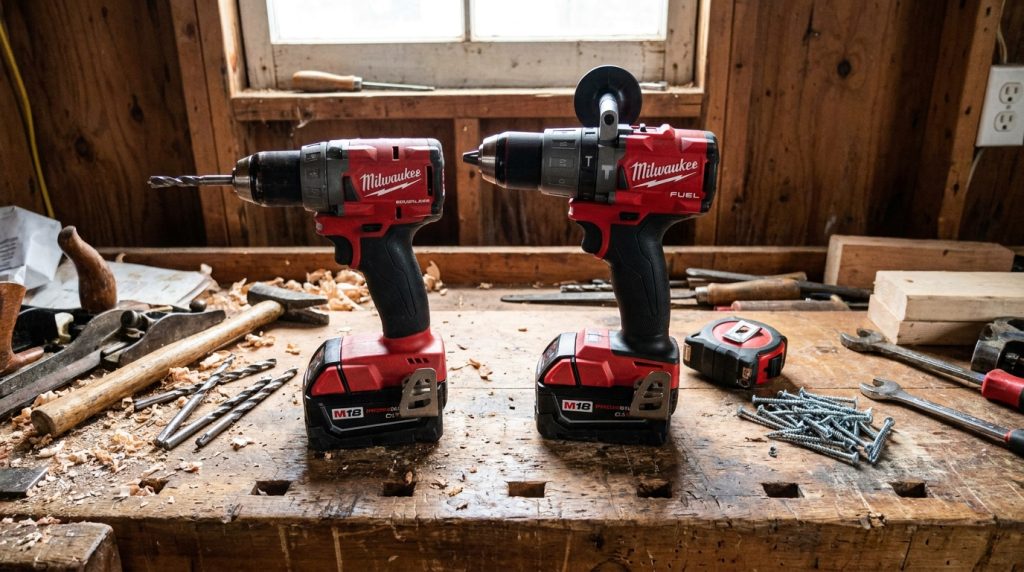
If you’re comparing Milwaukee Fuel vs Brushless tools, the most important point is this: Milwaukee FUEL tools are brushless, but not every Milwaukee brushless tool is FUEL. FUEL is Milwaukee’s premium performance platform, built around three core technologies: POWERSTATE brushless motors, REDLINK PLUS intelligence, and REDLITHIUM battery systems. Standard Milwaukee brushless tools still offer excellent efficiency and longer motor life compared to brushed tools, but they typically do not deliver the same power, electronics, runtime optimization, or heavy-duty performance as FUEL models.
For contractors, maintenance teams, fabricators, farmers, plant mechanics, and serious DIY users in Coldwater, Branch County, and Southern Michigan, the right choice depends on workload. If your tools run every day, drill large holes, drive structural fasteners, cut steel, grind welds, or support industrial maintenance, Milwaukee FUEL is often worth the investment. If you need dependable cordless tools for lighter repair, assembly, property maintenance, or occasional use, Milwaukee brushless tools can be a smart value.
At CEM Industrial Supply, we help customers match tools to real-world applications—not just specs on a box. Below is a practical, jobsite-focused breakdown to help you choose wisely.
Milwaukee’s cordless lineup can be confusing because “brushless” describes a motor type, while “FUEL” describes a complete premium tool system.
What “Brushless” Means
A brushless motor uses electronic controls instead of carbon brushes to manage motor operation. Compared to older brushed motors, brushless motors generally provide:
- Better energy efficiency
- Longer motor life
- Less heat buildup
- More runtime per battery charge
- Lower maintenance
- Improved power-to-size ratio
Brushless technology is now common across professional cordless tools, including drills, impact drivers, saws, grinders, and outdoor power equipment.
What “Milwaukee FUEL” Means
Milwaukee FUEL is the company’s highest-performance cordless tool platform. It includes:
- POWERSTATE brushless motor for higher torque, faster cutting, and better durability
- REDLINK PLUS intelligence for advanced communication between tool, battery, and charger
- REDLITHIUM battery technology for runtime, overload protection, and performance under load
In simple terms, FUEL tools are engineered for maximum output and protection under demanding conditions.
The Key Takeaway
| Feature | Milwaukee Brushless | Milwaukee FUEL |
||:|:|
| Brushless motor | Yes | Yes |
| Premium POWERSTATE motor | Usually no | Yes |
| Advanced REDLINK PLUS electronics | Usually no | Yes |
| Best runtime under heavy load | Good | Excellent |
| Best for daily professional use | Sometimes | Yes |
| Best for high-torque applications | Moderate | Excellent |
| Price | Lower | Higher |
| Value for occasional use | Excellent | Good, but may be more than needed |
| Value for industrial use | Good | Excellent |
If you’re asking, “Is Milwaukee FUEL better than brushless?” the answer is usually yes for heavy-duty work. But if you’re asking, “Do I need FUEL for my job?” the answer depends on how hard and how often you use the tool.
When comparing Milwaukee Fuel and Brushless tools, it’s essential to consider their performance, efficiency, and suitability for various tasks. For a deeper understanding of the tools available for different jobs, you can explore this informative article on the types and uses of pliers, which highlights the best options for every job. Check it out here: Pliers: Types, Uses, and the Best Options for Every Job.
Performance Comparison: Power, Runtime, Heat, and Durability
Milwaukee Fuel vs Brushless comparisons often come down to four practical concerns: power, runtime, heat control, and tool lifespan.
Power and Torque
FUEL tools are designed to maintain higher output under load. That matters when you’re:
- Drilling large-diameter holes
- Driving lag bolts or structural screws
- Cutting thick metal or hardwood
- Grinding welds or heavy burrs
- Running hole saws, auger bits, or step bits
- Using tools continuously in production or maintenance work
For example, a Milwaukee M18 FUEL impact driver will typically deliver stronger fastening performance and better control than a standard M18 brushless impact driver. The difference may not be obvious when driving small screws, but it becomes clear with large fasteners or repeated work.
Runtime Per Battery Charge
Both brushless and FUEL tools are efficient, but FUEL tools are tuned for better battery management under demanding loads. When paired with high-output Milwaukee M18 REDLITHIUM batteries, FUEL tools can often complete more work per charge in heavy applications.
That said, runtime is not only about the tool. It also depends on:
- Battery amp-hour rating
- Battery condition and age
- Material being cut, drilled, or fastened
- Accessory quality
- Operator technique
- Ambient temperature
For Southern Michigan users working in cold shops, barns, service trucks, and outdoor jobsites, battery performance matters. Lithium-ion batteries can lose efficiency in cold weather, so keeping batteries warm before use can help.
Heat Management
Heat is one of the biggest enemies of cordless power tools. Excessive heat can reduce motor life, damage electronics, and shorten battery lifespan.
Milwaukee FUEL tools generally handle heat better because of their premium motor design and more advanced electronics. They are built to detect overload conditions and optimize performance before damage occurs.
Standard Milwaukee brushless tools are still a major step up from brushed tools, but they may heat up faster during continuous heavy-duty work.
Long-Term Durability
For industrial maintenance crews, machine shops, fabrication teams, farms, municipalities, and construction contractors, durability is not optional. Downtime costs money.
FUEL tools are usually the better choice if the tool will be:
- Used daily
- Shared among multiple workers
- Exposed to heavy load cycles
- Used with larger accessories
- Stored in service vehicles
- Expected to replace corded tools
Standard brushless tools are still reliable, but they are often better suited for moderate workloads.
When Milwaukee FUEL Is Worth the Extra Cost
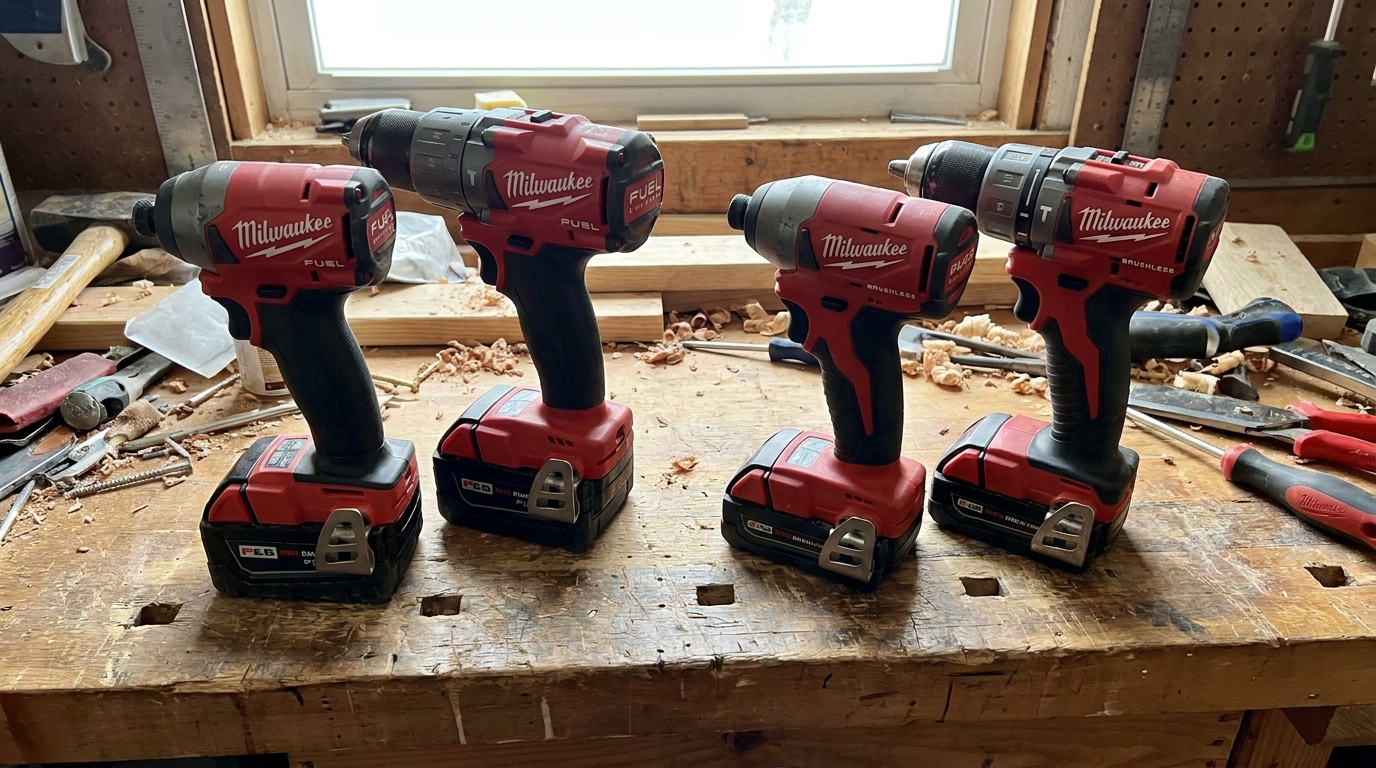
Milwaukee FUEL tools cost more than standard brushless models, but the investment can make sense when performance and uptime matter.
Choose Milwaukee FUEL for Heavy-Duty Applications
FUEL is typically the better option for:
- Commercial construction
- Industrial maintenance
- Equipment repair
- Metal fabrication
- Agricultural maintenance
- Plumbing and mechanical trades
- Electrical rough-in
- Concrete drilling and fastening
- Fleet and vehicle maintenance
- Municipal and facility maintenance
If you’re working around Coldwater, Branch County, or across Southern Michigan in demanding field conditions, FUEL tools can reduce frustration and improve productivity.
Best Milwaukee FUEL Tools for Industrial Users
Common FUEL tools that make sense for professional and industrial work include:
- M18 FUEL drills and hammer drills
- M18 FUEL impact drivers
- M18 FUEL impact wrenches
- M18 FUEL grinders
- M18 FUEL circular saws
- M18 FUEL reciprocating saws
- M18 FUEL band saws
- M18 FUEL rotary hammers
- M12 FUEL installation tools
- M12 FUEL ratchets and impact wrenches
These tools pair well with related supplies such as drill bits, cutting wheels, grinding discs, saw blades, fasteners, anchors, lubricants, safety glasses, gloves, and hearing protection.
FUEL Makes Sense When Replacing Corded Tools
One of Milwaukee’s biggest strengths is cordless performance that can rival corded tools in many applications. If you want to reduce extension cords, improve mobility, and speed up work, FUEL is usually the better platform.
This is especially useful for:
- Maintenance teams moving throughout a facility
- Contractors working where power access is limited
- Field repair crews
- Farm and equipment repair
- Service trucks
- Fabrication and installation crews
A standard brushless tool may be fine for smaller jobs, but FUEL is the better choice when you expect cordless tools to perform like corded tools.
Please visit our latest post at https://cemindustrialsupply.com/news/ for more information.
When Standard Milwaukee Brushless Tools Are the Better Value
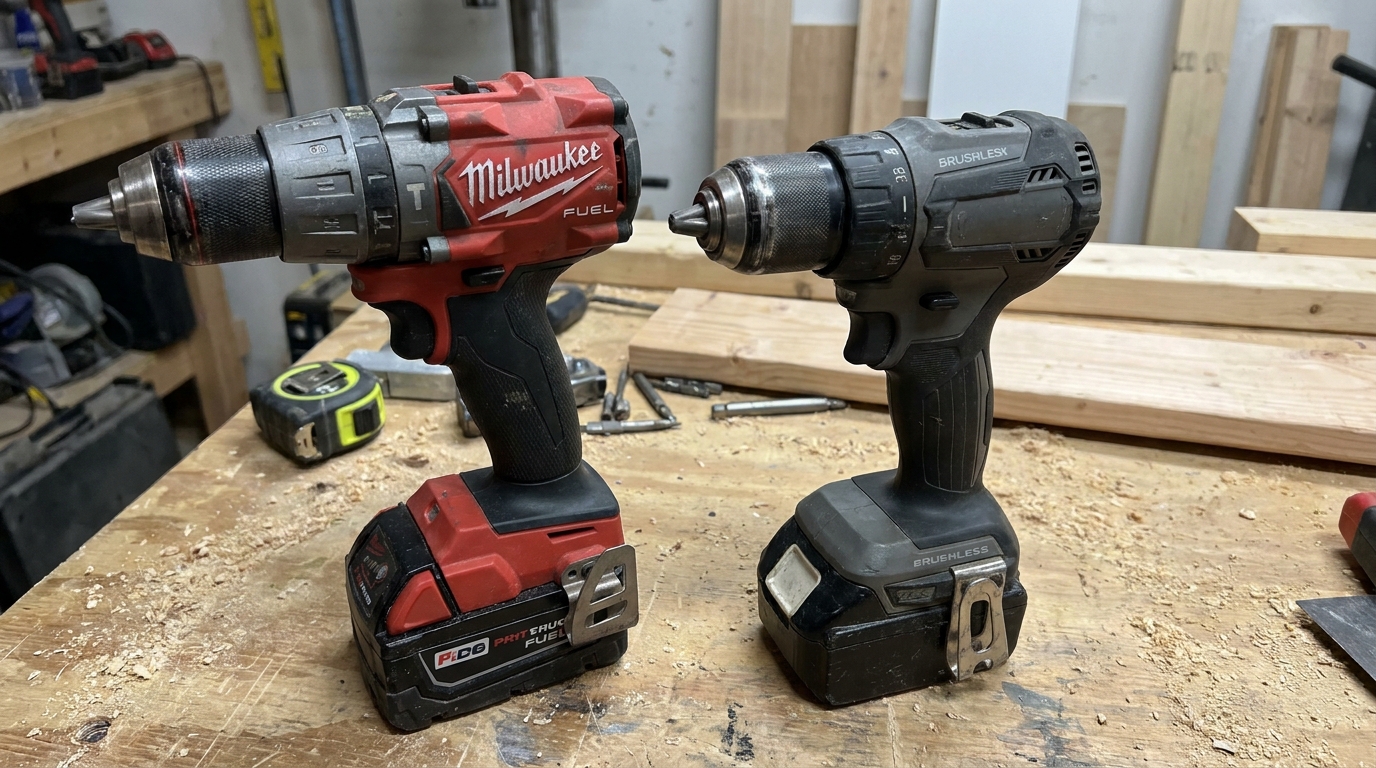
Not every user needs Milwaukee’s top-tier FUEL platform. Standard brushless tools can be an excellent choice when the work is lighter or less frequent.
Choose Brushless for General Maintenance and Light Trade Work
Standard Milwaukee brushless tools are often ideal for:
- Facility maintenance
- Home repair
- Light commercial use
- Assembly work
- Cabinetry and trim
- Property maintenance
- Occasional automotive repair
- Farm shop backup tools
- DIY projects
- Tool kits for apprentices or helpers
If you need reliable cordless performance without paying for maximum output, a Milwaukee brushless drill/driver or impact driver may be the practical choice.
Brushless Tools Still Beat Brushed Tools
If your choice is between brushed and brushless, brushless is usually worth it. Benefits include:
- Longer runtime
- Better motor life
- Less maintenance
- More compact designs
- Better battery efficiency
- Cooler operation
For many users, standard brushless tools offer the best balance of performance and price.
Good Fit for Secondary or Backup Tools
Even professional crews can benefit from standard brushless tools as backup or support tools. For example:
- A brushless drill for pilot holes
- A brushless impact driver for lighter fasteners
- A brushless circular saw for occasional cuts
- A brushless grinder for quick cleanup work
- A brushless oscillating tool for punch-list tasks
Not every tool in your kit has to be FUEL. Many smart buyers invest in FUEL for the tools they use hardest, then choose brushless for secondary tools.
When considering the advantages of Milwaukee Fuel vs Brushless tools, it’s essential to understand the broader context of motor efficiency and longevity. A related article discusses the critical decision-making process regarding motor repairs, specifically when to replace a motor instead of opting for a rewind. This information can be invaluable for those evaluating the long-term benefits of investing in high-quality tools. For more insights, you can read the article here.
Milwaukee M12 vs M18: Where FUEL and Brushless Fit
The Milwaukee Fuel vs Brushless decision also depends on whether you’re using the M12 or M18 platform.
Milwaukee M12: Compact and Lightweight
Milwaukee M12 tools are 12-volt cordless tools designed for compact work, tight spaces, and lower fatigue. They are popular with:
- Electricians
- HVAC technicians
- Maintenance technicians
- Automotive technicians
- Installers
- Assembly workers
M12 FUEL tools are especially impressive because they deliver strong performance in a compact package. For tight mechanical spaces, service work, and overhead tasks, M12 FUEL can be a smart choice.
Milwaukee M18: More Power and Broader Capability
Milwaukee M18 tools are 18-volt cordless tools designed for heavier work. This is the primary platform for:
- Construction
- Fabrication
- Industrial maintenance
- Concrete work
- Heavy fastening
- Cutting and grinding
- Large drilling applications
If you’re comparing M18 FUEL vs M18 brushless, FUEL is generally the stronger choice for demanding jobsite and industrial use.
M12 FUEL vs M18 Brushless
Sometimes users ask whether they should buy M12 FUEL or M18 brushless. The answer depends on the task.
| Application | Better Choice |
|||
| Tight-space fastening | M12 FUEL |
| Light assembly | M12 brushless or M12 FUEL |
| Heavy drilling | M18 FUEL |
| Large lag bolts | M18 FUEL |
| Service work | M12 FUEL |
| Cutting lumber | M18 brushless or M18 FUEL |
| Grinding metal | M18 FUEL |
| Automotive interior work | M12 FUEL |
| Industrial maintenance | M18 FUEL |
For many professional users, the best setup is both platforms: M12 for compact work and M18 for power-hungry jobs.
When considering the differences between Milwaukee Fuel and brushless tools, it’s essential to understand how various components affect performance and efficiency. For instance, the choice of sanding belts can significantly influence the outcome of your projects. A related article discusses the types of sanding belts, specifically aluminum oxide versus zirconia, and when they might burn during use. You can read more about this topic in the article here. Understanding these nuances can help you make informed decisions about your tools and materials.
Buying Guide: How to Choose Between Milwaukee FUEL and Brushless
Before buying, think about your work—not just the tool specs. The right tool is the one that performs reliably for your actual application.
Step 1: Identify Your Workload
Ask yourself:
- Will this tool be used daily or occasionally?
- Will it be used by one person or a crew?
- Are the materials light-duty or heavy-duty?
- Will the tool run continuously?
- Are you replacing a corded tool?
- Is downtime expensive?
- Do you need maximum torque or speed?
- Will the tool be used outdoors or in cold weather?
If the tool is mission-critical, choose FUEL. If it is for lighter use, standard brushless may be enough.
Step 2: Match Tool Type to Application
Some tools benefit more from FUEL technology than others.
| Tool Type | Brushless Is Usually Enough When… | FUEL Is Better When… |
||||
| Drill/driver | Small holes, light fastening | Large bits, hole saws, daily trade use |
| Impact driver | Deck screws, general screws | Structural fasteners, production fastening |
| Impact wrench | Occasional lug nuts | Heavy equipment, fleet, rusted fasteners |
| Grinder | Light cleanup | Weld grinding, cutting steel, daily use |
| Circular saw | Occasional lumber cuts | Framing, treated lumber, heavy cutting |
| Reciprocating saw | Light demolition | Pipe, metal, heavy demo |
| Rotary hammer | Small anchors | Concrete drilling, repeated anchors |
| Band saw | Light conduit | Pipe, strut, fabrication work |
Step 3: Choose the Right Battery
A high-performance tool needs the right battery. Underpowered batteries can limit performance.
General battery guidance:
- Compact batteries: lighter weight, shorter runtime
- Mid-size batteries: balanced weight and runtime
- High-output batteries: best for saws, grinders, rotary hammers, and high-demand tools
- Larger amp-hour batteries: better runtime but more weight
For M18 FUEL grinders, saws, and high-torque tools, high-output batteries are strongly recommended.
Step 4: Don’t Forget Accessories
The best cordless tool can perform poorly with cheap or worn accessories. For industrial work, quality accessories matter.
Useful add-ons include:
- High-quality drill bits
- Step bits and hole saws
- Impact-rated driver bits
- Saw blades for wood, metal, and demolition
- Cut-off wheels and grinding discs
- Flap discs and abrasives
- Anchors and fasteners
- Tool storage
- PPE such as gloves, safety glasses, face shields, and hearing protection
CEM Industrial Supply can help pair power tools with the consumables and safety products needed to keep work moving.
Practical Examples: Which Tool Should You Buy?
The best way to compare Milwaukee Fuel vs Brushless is to look at real job scenarios.
Industrial Maintenance Technician
A maintenance technician in a manufacturing facility may need to drill steel, cut bolts, remove guards, install anchors, and repair equipment quickly.
Recommended choice:
- M18 FUEL drill/driver
- M18 FUEL impact wrench
- M18 FUEL grinder
- M12 FUEL ratchet
- High-output batteries
- Quality drill bits, abrasives, and PPE
Why: Industrial work demands durability, power, and reliability.
Farm and Equipment Repair
Farm shops in Branch County and Southern Michigan often deal with rusted fasteners, field repairs, gates, trailers, hydraulic brackets, and seasonal maintenance.
Recommended choice:
- M18 FUEL impact wrench
- M18 FUEL grinder
- M18 FUEL drill
- M18 brushless work light or secondary drill
- Cut-off wheels, grinding discs, penetrating oil, gloves
Why: FUEL tools handle heavy fastening and metalwork better.
Contractor or Remodeler
A contractor may need a mix of high-power and general-purpose tools.
Recommended choice:
- M18 FUEL circular saw
- M18 FUEL impact driver
- M18 brushless drill for lighter work
- M12 FUEL installation driver
- Saw blades, driver bits, dust control, safety gear
Why: Invest in FUEL where productivity matters most, use brushless where value matters.
Facility or Property Maintenance
For general maintenance around buildings, rental properties, schools, or municipal facilities, standard brushless tools can be enough.
Recommended choice:
- M18 brushless drill/driver
- M18 brushless impact driver
- M12 FUEL compact tools for tight spaces
- Basic bit sets, anchors, fasteners, PPE
Why: Balanced performance without overspending.
Maintenance Tips for Milwaukee Brushless and FUEL Tools
Even premium cordless tools need proper care. Good maintenance improves performance, safety, and tool life.
Keep Tools Clean
Dust, metal chips, and debris can shorten tool life.
Best practices:
- Blow dust out with low-pressure air
- Wipe tools after use
- Keep vents clear
- Avoid setting tools in mud, water, or grinding dust
- Use cases or tool storage when transporting
For metalworking environments, be especially careful with grinding dust. Fine metal particles can damage electronics over time.
Protect Batteries
Milwaukee REDLITHIUM batteries are built tough, but they still need care.
Battery tips:
- Store batteries in a dry location
- Avoid extreme heat
- Keep batteries warm in cold weather before use
- Do not leave batteries in wet areas
- Remove batteries before changing blades or accessories
- Use the correct Milwaukee charger
- Avoid using damaged batteries
In Southern Michigan winters, don’t leave batteries overnight in a freezing truck if you need full performance first thing in the morning.
Use Sharp, Correct Accessories
Dull blades and bits make tools work harder. That creates heat, drains batteries, and reduces productivity.
Replace accessories when you notice:
- Slower cutting or drilling
- Burning material
- Excessive vibration
- Wandering cuts
- Rounded driver bits
- Chipped carbide teeth
- Glazed grinding wheels
Good accessories are not optional—they are part of tool performance.
Safety Tips for Cordless Power Tools
Cordless tools are convenient, but they are still powerful industrial equipment. Treat them with respect.
Personal Protective Equipment
Depending on the task, use:
- Safety glasses
- Face shield
- Cut-resistant gloves
- Hearing protection
- Dust mask or respirator
- Steel-toe boots
- Flame-resistant clothing when grinding or cutting metal
For grinding, cutting, drilling overhead, or using rotary hammers, eye and face protection are especially important.
Safe Operating Practices
Follow these basics:
- Read the tool manual
- Use the correct accessory rating
- Secure the workpiece
- Keep hands away from cutting paths
- Remove the battery before accessory changes
- Do not force the tool
- Let the tool do the work
- Maintain stable footing
- Keep bystanders clear
- Inspect tools before use
Avoid Overloading the Tool
Even FUEL tools have limits. If a tool repeatedly stalls, overheats, or shuts down, reassess the application.
You may need:
- A sharper blade
- A different bit
- A larger battery
- A different speed setting
- A corded or specialty tool
- Cutting fluid or lubricant
- A more powerful FUEL model
Tool shutdown is often the electronics protecting your investment.
Milwaukee FUEL vs Brushless Checklist
Use this quick checklist before buying.
Choose Milwaukee FUEL if:
- You use the tool daily
- You work in construction, industrial maintenance, or fabrication
- You need maximum torque or cutting power
- You run large bits, blades, or wheels
- You want corded-like cordless performance
- You work with steel, concrete, treated lumber, or heavy fasteners
- You need better overload protection
- You want the longest practical tool life under hard use
- Downtime costs you money
Choose Milwaukee Brushless if:
- You use the tool occasionally or moderately
- You want better performance than brushed tools
- You need good runtime at a lower price
- You do light fastening, drilling, or cutting
- You are building a starter cordless kit
- You need backup tools for a crew
- You do property, facility, or home maintenance
- Maximum performance is not required
Consider a Mixed Kit if:
- Some tools are used heavily and others lightly
- You want to control budget
- You need both M12 and M18 tools
- You have multiple users
- You want premium performance where it matters most
A mixed Milwaukee setup is often the smartest approach for professional users.
Local Support in Coldwater, Branch County, and Southern Michigan
Choosing between Milwaukee FUEL and brushless tools is easier when you can talk through the application with someone who understands industrial work. CEM Industrial Supply serves customers in Coldwater, Branch County, and across Southern Michigan with practical product guidance for shops, contractors, farms, maintenance departments, and production facilities.
Product Categories That Support Milwaukee Tool Users
When selecting a cordless tool, don’t overlook the supplies that make the tool productive and safe. CEM Industrial Supply can help with categories such as:
- Cordless power tools
- Batteries and chargers
- Drill bits and cutting tools
- Saw blades
- Abrasives and grinding wheels
- Fasteners and anchors
- Hand tools
- Measuring and layout tools
- Lubricants and chemicals
- PPE and safety supplies
- Tool storage and jobsite organization
- Facility maintenance supplies
A tool purchase should solve the whole job—not just put another drill on the shelf.
Why Local Industrial Knowledge Matters
Online specs are helpful, but real-world tool selection depends on the work. A plant maintenance team, a farmer, an electrician, and a fabrication shop may all need different Milwaukee tools even if they are looking at the same voltage platform.
Local support helps you choose based on:
- Materials you work with
- Frequency of use
- Battery compatibility
- Accessory needs
- Safety requirements
- Budget
- Replacement or expansion plans
- Crew standardization
For businesses around Coldwater and Branch County, having a local industrial supply partner can reduce downtime and simplify purchasing.
FAQs About Milwaukee FUEL vs Brushless
Is Milwaukee FUEL the same as brushless?
No. Milwaukee FUEL tools are brushless, but FUEL is a premium system that includes Milwaukee’s POWERSTATE brushless motor, REDLINK PLUS electronics, and REDLITHIUM battery technology. Standard Milwaukee brushless tools have brushless motors but usually do not include the same premium performance package.
Is Milwaukee FUEL better than regular Milwaukee brushless?
For heavy-duty work, yes. Milwaukee FUEL tools generally provide more power, better runtime under load, improved electronics, and stronger durability. For light or occasional work, standard brushless tools may be the better value.
Are Milwaukee brushless tools still professional quality?
Yes. Milwaukee brushless tools can be a good choice for professionals, especially for moderate-duty tasks, backup tools, or general maintenance. However, for daily heavy use, FUEL is usually the preferred option.
Do Milwaukee FUEL tools need special batteries?
Milwaukee FUEL tools run on the same compatible Milwaukee M12 or M18 batteries within their platform. However, high-demand FUEL tools perform best with higher-capacity or high-output batteries. Using a small compact battery on a grinder or saw may limit runtime and performance.
Is M18 FUEL worth it over M18 brushless?
M18 FUEL is worth it if you need maximum power, longer runtime under load, and better durability for demanding work. For drilling small holes, driving light fasteners, or occasional use, M18 brushless may be enough.
Which is better for automotive work: FUEL or brushless?
For automotive and equipment repair, FUEL is often better—especially for impact wrenches, ratchets, grinders, and heavy fastening tools. M12 FUEL tools are popular for tight spaces, while M18 FUEL tools are better for high-torque applications.
Can Milwaukee FUEL replace corded tools?
In many applications, yes. M18 FUEL saws, grinders, rotary hammers, and drills can replace corded tools for many jobsite and maintenance tasks. For continuous production work or extreme-duty applications, corded or pneumatic tools may still have a place.
Do brushless tools last longer than brushed tools?
Generally, yes. Brushless motors do not use carbon brushes, so there are fewer wear components. They also run more efficiently and often cooler, which can improve tool life when used properly.
What should I buy first: a FUEL drill or impact driver?
If you do a lot of fastening, start with an impact driver. If you drill more holes or need clutch control, start with a drill/driver or hammer drill. Many users benefit from a combo kit. For professional use, an M18 FUEL drill and impact driver kit is a strong foundation.
How do I know if I’m overbuying with FUEL?
If the tool will only be used occasionally for light-duty tasks, you may not need FUEL. Standard brushless tools provide excellent value for general repair, maintenance, and home use. But if the tool affects productivity, safety, or downtime, FUEL is often the better long-term investment.
Final Recommendation: Milwaukee FUEL or Brushless?
For most industrial, construction, agricultural, and maintenance professionals, Milwaukee FUEL is the better choice for the tools used hardest. The added power, advanced electronics, and durability can pay for themselves through faster work, less frustration, and longer service life.
For lighter-duty users, standard Milwaukee brushless tools remain a strong value. They are efficient, capable, and a clear upgrade over brushed tools.
The smartest approach is often selective buying:
- Buy FUEL for drills, impact wrenches, grinders, saws, and rotary hammers used under heavy load.
- Buy standard brushless for lighter-duty tools, backups, and occasional-use applications.
- Invest in quality batteries, chargers, accessories, and PPE.
- Match the tool to the job, not just the price tag.
If you’re in Coldwater, Branch County, or Southern Michigan and need help comparing Milwaukee Fuel vs Brushless options for your work, CEM Industrial Supply can help you build a practical tool setup that fits your applications, budget, and safety needs.
FAQs
What is the difference between Milwaukee Fuel and Brushless tools?
Milwaukee Fuel tools are a specific line of cordless power tools that feature brushless motors, which are designed to deliver more power, longer runtime, and longer motor life compared to traditional brushed motors. Brushless tools, on the other hand, refer to any power tool that utilizes a brushless motor, regardless of the brand.
Are Milwaukee Fuel tools the same as brushless tools?
No, Milwaukee Fuel tools are a specific line of cordless power tools manufactured by Milwaukee Tool, which feature brushless motors. While all Milwaukee Fuel tools are brushless, not all brushless tools are Milwaukee Fuel.
What are the advantages of Milwaukee Fuel tools over traditional brushed tools?
Milwaukee Fuel tools offer several advantages over traditional brushed tools, including increased power, longer runtime, and longer motor life. The brushless motor design also reduces maintenance and wear on the tool, resulting in a longer lifespan.
Do Milwaukee Fuel tools cost more than traditional brushed tools?
Generally, Milwaukee Fuel tools do cost more than traditional brushed tools due to the advanced technology and features, such as the brushless motor. However, the increased performance and durability of Milwaukee Fuel tools may justify the higher cost for professionals and serious DIY enthusiasts.
Which type of tool is better for professional use, Milwaukee Fuel or traditional brushed?
For professional use, Milwaukee Fuel tools are often preferred due to their superior performance, longer runtime, and longer motor life. The investment in Milwaukee Fuel tools may pay off in the long run for professionals who rely on their tools for daily use and demanding applications.