
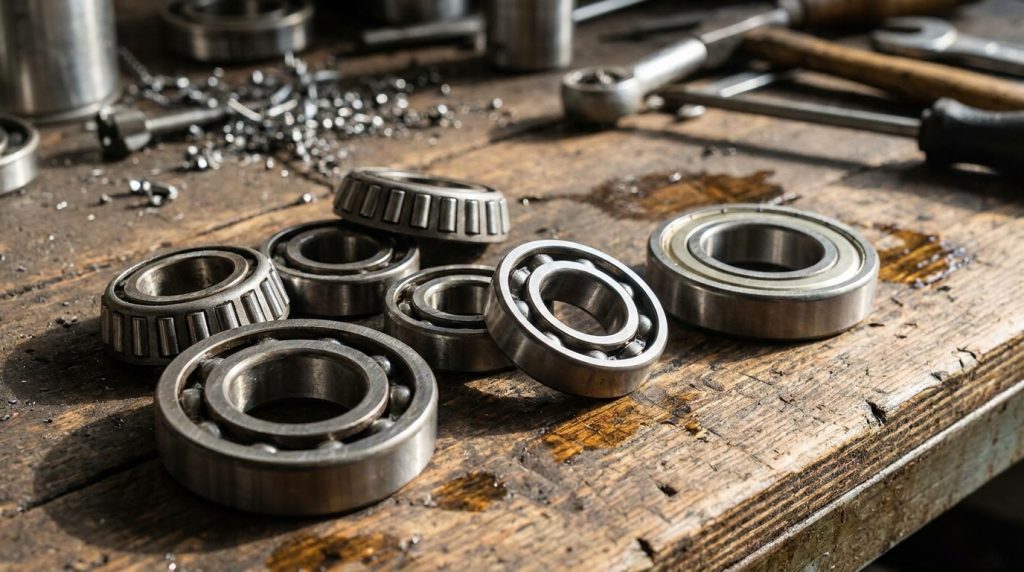
If you’re searching for where to buy bearings in Coldwater, you’re probably trying to solve a problem quickly: a conveyor is down, a motor is running hot, a shaft has excessive play, or a farm, food processing, machine shop, or maintenance operation needs replacement bearings before production stops.
For maintenance teams in Coldwater, Branch County, and Southern Michigan, buying the right bearing is about more than finding a part that “looks close.” Bearing fit, load rating, seal type, speed, lubrication, housing style, and shaft condition all affect service life. The right supplier should help you identify the correct bearing, match it to the application, and support you with related industrial supplies such as belts, pulleys, lubricants, fasteners, seals, tools, safety products, and power transmission components.
CEM Industrial Supply serves industrial, commercial, agricultural, and maintenance customers throughout Coldwater, Branch County, and Southern Michigan with practical product knowledge and dependable sourcing support. Whether you need one replacement insert bearing or recurring supply for plant maintenance, this guide will help you understand what to buy, what to ask, and how to avoid premature bearing failure.
When a bearing fails, the temptation is to buy the first available replacement. That can work for simple applications, but in industrial maintenance, the wrong bearing can lead to repeat failures, shaft damage, downtime, and safety hazards.
A good local bearing supplier should offer more than a box on a shelf. Look for a supplier that understands industrial equipment and can help you confirm specifications before you purchase.
Choose a Supplier That Understands Industrial Applications
Bearings are used across many types of equipment in Coldwater-area operations, including:
- Conveyors and material handling systems
- Electric motors and gearboxes
- Pumps and fans
- Agricultural equipment
- Packaging machinery
- Food processing equipment
- CNC and machine shop equipment
- HVAC systems
- Rollers, carts, and casters
- Hydraulic and pneumatic support systems
The bearing for a slow-turning agricultural shaft is not the same as a high-speed motor bearing or a sealed washdown bearing for a food processing line. Your supplier should ask about the application, not just the part number.
Prioritize Local Support and Fast Access
For facilities in Coldwater, Quincy, Bronson, Union City, Tekonsha, Kinderhook, and throughout Branch County, a local industrial supplier can reduce downtime by helping you source parts faster.
Local support matters when you need:
- Same-day or quick-turn sourcing options
- Help identifying unmarked or worn bearings
- Cross-referencing obsolete part numbers
- Matching bearings with seals, collars, housings, or grease
- Recurring maintenance inventory planning
- Industrial-grade products rather than light-duty substitutes
CEM Industrial Supply is positioned to support Southern Michigan maintenance teams with product categories commonly needed alongside bearings, including power transmission components, industrial hardware, lubricants, cutting tools, safety supplies, abrasives, adhesives, and shop supplies.
Make Sure the Supplier Can Help Cross-Reference Bearings
Many bearing failures happen on older equipment where the original number is worn off, discontinued, or replaced by a newer equivalent. A knowledgeable supplier can often cross-reference based on:
- Bore size
- Outside diameter
- Width
- Seal or shield style
- Bearing type
- Housing type
- Locking mechanism
- Load and speed requirements
- Manufacturer part number
- Equipment make and model
Bringing the old bearing, housing, shaft measurement, or equipment manual can speed up identification.
If you’re looking for a comprehensive guide on purchasing bearings in Coldwater, you might find it helpful to also explore related industrial supplies. For instance, you can check out this article on industrial sockets, which provides valuable insights into another essential component for various machinery and equipment. Understanding the different types of industrial supplies can enhance your overall purchasing decisions.
Common Bearing Types Available for Coldwater-Area Industrial Buyers
The word “bearing” covers a wide range of products. Selecting the right type depends on the direction of load, speed, environment, mounting style, and maintenance expectations.
Ball Bearings
Ball bearings are among the most common industrial bearings. They are used in electric motors, conveyors, fans, pumps, rollers, and general rotating equipment.
Common ball bearing styles include:
- Deep groove ball bearings
- Angular contact ball bearings
- Self-aligning ball bearings
- Miniature ball bearings
- Double-row ball bearings
Deep groove ball bearings are widely used because they handle radial loads and some axial loads while operating smoothly at moderate to high speeds.
Roller Bearings
Roller bearings use cylindrical, tapered, spherical, or needle-shaped rolling elements. They generally handle heavier loads than ball bearings.
Common roller bearing types include:
- Tapered roller bearings
- Cylindrical roller bearings
- Spherical roller bearings
- Needle roller bearings
Tapered roller bearings are common in wheel hubs, gearboxes, agricultural equipment, and heavy-duty rotating assemblies. Spherical roller bearings are often used where misalignment and heavy radial loads are concerns.
Mounted Bearings and Bearing Units
Mounted bearings combine a bearing insert with a housing, making installation easier and providing support for rotating shafts.
Common mounted bearing styles include:
- Pillow block bearings
- Flange bearings
- 2-bolt flange units
- 4-bolt flange units
- Take-up bearings
- Hanger bearings
- Cartridge bearings
Mounted bearings are common in conveyors, bulk handling systems, agricultural equipment, packaging lines, and material handling equipment throughout Southern Michigan.
Plain Bearings and Bushings
Plain bearings, also called bushings or sleeve bearings, provide sliding contact rather than rolling contact. They are often used in slower-speed or oscillating applications.
Common materials include:
- Bronze
- Oil-impregnated bronze
- Steel-backed bushings
- Plastic or polymer
- Composite materials
Bushings are common in linkages, pivots, hinges, lift mechanisms, and agricultural equipment.
Specialty Bearings
Some applications require specialized bearing designs. These may include:
- Stainless steel bearings
- High-temperature bearings
- Washdown-duty bearings
- Food-grade bearings
- Corrosion-resistant bearings
- Cam followers
- Track rollers
- Linear bearings
- Thrust bearings
If your equipment operates in moisture, chemicals, high temperatures, dust, or food processing environments, a standard bearing may not provide acceptable service life.
Bearing Buying Guide for Coldwater, Branch County, and Southern Michigan
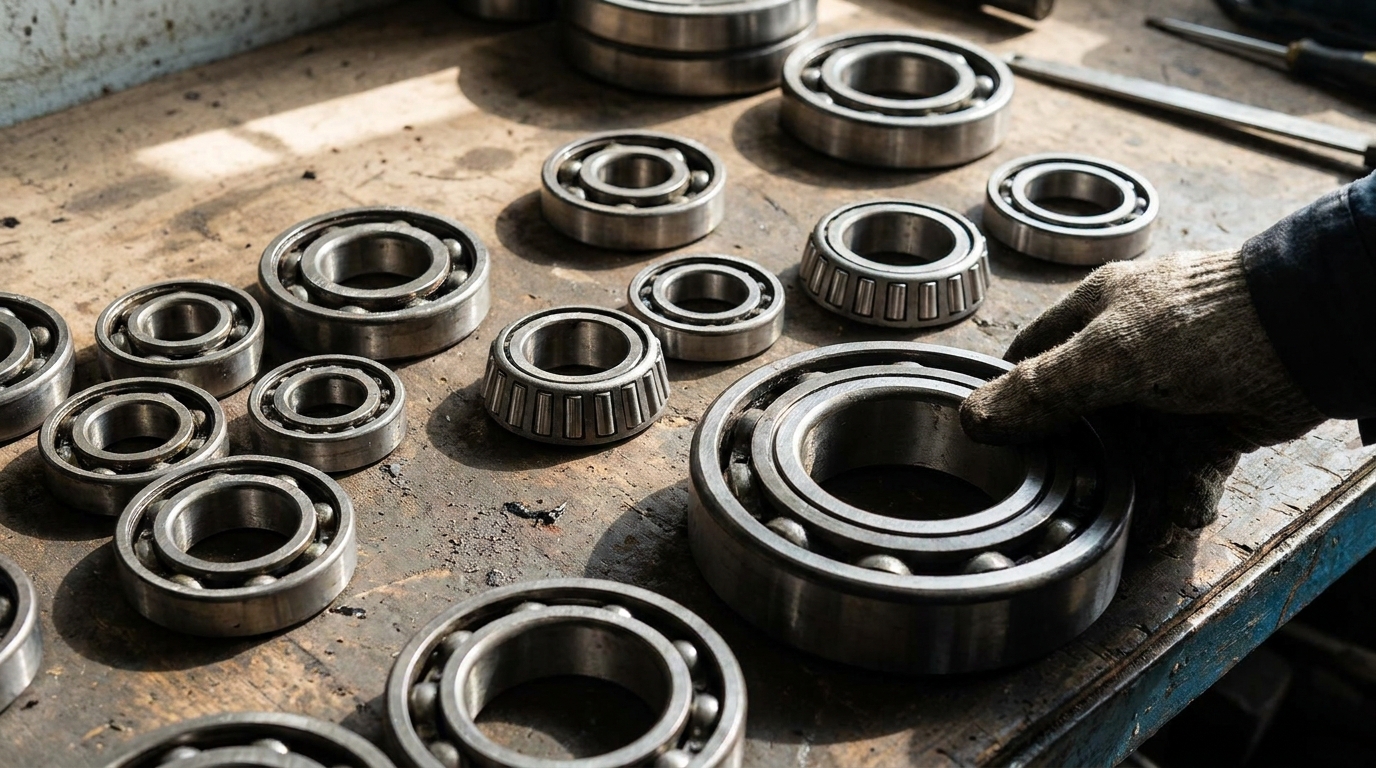
Buying bearings is easier when you know what information to provide. If you are not sure what you need, CEM Industrial Supply can help you work through the details.
Key Bearing Measurements to Know
The three most important dimensions are:
| Measurement | What It Means | Why It Matters |
|---|---|---|
| Bore size | Inside diameter of the bearing | Must match the shaft |
| Outside diameter | Outer diameter of the bearing | Must fit the housing or bore |
| Width | Bearing thickness | Affects fit, spacing, and load support |
For mounted bearings, you may also need:
- Shaft size
- Bolt hole spacing
- Housing style
- Base height
- Locking collar type
- Overall housing dimensions
- Grease fitting location
- Insert bearing number
Use calipers for accurate measurement whenever possible. Tape measures are often not precise enough for bearing identification.
Understand Bearing Load Requirements
Bearings experience different types of load:
- Radial load: Force perpendicular to the shaft
- Axial load: Force parallel to the shaft, also called thrust load
- Combined load: Both radial and axial loads
- Shock load: Impact or sudden force during operation
For example, a conveyor roller may mainly experience radial load, while a screw conveyor or gearbox may experience thrust load. Heavy shock loads may require a more robust bearing than a standard replacement.
Match Bearing Speed to the Application
Every bearing has a speed rating. Using a bearing above its rated speed can cause overheating, lubricant breakdown, cage damage, and early failure.
High-speed applications may require:
- Precision bearings
- Proper internal clearance
- Lower-friction seals or shields
- Correct grease type and fill level
- Accurate shaft and housing alignment
Electric motor bearings, fans, and high-speed spindles require extra attention to speed and heat.
Choose the Right Seal or Shield
Bearing seals and shields protect the rolling elements from contamination and help retain lubricant.
| Protection Type | Best For | Considerations |
|---|
| Open bearing | Clean, lubricated systems | Requires external lubrication and protection |
| Metal shield | Moderate contamination, higher-speed applications | Less protection than rubber seals |
| Contact rubber seal | Dust, dirt, and moisture | Creates more friction than metal shields |
| Non-contact seal | Higher-speed applications with light contamination | Provides less sealing than contact seals |
| Triple-lip seal | Harsh, dirty, or wet environments | Commonly used in mounted bearing units |
In Coldwater-area manufacturing, agriculture, and outdoor equipment, contamination is one of the most common causes of bearing failure. Dust, water, grit, fertilizer, metal chips, and cleaning chemicals can quickly shorten bearing life.
Consider the Operating Environment
Before buying a bearing, ask:
- Is the area wet, dusty, hot, or corrosive?
- Is the equipment washed down?
- Are food-grade lubricants required?
- Is the bearing exposed to outdoor weather?
- Is there vibration or misalignment?
- Is the bearing difficult to access for maintenance?
- Will the equipment run continuously or intermittently?
A bearing that works well indoors may fail quickly outdoors or in a washdown area.
Please visit our latest post at https://cemindustrialsupply.com/news/ for more information.
Comparing Common Bearing Options
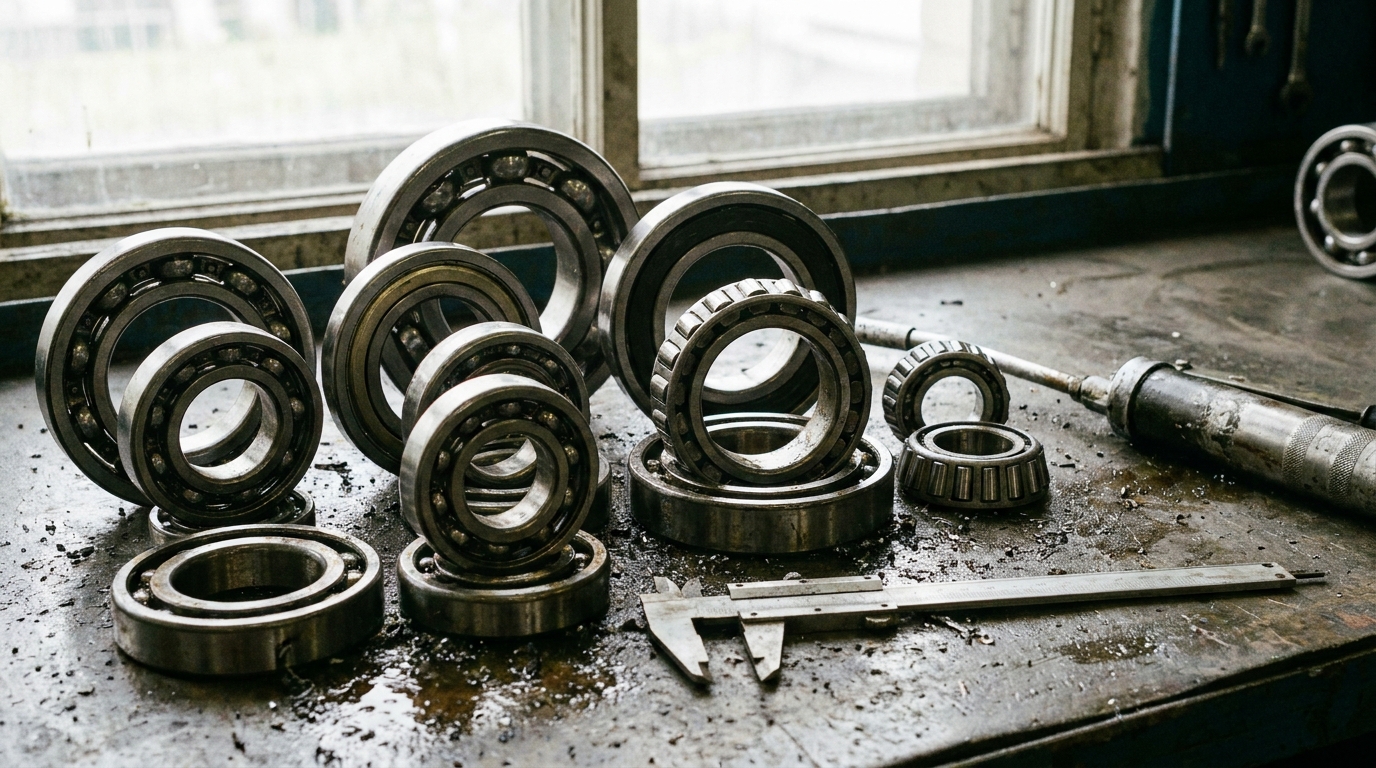
The best bearing depends on the application. This table offers a quick comparison for maintenance buyers.
| Bearing Type | Load Capacity | Speed Capability | Misalignment Tolerance | Common Uses |
|---|
| Deep groove ball bearing | Medium | High | Low | Electric motors, fans, pumps, conveyors |
| Tapered roller bearing | High | Medium | Low | Wheel hubs, gearboxes, industrial equipment |
| Spherical roller bearing | Very high | Medium | High | Heavy conveyors, crushers, mining equipment |
| Needle roller bearing | High for its size | Medium | Low | Compact machinery, transmissions, gear assemblies |
| Pillow block bearing | Medium to high | Medium | Moderate | Conveyors, line shafts, agricultural equipment |
| Flange bearing | Medium to high | Medium | Moderate | Mounted shafts, machinery frames, conveyors |
| Bronze bushing | Medium | Low | Moderate | Pivots, hinges, linkages, slow-speed applications |
| Linear bearing | Application-specific | Application-specific | Low | Linear guides, automation systems, CNC machines |
For critical equipment, do not rely on appearance alone. Two bearings may look similar but have different clearances, seals, materials, load ratings, or internal designs.
If you’re looking for reliable sources to purchase bearings in Coldwater, you might find it helpful to explore related topics that discuss the durability and longevity of various industrial supplies. For instance, an insightful article on tool storage options can provide valuable information on how different systems compare in terms of durability and functionality. You can read more about this in the article on tool storage systems, which may give you a broader perspective on the quality of equipment that can complement your bearing purchases.
How to Identify a Replacement Bearing
If you have the old bearing, identification is usually straightforward. If the bearing is damaged or unreadable, you may need to measure and inspect the assembly.
Step 1: Look for the Bearing Number
Most bearings have a number stamped or etched on the ring, seal, shield, or housing. Clean the bearing carefully and look for markings.
Examples of bearing numbers may include codes indicating:
- Bearing series
- Bore size
- Seal or shield type
- Internal clearance
- Precision class
- Material or special design
If you find a number, provide the full marking to your supplier. Even small suffixes can matter.
Step 2: Measure the Bearing
Use calipers to measure:
- Inside diameter
- Outside diameter
- Width
- Shaft diameter
- Housing bore, if applicable
For mounted bearings, also measure:
- Bolt spacing
- Base-to-center height
- Housing length and width
- Flange pattern
- Locking collar style
Step 3: Identify the Locking Method
Mounted bearing inserts may secure to the shaft in several ways:
- Set screw locking
- Eccentric locking collar
- Adapter sleeve
- Concentric locking collar
- Tapered bore
- Press fit
Using the wrong locking style can lead to shaft slippage, fretting, vibration, or premature failure.
Step 4: Check the Shaft and Housing
A new bearing will not last if installed on a damaged shaft or in a worn housing.
Look for:
- Scoring
- Grooving
- Corrosion
- Undersized shaft wear
- Out-of-round shaft condition
- Loose housing fit
- Cracked housing
- Misalignment
- Contamination buildup
If the shaft is worn, the bearing may spin on the shaft instead of rotating internally. That can damage both the bearing and the equipment.
If you’re looking for bearings in Coldwater, you might also find it helpful to explore the differences between various tools that can assist in your projects. For instance, understanding the distinctions between combination, ratcheting, and flare nut wrenches can greatly enhance your efficiency. You can read more about this in the article on wrenches, which provides valuable insights for anyone in need of reliable tools. Check it out here.
Bearings and Related Industrial Supplies from CEM Industrial Supply
When searching for bearings in Coldwater, many buyers also need related components to complete the repair correctly. CEM Industrial Supply supports maintenance and repair operations with product categories that commonly work alongside bearings.
Power Transmission Components
Bearings are part of a larger rotating system. Depending on the equipment, you may also need:
- V-belts
- Timing belts
- Sheaves and pulleys
- Sprockets
- Roller chain
- Couplings
- Bushings
- Gear reducers
- Shaft collars
- Keys and key stock
Replacing a bearing without checking belt tension, pulley alignment, chain condition, or coupling wear can lead to another failure.
Lubricants and Grease
Lubrication is one of the most important factors in bearing life. CEM can help customers source industrial lubricants and greases suitable for different conditions, such as:
- General-purpose bearing grease
- High-temperature grease
- Food-grade grease
- Water-resistant grease
- Heavy-duty EP grease
- Synthetic lubricants
- Penetrants and anti-seize products
Using the wrong lubricant can cause overheating, contamination, or inadequate film strength.
Fasteners, Hardware, and Retaining Components
Bearing replacement often requires related hardware, including:
- Bolts and nuts
- Washers
- Lock washers
- Set screws
- Snap rings
- Retaining rings
- Shaft keys
- Threadlocker
- Shims
- Mounting plates
Do not reuse damaged fasteners in critical rotating equipment. Loose mounting hardware can cause vibration, misalignment, and bearing housing failure.
Tools and Shop Supplies
Proper installation requires the right tools. Depending on the job, maintenance teams may need:
- Bearing pullers
- Press tools
- Calipers
- Torque wrenches
- Alignment tools
- Dead blow hammers
- Files
- Cleaners and degreasers
- Abrasives
- Shop towels
- PPE
Improper bearing installation is a major cause of early failure. Hammering directly on bearing rings, over-tightening set screws, or forcing a bearing onto a damaged shaft can ruin the part before the equipment is restarted.
Safety Products
Bearing work often happens around rotating machinery, pinch points, elevated equipment, hot surfaces, and heavy components. CEM Industrial Supply can help customers source safety products such as:
- Safety glasses
- Gloves
- Hearing protection
- Lockout/tagout supplies
- Face shields
- Protective clothing
- Spill control products
- First aid supplies
Safety should be part of every bearing replacement job, especially in production environments where downtime pressure can lead to shortcuts.
Maintenance Tips to Extend Bearing Life
The cheapest bearing is not always the lowest-cost option. A slightly better bearing, properly installed and maintained, can save money by reducing downtime and labor.
Keep Bearings Clean
Contamination is one of the leading causes of bearing failure. Dirt and metal particles damage rolling surfaces and accelerate wear.
Best practices include:
- Store bearings in original packaging until use
- Keep bearings away from dust, moisture, and chemicals
- Clean shafts and housings before installation
- Use clean gloves or clean hands
- Avoid placing bearings on dirty workbenches
- Keep grease guns and fittings clean
Never spin a dry bearing with compressed air. It can damage the bearing and create a safety hazard.
Lubricate Correctly
Over-greasing can be just as harmful as under-greasing. Too much grease can cause heat buildup, seal failure, and lubricant churn.
Good lubrication practices:
- Follow manufacturer recommendations
- Use the correct grease type
- Avoid mixing incompatible greases
- Apply the right amount
- Clean grease fittings before use
- Establish a lubrication schedule
- Monitor operating temperature after lubrication
If a bearing runs hotter after greasing, it may be overfilled or using the wrong lubricant.
Align Shafts and Housings
Misalignment causes uneven loading and premature bearing wear. This is especially important for pillow block bearings, flange bearings, couplings, belt drives, and conveyors.
Check for:
- Parallel shaft alignment
- Angular misalignment
- Soft foot on mounted units
- Proper housing placement
- Correct belt or chain tension
- Level mounting surfaces
If a bearing fails repeatedly in the same position, alignment should be one of the first things inspected.
Monitor Noise, Heat, and Vibration
Bearings often show warning signs before failure.
Watch for:
- Grinding or rumbling noise
- Squealing
- Excessive heat
- Vibration
- Grease leakage
- Rust-colored dust
- Shaft movement
- Increased motor amperage
- Belt tracking problems
Routine inspection can prevent unexpected shutdowns.
Bearing Installation Checklist
Use this checklist before and during bearing replacement.
Before Installation
- Confirm the correct bearing part number
- Check dimensions and seal type
- Inspect shaft condition
- Inspect housing condition
- Verify lubricant compatibility
- Clean the work area
- Gather proper tools
- Review lockout/tagout requirements
- Inspect related belts, chains, pulleys, and couplings
- Confirm mounting hardware condition
During Installation
- Do not remove packaging until ready to install
- Keep bearing clean
- Apply force only to the correct bearing ring
- Do not hammer directly on the bearing
- Use proper press tools or mounting sleeves
- Tighten fasteners to recommended torque
- Align shafts and housings
- Set proper belt or chain tension
- Lubricate according to recommendations
- Rotate by hand before startup when possible
After Installation
- Start equipment at low load if possible
- Listen for abnormal noise
- Check temperature during initial run
- Inspect for vibration
- Recheck fastener tightness
- Confirm grease purge if applicable
- Document replacement date and part number
- Schedule follow-up inspection
Good documentation helps maintenance teams spot patterns and improve future purchasing decisions.
Common Causes of Premature Bearing Failure
A bearing failure is rarely random. Most failures can be traced to a specific cause.
Improper Installation
Common installation mistakes include:
- Hammering through rolling elements
- Pressing on the wrong ring
- Installing on a damaged shaft
- Misaligning mounted units
- Over-tightening set screws
- Contaminating the bearing during installation
Even a high-quality bearing will fail early if installed incorrectly.
Lubrication Problems
Lubrication-related failures may come from:
- Too little grease
- Too much grease
- Wrong grease type
- Incompatible grease mixing
- Contaminated grease
- Grease breakdown from heat
- Missed lubrication intervals
For hard-to-reach bearings, consider whether automatic lubrication or improved maintenance access is needed.
Contamination
Common contaminants in Southern Michigan industrial and agricultural environments include:
- Dust
- Dirt
- Water
- Metal chips
- Fertilizer
- Cleaning chemicals
- Food particles
- Abrasive debris
Seal selection matters. In dirty environments, a shielded bearing may not be enough.
Misalignment and Excessive Load
Misalignment and overload create heat, stress, and uneven wear.
Potential sources include:
- Bent shafts
- Improperly tensioned belts
- Chain misalignment
- Unbalanced loads
- Loose mounting surfaces
- Worn couplings
- Equipment frame distortion
When replacing a failed bearing, look for the root cause rather than simply replacing the part.
Buying Bearings Locally vs. Ordering Online
Online marketplaces can be convenient, but industrial buyers should be careful. Bearings are precision components, and incorrect or low-quality products can create costly problems.
Advantages of Buying Locally in Coldwater
Buying through a knowledgeable local supplier offers several advantages:
- Help confirming the correct part
- Local understanding of industrial applications
- Faster troubleshooting
- Ability to bring in old parts for comparison
- Support for related maintenance supplies
- Better communication for urgent needs
- Reduced risk of ordering the wrong item
For Branch County manufacturers, machine shops, farms, contractors, and maintenance departments, local sourcing can reduce downtime and improve reliability.
When Online Ordering Can Be Risky
Online ordering may cause issues when:
- The part description is incomplete
- Seal or clearance suffixes are missing
- The bearing is a low-quality substitute
- Dimensions are listed incorrectly
- The part is counterfeit or not traceable
- Delivery timing is uncertain
- Technical support is unavailable
If a bearing is used in critical production equipment, pumps, motors, conveyors, or safety-related machinery, expert sourcing support is worth it.
How CEM Industrial Supply Helps Coldwater Businesses Buy the Right Bearings
CEM Industrial Supply works with industrial and maintenance customers who need practical, accurate solutions—not guesswork. The goal is to help customers in Coldwater, Branch County, and Southern Michigan find bearings and related supplies that fit the equipment and application.
Support for Maintenance and Repair Teams
CEM can help with:
- Bearing identification
- Replacement part sourcing
- Cross-referencing part numbers
- Mounted bearing selection
- Power transmission component support
- Lubrication product selection
- Safety and shop supply needs
- Maintenance inventory planning
Whether you maintain a single machine or an entire facility, having a dependable industrial supply partner can reduce downtime and purchasing headaches.
Practical Help for Local Industries
Coldwater and the surrounding Southern Michigan region include a wide mix of businesses and operations, such as:
- Manufacturing plants
- Food processing facilities
- Agricultural operations
- Machine shops
- Fabrication shops
- Municipal maintenance departments
- Contractors
- Warehouses and distribution facilities
- Automotive-related suppliers
- Equipment repair shops
Each industry has different bearing needs. For example, food processing may require washdown-resistant bearings and food-grade lubricants, while agricultural equipment may require heavy-duty seals and corrosion resistance.
Quick Bearing Selection Checklist for Buyers
Before contacting a supplier or placing an order, gather as much of the following information as possible:
- Bearing part number
- Equipment make and model
- Bore size
- Outside diameter
- Width
- Shaft diameter
- Housing type
- Seal or shield type
- Load direction
- Speed
- Operating temperature
- Exposure to water, dust, or chemicals
- Lubrication requirements
- Failure symptoms
- Photos of the bearing and equipment
- Quantity needed
- Urgency or downtime status
If you do not have all the information, bring the old bearing or photos to CEM Industrial Supply for help identifying the best replacement option.
Safety Tips When Replacing Bearings
Bearing replacement can be hazardous if the equipment is not properly secured.
Lockout/Tagout Is Essential
Before working on rotating equipment:
- Shut down the machine
- Isolate electrical, hydraulic, pneumatic, and mechanical energy
- Lock and tag energy sources
- Verify zero energy state
- Block or support moving components
- Release stored pressure
- Follow company safety procedures
Never rely only on a stop button.
Use Proper Lifting and Handling
Large bearings, housings, shafts, and pulleys can be heavy.
Use:
- Hoists
- Slings
- Lifting eyes
- Mechanical assistance
- Team lifting when appropriate
Avoid placing fingers near pinch points during alignment or mounting.
Wear the Right PPE
Recommended PPE may include:
- Safety glasses
- Cut-resistant gloves
- Steel-toe footwear
- Hearing protection
- Face shield when using pullers or impact tools
- Protective clothing near hot surfaces
Always match PPE to the job and facility requirements.
FAQs
Where can I buy bearings in Coldwater, Michigan?
You can buy industrial bearings in Coldwater through CEM Industrial Supply, which supports local maintenance, manufacturing, agricultural, and repair customers with bearing sourcing and related industrial supplies. CEM can help identify replacement bearings, cross-reference part numbers, and support surrounding areas in Branch County and Southern Michigan.
What information do I need to buy a replacement bearing?
The most helpful information includes the bearing part number, bore size, outside diameter, width, seal type, shaft size, housing style, equipment model, and application details. If the number is unreadable, bring the old bearing or clear photos for identification.
Can CEM Industrial Supply help cross-reference bearing numbers?
Yes. Bearing cross-referencing is often necessary when part numbers are obsolete, worn off, or from different manufacturers. Providing the full number, dimensions, and application details helps identify the correct replacement.
What is the difference between a sealed and shielded bearing?
A sealed bearing usually has rubber or contact seals that provide better protection against dirt and moisture. A shielded bearing has metal shields that reduce contamination while allowing higher speeds and lower friction. The best choice depends on speed, environment, and contamination exposure.
How do I know if I need a pillow block bearing or a flange bearing?
A pillow block bearing mounts to a flat surface and supports a shaft parallel to that surface. A flange bearing mounts to a vertical or side surface using a 2-bolt or 4-bolt flange. The equipment design, shaft direction, and mounting surface determine which type is needed.
Why do my bearings keep failing?
Repeat bearing failure is often caused by misalignment, contamination, poor lubrication, improper installation, overloading, excessive belt tension, shaft wear, or the wrong bearing type. Inspecting the full system is important before installing another replacement.
Do bearings need to be greased?
Some bearings are sealed for life and do not require relubrication. Others, especially mounted bearings, require scheduled greasing. Always follow the manufacturer’s recommendations and use the correct grease type and amount.
Can I replace a bearing myself?
Many maintenance teams can replace bearings safely with the right tools and training. However, critical equipment, high-speed machinery, press fits, large bearings, and precision applications may require experienced technicians. Always follow lockout/tagout procedures and manufacturer instructions.
What related parts should I inspect when replacing a bearing?
Inspect shafts, housings, belts, pulleys, chains, sprockets, couplings, seals, fasteners, keys, and lubrication points. A worn related component can quickly damage the new bearing.
Does buying bearings locally help reduce downtime?
Yes. Buying bearings locally in Coldwater can help reduce downtime by improving part identification, communication, and access to related maintenance supplies. A local industrial supplier can also help prevent ordering mistakes that delay repairs.
Final Buying Advice for Coldwater Bearing Customers
When deciding where to buy bearings in Coldwater, choose a supplier that can help you get the right product the first time. Bearings may be small compared to the equipment they support, but they have a major impact on uptime, safety, and operating cost.
For businesses in Coldwater, Branch County, and Southern Michigan, CEM Industrial Supply is a practical resource for bearings and the industrial supplies that support reliable maintenance work. From mounted bearings and power transmission components to lubricants, fasteners, tools, abrasives, and safety products, CEM helps local teams keep equipment running and repairs moving.
Before buying your next bearing, take time to confirm the part number, measure accurately, inspect the shaft and housing, and consider the environment. A few extra minutes of identification and selection can prevent hours—or days—of downtime later.