
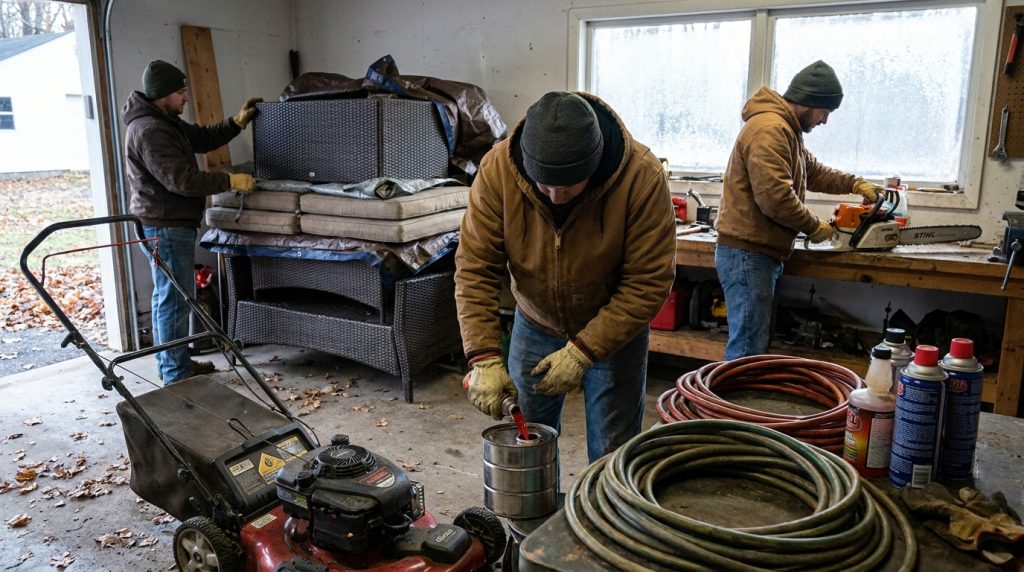
As temperatures begin to drop, properly winterizing your outdoor equipment becomes one of the smartest maintenance tasks you can perform. Lawn mowers, string trimmers, chainsaws, pressure washers, generators, patio furniture, garden hoses, grills, and other outdoor equipment can suffer costly damage from freezing temperatures, moisture, corrosion, and stale fuel if they aren’t prepared for long-term storage.
Taking a few hours in the fall can prevent expensive repairs, extend equipment life, improve reliability, and ensure everything is ready when spring arrives. This guide covers everything you need to know to properly winterize your outdoor equipment before the cold weather sets in.
Why Winterizing Outdoor Equipment Is Important
Cold temperatures, moisture, and months of inactivity can damage outdoor equipment in several ways.
Common winter-related problems include:
- Rust and corrosion
- Frozen water lines
- Cracked pumps
- Dead batteries
- Clogged carburetors
- Fuel degradation
- Mold and mildew
- Damaged rubber seals
- Engine starting problems
- Shortened equipment lifespan
Proper winter storage protects your investment while reducing spring maintenance.
Equipment That Should Be Winterized
Most homeowners should winterize:
- Lawn mowers
- Riding mowers
- Garden tractors
- String trimmers
- Leaf blowers
- Chainsaws
- Hedge trimmers
- Pressure washers
- Garden hoses
- Irrigation systems
- Outdoor faucets
- Patio furniture
- Grills
- Generators
- Snow blowers
- Hand tools
- Power tools
- Outdoor décor
Each piece of equipment has different maintenance requirements, but many follow the same basic principles.
Winterizing Lawn Mowers
Your lawn mower is likely one of your most valuable outdoor tools.
Clean the Mower
Remove:
- Grass clippings
- Mud
- Dirt
- Leaves
- Oil buildup
Clean underneath the mower deck thoroughly.
Built-up grass traps moisture and encourages rust.
Allow the mower to dry completely before storage.
Change the Oil
Used engine oil contains contaminants that can damage engine components during long-term storage.
Replace the oil according to your owner’s manual.
Also inspect:
- Oil filter
- Fuel filter
- Air filter
Replace dirty filters before winter.
Stabilize or Drain Fuel
Gasoline deteriorates over time.
You have two options:
- Add fuel stabilizer and run the engine for several minutes.
- Drain the fuel system completely.
Follow your manufacturer’s recommendations.
Sharpen the Blade
Winter is an excellent time to:
- Remove the blade
- Sharpen it
- Balance it
- Replace damaged blades
Starting spring with a sharp blade improves lawn health.
Disconnect the Battery
For riding mowers:
- Remove the battery.
- Clean the terminals.
- Store indoors.
- Connect to a battery maintainer if recommended.
Winterizing Small Engine Equipment
Small engines require similar care.
Equipment includes:
- String trimmers
- Leaf blowers
- Chainsaws
- Edgers
- Hedge trimmers
Recommended maintenance:
- Stabilize fuel
- Clean air filter
- Replace spark plug if needed
- Clean cooling fins
- Inspect fuel lines
- Lubricate moving parts
- Clean exterior surfaces
Proper storage prevents difficult spring startups.
Chainsaw Maintenance
Before storing your chainsaw:
- Clean the bar
- Clean the chain
- Remove sawdust
- Inspect sprockets
- Sharpen the chain
- Lubricate moving parts
Store with a protective bar cover.
Inspect:
- Chain brake
- Throttle lock
- Safety features
Battery-Powered Equipment
Cordless equipment should receive special attention.
Remove batteries from:
- Trimmers
- Blowers
- Chainsaws
- Hedge trimmers
- Lawn mowers
Store batteries:
- Indoors
- Dry location
- Moderate temperatures
- Away from direct sunlight
Follow manufacturer recommendations regarding storage charge level.
Winterizing Garden Hoses
Water left inside a hose can freeze and expand.
To prevent damage:
- Disconnect the hose.
- Drain completely.
- Coil loosely.
- Store indoors or in a protected location.
Avoid sharp bends that may weaken the hose.
Protect Outdoor Faucets
If your home has shutoff valves:
- Turn off water supply.
- Open exterior faucets.
- Drain remaining water.
- Install insulated faucet covers.
Frozen pipes can lead to expensive plumbing repairs.
Winterizing Irrigation Systems
Sprinkler systems should be drained before freezing temperatures arrive.
Methods include:
- Manual drain
- Automatic drain
- Compressed air blowout
Improper blowout procedures can damage irrigation components.
If unsure, consider hiring an irrigation professional.
Pressure Washer Winterization
Pressure washer pumps are especially vulnerable to freeze damage.
Recommended steps:
- Disconnect water supply.
- Drain hoses.
- Drain pump.
- Use pump saver antifreeze if recommended.
- Store in a heated or protected location.
A cracked pump is often more expensive than the winterization supplies needed to prevent it.
Patio Furniture Storage
Outdoor furniture lasts longer when properly stored.
Before winter:
- Wash thoroughly.
- Remove dirt and pollen.
- Dry completely.
- Touch up damaged finishes.
- Apply protective coatings if appropriate.
Store cushions indoors.
Cover furniture with breathable weather-resistant covers.
Winterizing Outdoor Grills
Gas, charcoal, and pellet grills all benefit from seasonal maintenance.
Clean:
- Cooking grates
- Burners
- Grease tray
- Exterior surfaces
Disconnect propane if recommended.
Store propane tanks outdoors in an upright position.
Cover the grill to protect against snow and moisture.
Winterizing Hand Tools
Garden tools should be cleaned before storage.
Inspect:
- Shovels
- Rakes
- Hoes
- Pruners
- Trowels
- Loppers
Remove dirt and rust.
Sharpen cutting edges.
Lightly oil metal surfaces.
Replace damaged handles.
Preparing Snow Removal Equipment
Before winter arrives:
Inspect your:
- Snow blower
- Snow shovels
- Ice scrapers
- Roof rake
- Ice melt spreader
Start the snow blower before the first snowfall.
Check:
- Fuel
- Oil
- Spark plug
- Belts
- Shear pins
- Auger
- Tires
Finding problems before the first storm makes repairs much easier.
Generator Maintenance
If you own a portable generator:
- Change oil if necessary.
- Test run the engine.
- Stabilize fuel.
- Inspect air filter.
- Check spark plug.
- Verify extension cords are in good condition.
Always operate generators outdoors in well-ventilated areas.
Never run a generator inside a garage, basement, or enclosed structure.
Organize Your Storage Area
A clean storage space protects equipment.
Before storing everything:
- Sweep floors.
- Remove leaves.
- Check for leaks.
- Inspect for rodents.
- Install shelving if needed.
- Label storage bins.
Store frequently used winter equipment near the front.
Keep summer equipment together.
Winter Safety Supplies
Prepare before storms arrive.
Stock:
- Ice melt
- Sand
- Flashlights
- Batteries
- Extension cords
- Fuel containers
- Emergency blankets
- First aid kit
- Snow brushes
- Windshield scrapers
Emergency preparation saves time during severe weather.
Common Winterization Mistakes
Avoid these common errors:
Leaving untreated fuel in engines
Storing dirty equipment
Leaving batteries outdoors
Forgetting to drain hoses
Ignoring rust
Covering wet furniture
Waiting until after the first freeze
Skipping annual maintenance
Proper preparation now prevents costly repairs later.
Winter Maintenance Checklist
Lawn Equipment
- Clean mower
- Change oil
- Replace air filter
- Stabilize fuel
- Sharpen blade
- Disconnect battery
Small Engines
- Drain or stabilize fuel
- Inspect spark plug
- Clean filters
- Lubricate moving parts
Water Systems
- Drain hoses
- Shut off outdoor faucets
- Winterize irrigation
- Drain pressure washer
Outdoor Living
- Clean furniture
- Store cushions
- Clean grill
- Cover outdoor equipment
Winter Equipment
- Test snow blower
- Prepare generator
- Organize shovels
- Stock ice melt
Storage
- Clean garage
- Organize shelves
- Protect against moisture
- Store chemicals safely
Related Articles
Continue protecting your home and equipment with these helpful guides:
- Build Heavy-Duty Shop Shelves
- Repair a Broken Gate Hinge
- Build a Rolling Tool Cart
- How to Replace Trailer Lights
- Essential PPE for Construction and Industrial Work
Frequently Asked Questions
When should I winterize outdoor equipment?
It’s best to winterize equipment before the first hard freeze, typically during late fall.
Should I drain fuel or use a fuel stabilizer?
Either method can work depending on the equipment and manufacturer recommendations. Always consult your owner’s manual.
Can I leave batteries in outdoor equipment?
For most equipment, removing and storing batteries indoors during winter helps extend battery life and improves spring starting performance.
Why should I sharpen mower blades before winter?
Winter provides an ideal opportunity to sharpen blades so your mower is ready for the first cut of spring without delaying lawn maintenance.
Should I cover outdoor equipment?
Yes. Even equipment stored inside benefits from protection against dust and moisture. Outdoor equipment should be covered with breathable, weather-resistant covers.
Protect Your Equipment All Winter Long
Winterizing outdoor equipment is one of the simplest ways to extend the life of your tools and avoid expensive repairs. A few hours of maintenance before freezing temperatures arrive can improve reliability, reduce downtime, and ensure your equipment is ready to perform when warmer weather returns.
Whether you’re maintaining lawn equipment, generators, pressure washers, hand tools, or outdoor living spaces, CEM Industrial Supply offers the maintenance products, lubricants, fasteners, safety equipment, storage solutions, and professional-grade tools you need to protect your investment year after year.