
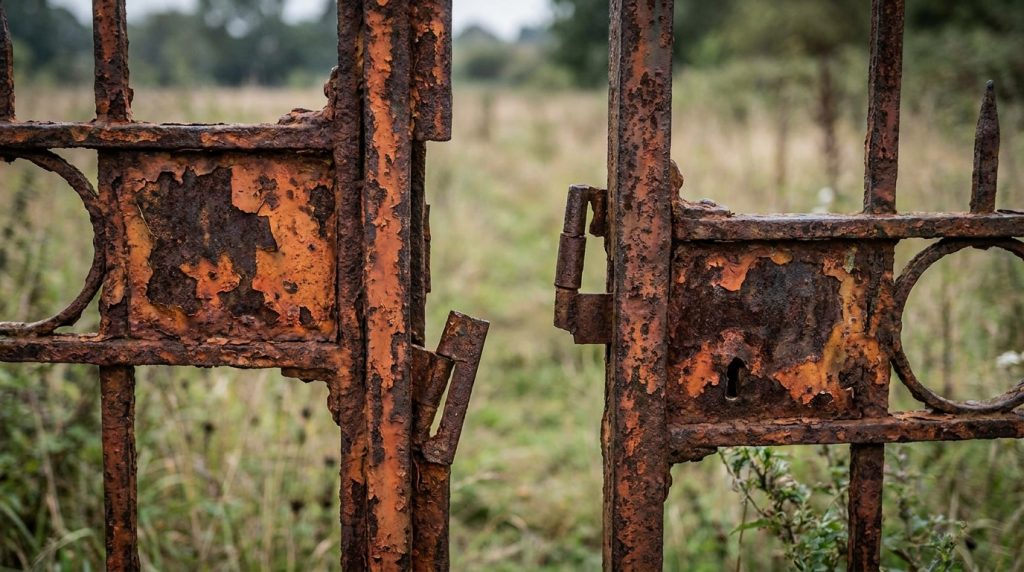
A rusted metal gate doesn’t always need to be replaced. In many cases, rust can be removed, damaged areas repaired, and the entire gate restored to look and function like new. Whether you have a wrought iron driveway gate, steel security gate, decorative garden gate, or metal fence gate, addressing rust early helps prevent structural damage, extends the life of the gate, and improves your property’s appearance.
This guide explains how to identify rust damage, remove corrosion, repair weakened metal, repaint the gate, and prevent rust from returning.
Why Metal Gates Rust
Rust develops when iron or steel is exposed to oxygen and moisture over time.
Common causes include:
- Rain and snow
- High humidity
- Standing water
- Sprinkler overspray
- Salt exposure
- Chipped paint
- Scratched protective coatings
- Poor drainage
- Lack of maintenance
Once the protective finish is damaged, corrosion begins spreading beneath the surface.
Types of Rust Damage
Not every rust problem requires major repairs.
Surface Rust
Surface rust usually appears as:
- Orange discoloration
- Light corrosion
- Minor paint bubbling
- Small rust spots
This type of damage is generally easy to repair.
Deep Corrosion
More serious rust damage may include:
- Deep pitting
- Flaking metal
- Holes
- Weak welds
- Bent sections
- Structural deterioration
Extensive corrosion may require welding or replacement of damaged sections.
Tools You’ll Need
Gather your tools before beginning.
Recommended tools include:
- Wire brush
- Wire wheel attachment
- Angle grinder (optional)
- Sandpaper
- Orbital sander
- Paint scraper
- Putty knife
- Bucket
- Garden hose
- Clean rags
- Safety glasses
- Dust mask
- Work gloves
Power tools can significantly reduce repair time on heavily rusted gates.
Materials Needed
You’ll also need:
- Rust remover
- Rust converter
- Metal filler
- Epoxy repair compound
- Rust-inhibiting primer
- Exterior metal paint
- Paint brushes
- Paint rollers
- Spray paint (optional)
- Degreaser
- Mineral spirits
- Replacement hinges or hardware
- Lubricant
Choose products specifically formulated for exterior metal surfaces.
Step 1: Inspect the Gate
Carefully inspect:
- Hinges
- Latch
- Frame
- Welds
- Decorative sections
- Bottom rails
- Mounting posts
Pay special attention to areas near the ground where moisture tends to collect.
Look for:
- Rust bubbles
- Loose paint
- Soft metal
- Cracks
- Missing hardware
Step 2: Wash the Gate
Remove dirt, grease, and debris using:
- Mild detergent
- Water
- Soft brush
Rinse thoroughly.
Allow the gate to dry completely before continuing.
Painting over moisture often causes rust to return.
Step 3: Remove Rust
Remove loose corrosion using:
- Wire brush
- Sandpaper
- Wire wheel
- Grinder
Continue until all loose rust and peeling paint are removed.
The goal is a solid, stable surface.
Step 4: Smooth the Surface
Sand surrounding painted areas to feather the edges.
This creates a smoother transition for primer and paint.
Remove all sanding dust before moving forward.
Step 5: Apply Rust Treatment
Small amounts of remaining corrosion can be treated with a quality rust converter.
Rust converters chemically stabilize tightly bonded rust, creating a surface suitable for priming.
Follow manufacturer drying times carefully.
Step 6: Repair Damaged Areas
Repair pits and small holes using:
- Metal epoxy
- Automotive body filler
- Exterior metal repair compounds
Allow the filler to cure completely.
Sand smooth until it blends with the surrounding metal.
Large holes or structural damage generally require welding.
Step 7: Prime the Gate
Apply a rust-inhibiting metal primer.
Cover:
- Bare steel
- Sanded areas
- Filled repairs
- Welded sections
Primer improves paint adhesion while protecting against future corrosion.
Allow the primer to cure completely.
Step 8: Paint the Gate
Apply two or more thin coats of exterior metal paint.
Choose products labeled:
- Rust-resistant
- Exterior enamel
- Direct-to-metal
- Industrial coating
Be sure to coat:
- Bottom rails
- Hinges
- Welds
- Corners
- Decorative details
Several light coats provide better durability than one heavy coat.
Step 9: Lubricate Moving Parts
After the paint cures, lubricate:
- Hinges
- Latches
- Locks
- Sliding tracks
- Rollers
Proper lubrication reduces wear while helping the gate operate smoothly.
Repairing Severe Rust Damage
Some gates require more extensive restoration.
Structural repairs may include:
- Welding replacement sections
- Installing steel patches
- Replacing damaged hinges
- Replacing hardware
- Reinforcing weakened welds
- Installing new mounting brackets
Professional welding is recommended for structural repairs.
Replace Rusted Hardware
Old hardware often corrodes faster than the gate itself.
Consider replacing:
- Hinges
- Bolts
- Nuts
- Washers
- Latches
- Locks
- Wheels
- Mounting brackets
Galvanized or stainless steel hardware provides superior corrosion resistance.
Prevent Rust from Returning
Preventive maintenance greatly extends gate life.
Best practices include:
- Wash the gate regularly.
- Touch up paint chips immediately.
- Keep vegetation trimmed away.
- Improve drainage around gate posts.
- Lubricate hinges annually.
- Inspect for scratches.
- Remove standing water.
- Keep sprinklers from spraying directly on the gate.
Small maintenance tasks prevent expensive future repairs.
Best Products for Rust Repair
Rust Remover
Ideal for removing heavy surface corrosion before sanding.
Rust Converter
Best for treating corrosion remaining in pits or difficult-to-reach areas.
Rust-Inhibiting Primer
Essential for protecting repaired metal and promoting paint adhesion.
Exterior Metal Paint
Choose a high-quality coating specifically designed for steel or wrought iron exposed to weather.
Metal Epoxy
Useful for repairing small pits, holes, and damaged decorative sections.
Common Mistakes to Avoid
Avoid these common errors:
- Painting over active rust
- Skipping primer
- Painting damp metal
- Using interior paint outdoors
- Ignoring rust near hinges
- Leaving bare metal exposed too long
- Applying thick paint coats
- Ignoring drainage problems
Good preparation determines how long the repair will last.
When to Replace the Gate
Replacement may be more practical when:
- Large sections have rusted through.
- The frame is severely weakened.
- Welds have failed extensively.
- Repairs approach replacement cost.
- The gate no longer provides adequate security.
A professional fabricator can help determine whether restoration or replacement is the better investment.
Related Articles
Continue improving your property with these helpful guides:
- Repair a Broken Gate Hinge
- Install a New Door Closer
- Winterize Outdoor Equipment
- Replace a Hydraulic Hose
- Essential PPE for Construction and Industrial Work
Frequently Asked Questions
Can a rusted metal gate be repaired?
Yes. Most rusted gates can be restored if the corrosion hasn’t severely weakened the frame. Surface rust is typically straightforward to repair using rust removal, primer, and exterior metal paint.
What’s the best way to remove rust from a metal gate?
A combination of wire brushing, sanding, grinding, and rust-removal products is usually the most effective approach. Deep corrosion may also require a rust converter.
Can I paint directly over rust?
No. Loose rust should always be removed first, and any remaining corrosion should be treated with a rust converter before priming and painting.
How often should I repaint a metal gate?
Most exterior metal gates benefit from repainting every 5 to 10 years, depending on climate, sun exposure, and the quality of the existing coating.
What type of paint is best for metal gates?
Use a high-quality exterior metal paint designed for corrosion resistance, along with a rust-inhibiting primer. These products provide the best long-term protection against weather and moisture.
Restore Your Gate and Protect It for Years
Repairing a rusted metal gate is one of the most effective ways to improve your property’s appearance while extending the life of the gate itself. With proper surface preparation, rust treatment, quality primers, and durable exterior coatings, most gates can provide many additional years of reliable service.
Whether you’re maintaining a decorative wrought iron gate, repairing a steel security entrance, or restoring commercial fencing, CEM Industrial Supply offers the abrasives, rust-removal products, industrial coatings, primers, fasteners, lubricants, and safety equipment needed to complete the job with professional-quality results.