
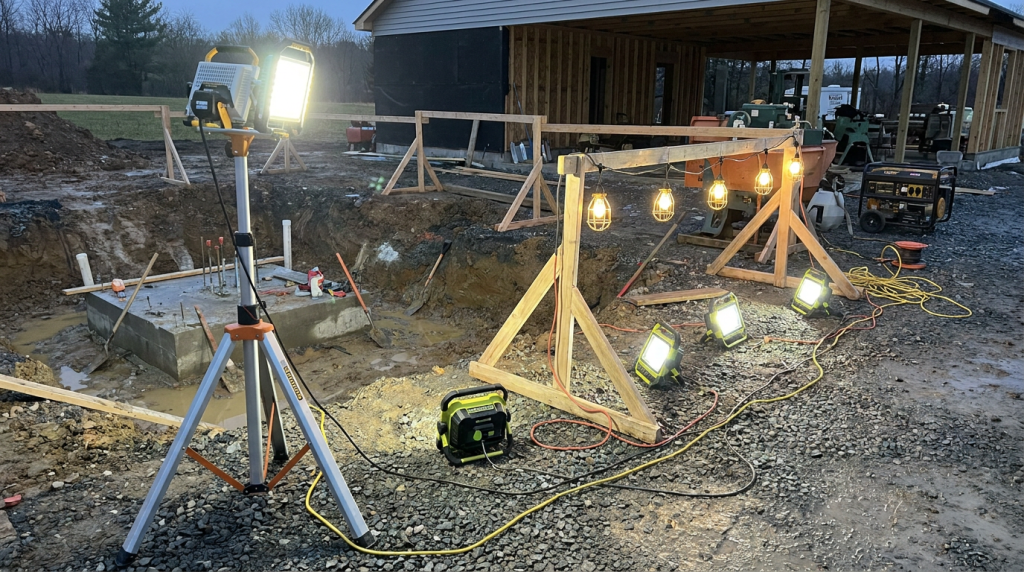
Best Work Lights for Contractors
Whether you’re framing a house before sunrise, troubleshooting electrical panels in a dim mechanical room, or finishing concrete after sunset, good lighting isn’t a luxury—it’s a necessity. The right work light improves visibility, reduces eye strain, increases productivity, and helps prevent accidents on the jobsite.
Today’s LED work lights are brighter, more energy-efficient, and more durable than ever before. From compact rechargeable lights that fit in a tool bag to powerful tripod floodlights that illuminate an entire work area, choosing the right option depends on the work you do.
Why Quality Work Lights Matter
Poor lighting contributes to mistakes, rework, and workplace injuries. Shadows can hide tripping hazards, make measurements more difficult, and increase fatigue over the course of a long workday.
A quality contractor-grade work light should provide:
- Bright, even illumination
- Long battery life or dependable corded power
- Impact-resistant construction
- Weather resistance for outdoor work
- Adjustable beam angles
- Stable mounting options
Investing in quality lighting often pays for itself through improved efficiency and safer working conditions.
Types of Contractor Work Lights
Handheld Work Lights
Compact handheld lights are ideal for inspections, electrical work, plumbing repairs, and service calls. Many feature magnetic bases, rotating heads, or built-in hooks for hands-free operation.
Best for:
- Electricians
- HVAC technicians
- Service technicians
- Home inspectors
Rechargeable LED Work Lights
Rechargeable LED lights have become the standard for many contractors. Modern lithium-ion batteries provide hours of runtime while eliminating the cost and inconvenience of disposable batteries.
Advantages include:
- Portable
- No extension cords
- Fast charging
- High light output
- Lower operating costs
For professionals who rely on battery-powered tools, rechargeable work lights often use the same battery platform.
Tripod Work Lights
Tripod-mounted flood lights provide excellent coverage for:
- Remodeling projects
- Concrete work
- Painting
- Roofing
- Commercial construction
Their elevated position reduces shadows while lighting a large work area.
Magnetic Work Lights
Magnetic work lights attach securely to steel framing, equipment, electrical panels, or machinery.
They’re especially useful for:
- Automotive repair
- Industrial maintenance
- Mechanical rooms
- Equipment servicing
Corded Work Lights
Corded lights remain popular when continuous lighting is required for long periods.
Benefits include:
- Unlimited runtime
- Consistent brightness
- Lower initial cost
- Excellent for fixed workstations
When using corded lighting, always inspect extension cords for damage before use and avoid creating trip hazards around the work area.
What to Look for When Buying a Work Light
Brightness (Lumens)
Brightness is measured in lumens.
General guidelines include:
- 300–800 lumens: Close-up inspections
- 1,000–2,000 lumens: General contractor work
- 3,000–5,000 lumens: Garages and workshops
- 5,000–10,000+ lumens: Large jobsites
More lumens aren’t always better. Excessively bright lights can create glare in confined spaces.
Battery Runtime
For rechargeable models, consider:
- Full-power runtime
- Low-power runtime
- Charging time
- Battery compatibility
- Replaceable batteries
Contractors using cordless tool systems often benefit from choosing lights compatible with existing batteries.
Durability
Construction sites are demanding environments.
Look for:
- Rubber overmold protection
- Aluminum housing
- Impact resistance
- Water resistance
- Dust protection
A quality LED light should withstand repeated drops and daily use.
Weather Resistance
Outdoor contractors should look for weather-resistant lights designed for rain, dust, and changing temperatures.
An IP-rated light provides additional confidence when working outdoors.
Adjustable Positioning
Good work lights allow you to direct light exactly where it’s needed.
Helpful features include:
- Pivoting heads
- Folding stands
- Tripod mounts
- Magnetic bases
- Hanging hooks
These options improve flexibility while reducing shadows.
LED vs. Halogen
Most professionals now choose LED lighting.
LED advantages include:
- Lower power consumption
- Cooler operation
- Longer lifespan
- Better durability
- Instant-on performance
- Higher efficiency
Halogen lights still have some applications but generally consume more power and generate significantly more heat.
Safety Tips for Jobsite Lighting
Proper lighting improves jobsite safety, but it’s equally important to use lighting equipment correctly.
Remember to:
- Keep cords out of walkways.
- Replace damaged lights immediately.
- Never overload extension cords.
- Position lights to minimize glare.
- Avoid placing lights where they create trip hazards.
- Secure tripod lights on stable surfaces.
- Keep batteries charged before starting the workday.
Choosing the Right Work Light
Different trades have different lighting needs.
Consider:
- Electricians: Compact rechargeable lights with magnetic bases.
- General contractors: High-output tripod LED lights.
- Mechanics: Adjustable magnetic work lights.
- Painters: Wide flood lighting with accurate color rendering.
- Roofers: Lightweight cordless lights with long runtime.
- HVAC technicians: Compact inspection lights for tight spaces.
Choosing the right light helps improve both efficiency and safety throughout the workday.
Related Resources
If you’re building out your contractor toolkit, these guides may also help:
- Essential Electrical Components: The Complete Guide for Contractors and DIYers
- Power Tool Maintenance Tips to Extend the Life of Your Equipment
- Milwaukee vs. DeWalt: Which Power Tools Actually Last on the Jobsite?
- Tape Measures: Standout, Blade Width, and Accuracy Classes Explained
- Utility Knives: Blade Types and the Safest Way to Cut Roofing and Insulation
- Energizer Industrial Batteries: Bulk Power You Can Count On
Find Professional Contractor Supplies at CEM Industrial Supply
Whether you’re outfitting a new crew or replacing worn-out equipment, CEM Industrial Supply carries the professional-grade tools and supplies contractors depend on every day. From lighting and electrical supplies to hand tools, fasteners, safety equipment, and maintenance products, we’re committed to helping professionals work more safely and efficiently.
Browse our selection online or contact our team for assistance finding the right products for your next project.
Frequently Asked Questions
What is the best type of work light for contractors?
The best work light depends on your trade. Electricians and HVAC technicians often prefer compact rechargeable LED lights with magnetic bases, while general contractors benefit from high-output tripod floodlights that illuminate large work areas.
How many lumens do I need for a work light?
For most contractor tasks, a work light producing between 1,000 and 3,000 lumens is sufficient. Larger construction sites, warehouses, or outdoor projects may require 5,000 lumens or more for adequate visibility.
Are LED work lights better than halogen work lights?
Yes. LED work lights use less electricity, produce less heat, last significantly longer, and are generally more durable than halogen lights. They also provide instant full brightness and require less maintenance over time.
Should I choose a corded or rechargeable work light?
Rechargeable work lights offer excellent portability and eliminate the need for extension cords, making them ideal for most contractors. Corded work lights are better suited for stationary workstations or projects requiring continuous lighting for extended periods.
What features should I look for in a contractor work light?
Look for features such as:
- High lumen output
- Long battery runtime
- Durable impact-resistant housing
- Weather resistance
- Adjustable light head
- Magnetic base or hanging hook
- Tripod compatibility
- Fast charging capabilities
Are waterproof work lights worth it?
If you regularly work outdoors or in damp environments, a weather-resistant or waterproof work light is a worthwhile investment. Look for an IP rating that protects against water and dust intrusion.
Can I use my cordless tool batteries with a work light?
Many manufacturers, including Milwaukee, DeWalt, Makita, and Bosch, offer work lights that use the same batteries as their cordless power tools. This can reduce costs and simplify battery management on the jobsite.
How long do LED work lights last?
Quality LED work lights often have an expected lifespan of 30,000 to 50,000 hours or more, making them one of the longest-lasting lighting options available for contractors.
What color temperature is best for construction work?
Most contractors prefer a color temperature between 4,000K and 5,500K, which produces a bright, natural white light that improves visibility without causing excessive eye strain.
How can I safely use work lights on a jobsite?
To improve safety:
- Keep cords away from walkways.
- Inspect lights for damage before use.
- Secure tripod lights on stable surfaces.
- Avoid directing lights into workers’ eyes.
- Use properly rated extension cords.
- Recharge batteries before starting the workday.
- Position lights to eliminate shadows and reduce trip hazards.